• Home
  • E-Resources
  • About us
  • Blog
  • Contact us
  • Login
    • Forgot Password
Menu
Click to enlarge
Home ebooks Small Animal Ophthalmology

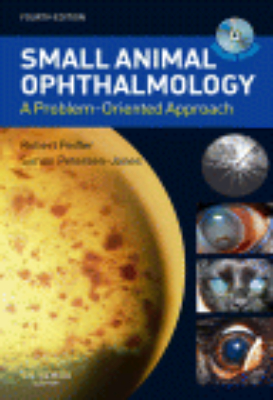
Small Animal Ophthalmology

“This new edition retains the successful problem-oriented approach and full color text of the previous edition, along with wide coverage of all aspects of small animal ophthalmology and more than 150 color illustrations. In addition the new edition offers much more, including an instructional CD-Rom of 40 clinical cases comprising video clips and questions, to further improve the reader’s skills in reaching an accurate diagnosis and selecting the best treatment option. All chapters have been fully revised and updated to take into account latest developments. Key Features. Over 150 full-color illustrations on all common ophthalmic conditions. Problem-oriented approach engages the reader and promotes learning. Concise basic science chapter to set the background to the clinical conditions. Comprehensive clinical examination and diagnosis chapter. International ophthalmic formulary appendix for quick reference to drug doses and formulations. Aimed at veterinary students and general practitioners. Comes with CD-Rom packed with 40 clinical cases to help readers apply what they have learned. New illustrations cover key clinical conditions and surgical procedures. Includes new material throughout on exotics. New contributors brought in to keep the text fully up to date”

Publication Language

English

Publication Access Type

Premium

Publication Author

*

Publisher

Elsevier

Publication Year

*

Publication Type

ebooks

ISBN/ISSN

*

Publication Category

Animal Science

Kindly Login to ICAR Digital Library Portal.

SKU: Elsevier-9780702028618 Category: ebooks Tag: Health Science
Close
Publication Types
  • ebooks 1206
  • eJournals 828
  • eMagazines 2

Related products

Agricultural Sustainability

ebooks
Collaboratively written by top international experts and established scientists in various fields of agricultural research, this book focuses on the state of food production and sustainability; the problems with degradation of valuable sources of land, water, and air and their effects on food crops; the increasing demand of food resources; and the challenges of food security worldwide. The book provides cutting edge scientific tools and methods of research as well as solid background information that is accessible for those who have a strong interest in agricultural research and development and want to learn more on the challenges facing the global agricultural production systems.

An Introduction to Economics for Students of Agriculture

ebooks
The Introduction to Economics for Students of Agriculture describes the universal economic principles, illustrated primarily by examples drawn from farming and the food industry. This book is composed of nine chapters, and begins with what an overview of the concepts of economics, its objective, with a particular emphasis on the mechanism of allocating scarce resources. The succeeding chapters deal with the behavior of individual through the theory of consumer choice, the concept of demand and supply, market competitions, and production economics. These topics are followed by discussions on the mobility of the factors of production and unemployment, and some problems of using the market as a resource allocator. This book will prove useful to economists, agriculturists, and students.

Genetically Modified Plants

ebooks
"A transgenic organism is a plant, animal, bacterium, or other living organism that has had a foreign gene added to it by means of genetic engineering. Transgenic plants can arise by natural movement of genes between species, by cross-pollination based hybridization between different plant species (which is a common event in flowering plant evolution), or by laboratory manipulations by artificial insertion of genes from another species. Methods used in traditional breeding that generate transgenic plants by non-recombinant methods are widely familiar to professional plant scientists, and serve important roles in securing a sustainable future for agriculture by protecting crops from pest and helping land and water to be used more efficiently. There is worldwide interest in the biosafety issues related to transgenic crops because of issues such as increased pesticide use, increased crop and weed resistance to pesticides, gene flow to related plant species, negative effects on nontarget organisms, and reduced crop and ecosystem diversity. This book is intended to provide the basic information for a wide range of people involved in the release of transgenic crops. These will include scientists and researchers in the initial stage of developing transgenic products, industrialists, and decision makers. It will be of particular interest to plant scientists taking up biotechnological approaches to agricultural improvement for developing nations. Key Features. Discusses traditional and future technology for genetic modification. Compares conventional non-GM approaches and genetic modification. Presents a risk assessment methodology for GM techniques. Details mitigation techniques for human and environmental effects"

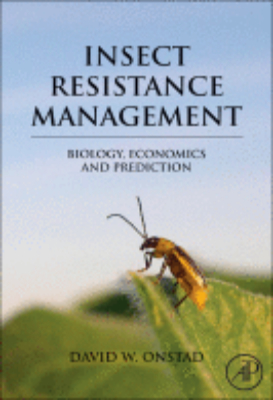
Insect Resistance Management: 2007

ebooks
Insects, mites, and ticks have a long history of evolving resistance to pesticides, host-plant resistance, crop rotation, pathogens, and parasitoids. Insect resistance management (IRM) is the scientific approach to preventing or delaying pest evolution and its negative impacts on agriculture, public health, and veterinary issues. This book provides entomologists, pest management practitioners, developers of new technologies, and regulators with information about the many kinds of pest resistance including behavioral and phenological resistance. Abstract concepts and various case studies provide the reader with the biological and economic knowledge required to manage resistance. No other source has the breadth of coverage of this book: genomics to economics, transgenic insecticidal crops, insecticides, and other pest management tactics such as crop rotation. Dr. David W. Onstad and a team of experts illustrate how IRM becomes efficient, effective and socially acceptable when local, social and economic aspects of the system are considered. Historical lessons are highlighted with new perspectives emphasized, so that future research and management may be informed by past experience, but not constrained by it.

Integrated Pest Management

ebooks
"Integrated Pest Management: Current Concepts and Ecological Perspective presents an overview of alternative measures to traditional pest management practices using biological control and biotechnology. The removal of some highly effective broad-spectrum chemicals, caused by concerns over environmental health and public safety, has resulted in the development of alternative, reduced risk crop protection products. These products, less toxic to the environment and easily integrated into biological control systems, target specific life stages or pest species. Predation recognized as a suitable, long-term strategy effectively suppresses pests in biotechnological control systems. Integrated Pest Management covers these topics and more. It explores the current ecological approaches in alternative solutions, such as biological control agents, parasites and predators, pathogenic microorganisms, pheromones and natural products as well as ecological approaches for managing invasive pests, rats, suppression of weeds, safety of pollinators, role of taxonomy and remote sensing in IPM and future projections of IPM. This book is a useful resource to entomologists, agronomists, horticulturists, and environmental scientists. Key Features. Fills a gap in the literature by providing critical analysis of different management strategies that have a bearing on agriculture, sustainability and environmental protection. Synthesizes research and practice on integrated pest management. Emphasizes an overview of management strategies, with critical evaluation of each in the larger context of ecologically based pest management"

Pulse Foods

ebooks
"Pulses are nutritionally diverse crops that can be successfully utilized as a food ingredient or a base for new product development. They provide a natural food grade ingredient that is rich in lysine, dietary fiber, complex carbohydrates, protein and B-vitamins suggesting that pulses can provide a variety of health benefits such as reducing heart disease and diabetes. Interest in the use of pulses and their ingredients in food formulations is growing and several factors are contributing to this drive. Pulse Foods: Processing, Quality and Nutraceutical Applications is the first book to provide up-to-date information on novel and emerging technologies for the processing of whole pulses, techniques for fractionating pulses into ingredients, their functional and nutritional properties, as well as their potential applications, so that the food industry can use this knowledge to incorporate pulses into new food products. Key Features. First reference bringing together essential information on the processing technology of pulses. Addresses processing challenges relevant to legume and pulse grain processors. Delivers insights into the current state-of-art and emerging processing technologies. In depth coverage of developments in nutraceutical applications of pulse protein and carbohydrate based foods"

Resource Structure of Agriculture

ebooks
Resource Structure of Agriculture: An Economic Analysis focuses on the quantitative economic analysis of the agricultural industry. The book first discusses the theory of resource demand. Topics include decision milieu in agriculture; aggregate demand for an input; and notes on the statistical estimation of the demand function for an input. The text also examines the role of labor in agriculture, including agricultural wages, migration from agriculture, and regional labor supply. The monograph underscores the use of machineries in the agricultural sector. Analysis of post-war demand for power and machinery; early developments in agricultural mechanization; trends in the use of other machinery; and supply conditions for agricultural machinery are discussed. The text also looks at the use of fertilizers and pesticides in the agricultural sector, as well the need to invest in farm buildings. The book examines the demand for resources and supply of agricultural products. Future pattern of resource use and technological change; interactions between demands for different resources; and resource demand and a derived supply elasticity are discussed. The text is a valuable source of data for readers interested in the economic analysis of the agricultural industry.

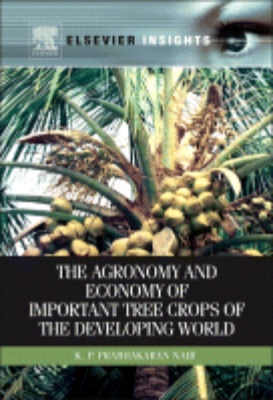
The Agronomy and Economy of Important Tree Crops of the Developing World

ebooks
"Major tree crops contribute substantially to the economy of many developing countries on the Asian, African and Latin American continents. For example, coffee is the main revenue earner for Kenya. This book provides a comprehensive review of the agronomy, botany, taxonomy, genetics, chemistry, economics, and future global prospects of a range of crops that have great food, industrial and economic value such as cocoa, coffee, cashew, oil palm and natural rubber. Key Features. Discusses the major tree crops of great economic value to the developing world. The author is an eminent scientist who has won numerous awards for his work in this area"

The Produce Contamination Problem: 2014

ebooks
"Understanding the causes and contributing factors leading to outbreaks of food-borne illness associated with contamination of fresh produce is a worldwide challenge for everyone from the growers of fresh-cut produce through the entire production and delivery process. The premise of The Produce Contamination Problem is that when human pathogen contamination of fresh produce occurs, it is extremely difficult to reduce pathogen levels sufficiently to assure microbiological safety with the currently available technologies. A wiser strategy would be to avoid crop production conditions that result in microbial contamination to start. These critical, problem-oriented chapters have been written by researchers active in the areas of food safety and microbial contamination during production, harvesting, packing and fresh-cut processing of horticultural crops, and were designed to provide methods of contamination avoidance. Coverage includes policy and practices in the United States, Mexico and Central America, Europe, and Japan. Key Features. Addresses food-borne contaminations from a prevention view, providing proactive solutions to the problems. Covers core sources of contamination and methods for identifying those sources. Includes best practice and regulatory information"

The Science of Grapevines: Anatomy and Physiology

ebooks
Written by a recognized expert and based on his experience in teaching the subject to students with a variety of educational backgrounds, The Science of Grapevines: Anatomy and Physiology is the only book to comprehensively explore the physiology of the grapevine as it occurs around the world.While other books have focused on the vines of specific regions, the globalization of the wine industry and the resulting increase of lands around the world being used for grapevine cultivation have left a gap in information. This book addresses not only the specific issues and concerns of grapevines from regions around the world, but includes important emerging topics such as global climate change, water relations, temperature effect and more. Key Features * Provides global coverage of grapevines, including the regional differences, similarities, challenges and potential changes* Avoids jargon while bringing the reader into this important aspect of the wine industry * Classroom proven by a leading expert in grapevine anatomy
    Wiley Online Library
    Taylor & Francis Group
    Springer Nature
    Oxford University Press
    Nature.com
    ICAR
    Elsevier

    The Logo depicts wheat in growing stage, the encircling component symbolizes strength of the holistic research.

    • CeRA (Consortium for e-Resources in Agriculture) Agricultural Education Division, ICAR, Krishi Anusandhan Bhavan -II, Pusa, New Nelhi-12
    • Phone: 91-11-25841760
    • Email: adg.ephs@icar.gov.in
    Recent Posts
    • Going Global: International Linkages
      July 11, 2023 No Comments
    • The Network: Disseminating Knowledge
      July 11, 2023 No Comments
    • The Utilization: Waste to Wealth
      July 11, 2023 No Comments
    • Women Power: Contribution at Par
      July 11, 2023 No Comments
    Our Menu
    • Home
    • E-Resources
    • About us
    • Blog
    • Contact us
    E-Resource Categories
    • eJournals
    Subject Categories
    Agricultural Science Animal Science Basic Science Engineering Health Science Life Science
    An Initiative of Indian Council of Agricultural Research (ICAR) Copyright @ 2024. Developed by Informatics Publishing Limited.
    • Menu
    • Categories
    • eJournals
    • Home
    • E-Resources
    • Blog
    • About Us
    • Contact Us
    • Login / Register
    Sidebar
    We use cookies to improve your experience on our website. By browsing this website, you agree to our use of cookies.
    Accept