• Home
  • E-Resources
  • About us
  • Blog
  • Contact us
  • Login
    • Forgot Password
Menu
Click to enlarge
Home ebooks Jubb, Kennedy & Palmer’s Pathology of Domestic Animals: Volume 3

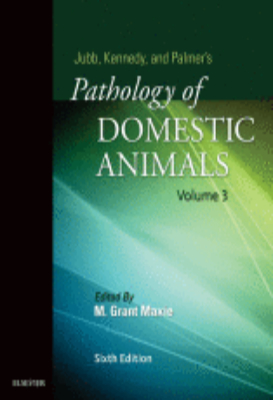
Jubb, Kennedy & Palmer’s Pathology of Domestic Animals: Volume 3

“With an emphasis on the disease conditions of dogs, cats, horses, swine, cattle and small ruminants, Jubb, Kennedy, and Palmer’s Pathology of Domestic Animals, 6th Edition continues its long tradition of being the most comprehensive reference book on common domestic mammal pathology. Using a body systems approach, veterinary pathology experts provide overviews of general system characteristics, reactions to insult, and disease conditions that are broken down by type of infectious or toxic insult affecting the anatomical subdivisions of each body system. The sixth edition now boasts a new full-color design, including more than 2,000 high-resolution images of normal and abnormal organs, tissues, and cells. Updated content also includes evolved coverage of disease agents such as the Schmallenberg virus, porcine epidemic diarrhea virus, and the porcine deltacoronavirus; plus new information on molecular-based testing, including polymerase chain reaction (PCR) and in-situ hybridization, keep you abreast of the latest diagnostic capabilities. “”a core text in veterinary pathology””Reviewed by: Alexander Stoll, on behalf of Wikivet, November 2015 Key Features. Updated content includes new and evolving pathogens and diagnostic techniques.. Updated bibliographies give readers new entry points into the rapidly expanding literature on each subject.. NEW! High-resolution color images clearly depict the diagnostic features of hundreds of conditions.. NEW! Introduction to the Diagnostic Process chapter illustrates the whole animal perspective and details the approaches to systemic, multi-system, and polymicrobial disease.. NEW! Coverage of camelids is now included in the references widened scope of species.. NEW! Team of 30+ expert contributors offers the latest perspective on the continuum of issues in veterinary pathology.. NEW! Expanded resources on the companion website include a variety of helpful tools such as full reference lists with entries linked to abstracts in Pub Med and bonus web-only figures.. NEW! Full-color design improves the accessibility of the text.”

Publication Language

English

Publication Access Type

Premium

Publication Author

*

Publisher

Elsevier

Publication Year

*

Publication Type

ebooks

ISBN/ISSN

*

Publication Category

Animal Science

Kindly Login to ICAR Digital Library Portal.

SKU: Elsevier-9780702053191 Category: ebooks Tag: Health Science
Close
Publication Types
  • ebooks 1206
  • eJournals 828
  • eMagazines 2

Related products

A History of Weed Science in the United States

ebooks
"It is important that scientists think about and know their history - where they came from, what they have accomplished, and how these may affect the future. Weed scientists, similar to scientists in many technological disciplines, have not sought historical reflection. The technological world asks for results and for progress. Achievement is important not, in general, the road that leads to achievement. What was new yesterday is routine today, and what is described as revolutionary today may be considered antiquated tomorrow. Weed science has been strongly influenced by technology developed by supporting industries, subsequently employed in research and, ultimately, used by farmers and crop growers. The science has focused on results and progress. Scientists have been--and the majority remain--problem solvers whose solutions have evolved as rapidly as have the new weed problems needing solutions. In a more formal sense, weed scientists have been adherents of the instrumental ideology of modern science. That is an analysis of their work, and their orientation reveals the strong emphasis on practical, useful knowledge; on know how. The opposite, and frequently complementary orientation, that has been missing from weed science is an emphasis on contemplative knowledge; that is, knowing why. This book expands on and analyzes how these orientations have affected weed sciences development. Key Features. The first analytical history of weed science to be written. Compares the development of weed science, entomology and plant pathology. Identifies the primary founders of weed science and describes their role"

Agrarian Development in Peasant Economies

ebooks
Agriculture and Forestry Division, Volume 2: Agrarian Development in Peasant Economies: Some Lessons from Kenya tackles various areas of concerns in agriculture in the context of peasant economy. The title provides examples from the Kenyan agrarian development policies. The text first covers concern in improving agricultural production, and then proceeds to tackling post-war Kenya. Next, the selection talks about Kenyan agrarian revolution, along with the economics and features of peasant agriculture. The sixth chapter discusses government and agrarian development, while the seventh chapter details further problems of agrarian reform. The book will be of great interest to political scientists, economists, agriculturists, and sociologists.

Genetically Modified Plants

ebooks
"A transgenic organism is a plant, animal, bacterium, or other living organism that has had a foreign gene added to it by means of genetic engineering. Transgenic plants can arise by natural movement of genes between species, by cross-pollination based hybridization between different plant species (which is a common event in flowering plant evolution), or by laboratory manipulations by artificial insertion of genes from another species. Methods used in traditional breeding that generate transgenic plants by non-recombinant methods are widely familiar to professional plant scientists, and serve important roles in securing a sustainable future for agriculture by protecting crops from pest and helping land and water to be used more efficiently. There is worldwide interest in the biosafety issues related to transgenic crops because of issues such as increased pesticide use, increased crop and weed resistance to pesticides, gene flow to related plant species, negative effects on nontarget organisms, and reduced crop and ecosystem diversity. This book is intended to provide the basic information for a wide range of people involved in the release of transgenic crops. These will include scientists and researchers in the initial stage of developing transgenic products, industrialists, and decision makers. It will be of particular interest to plant scientists taking up biotechnological approaches to agricultural improvement for developing nations. Key Features. Discusses traditional and future technology for genetic modification. Compares conventional non-GM approaches and genetic modification. Presents a risk assessment methodology for GM techniques. Details mitigation techniques for human and environmental effects"

Insect Resistance Management: 2007

ebooks
Insects, mites, and ticks have a long history of evolving resistance to pesticides, host-plant resistance, crop rotation, pathogens, and parasitoids. Insect resistance management (IRM) is the scientific approach to preventing or delaying pest evolution and its negative impacts on agriculture, public health, and veterinary issues. This book provides entomologists, pest management practitioners, developers of new technologies, and regulators with information about the many kinds of pest resistance including behavioral and phenological resistance. Abstract concepts and various case studies provide the reader with the biological and economic knowledge required to manage resistance. No other source has the breadth of coverage of this book: genomics to economics, transgenic insecticidal crops, insecticides, and other pest management tactics such as crop rotation. Dr. David W. Onstad and a team of experts illustrate how IRM becomes efficient, effective and socially acceptable when local, social and economic aspects of the system are considered. Historical lessons are highlighted with new perspectives emphasized, so that future research and management may be informed by past experience, but not constrained by it.

Managing Agricultural Greenhouse Gases

ebooks
Global climate change is a natural process that currently appears to be strongly influenced by human activities, which increase atmospheric concentrations of greenhouse gases (GHG). Agriculture contributes about 20% of the worlds global radiation forcing from carbon dioxide, methane and nitrous oxide, and produces 50% of the methane and 70% of the nitrous oxide of the human-induced emission. Managing Agricultural Greenhouse Gases synthesizes the wealth of information generated from the GRACEnet (Greenhouse gas Reduction through Agricultural Carbon Enhancement network) effort with contributors from a variety of backgrounds, and reports findings with important international applications.

Molecular Wine Microbiology

ebooks
"Molecular Wine Microbiology features rigorous scientific content written at a level comprehensible for wine professionals as well as advanced students. It includes information on production and spoilage issues, the microbial groups relevant for wine production and microbial wine safety. Microbiology has long been recognized as a key tool in studying wine production, however only recently have wine microbiology studies been addressed at a molecular level, increasing the understanding of how microbiology impacts not only the flavor quality of the wine, but also its safety. Understanding, at a molecular level, how a starter culture can impact ethanol, glycerol, volatile phenols, mannoproteins, biogenic amines or ochratoxin A of a wine are just some of the core points that must be considered in order to achieve maximium consumer acceptability while addressing safety concerns during processing and storage. While other books offer insights into the technological aspects of enology, this book is written by expert microbiologists, who explore the positive and negative impacts of gene function in the production of wine, from a microbiological point of view. Key Features. Winner of the 2012 Jury Award in Enology from the International Organisation of Vine and Wine. Presents the most current methods of studying the microbiology of wine. Includes latest identification and typing methods, reducing identification time from days and weeks to minutes and hours. Provides important knowledge about the impact of microbiological factors at the molecular level for reduction of wine spoilage and increased wine quality and safety"

Postharvest Handling: 1993

ebooks
"Postharvest Handling: A Systems Approach introduces a new concept in the handling of fresh fruits and vegetable. Traditional treatments have been either physiologically based with an emphasis on biological tissue or technologically based with an emphasis on storage and handling. This book integrates all processes from production practices through consumer consumption with an emphasis on understanding market forces and providing fresh product that meets consumer expectations. Postharvest physiologists and technologists across the disciplines of agricultural economics, agricultural engineering, food science and horticulture along with handlers of minially-processed products within the fresh produce fruit and vegetable processing industries will find this to be an invaluable source of information. Key Features

Pulse Foods

ebooks
"Pulses are nutritionally diverse crops that can be successfully utilized as a food ingredient or a base for new product development. They provide a natural food grade ingredient that is rich in lysine, dietary fiber, complex carbohydrates, protein and B-vitamins suggesting that pulses can provide a variety of health benefits such as reducing heart disease and diabetes. Interest in the use of pulses and their ingredients in food formulations is growing and several factors are contributing to this drive. Pulse Foods: Processing, Quality and Nutraceutical Applications is the first book to provide up-to-date information on novel and emerging technologies for the processing of whole pulses, techniques for fractionating pulses into ingredients, their functional and nutritional properties, as well as their potential applications, so that the food industry can use this knowledge to incorporate pulses into new food products. Key Features. First reference bringing together essential information on the processing technology of pulses. Addresses processing challenges relevant to legume and pulse grain processors. Delivers insights into the current state-of-art and emerging processing technologies. In depth coverage of developments in nutraceutical applications of pulse protein and carbohydrate based foods"

The Produce Contamination Problem: 2014

ebooks
"Understanding the causes and contributing factors leading to outbreaks of food-borne illness associated with contamination of fresh produce is a worldwide challenge for everyone from the growers of fresh-cut produce through the entire production and delivery process. The premise of The Produce Contamination Problem is that when human pathogen contamination of fresh produce occurs, it is extremely difficult to reduce pathogen levels sufficiently to assure microbiological safety with the currently available technologies. A wiser strategy would be to avoid crop production conditions that result in microbial contamination to start. These critical, problem-oriented chapters have been written by researchers active in the areas of food safety and microbial contamination during production, harvesting, packing and fresh-cut processing of horticultural crops, and were designed to provide methods of contamination avoidance. Coverage includes policy and practices in the United States, Mexico and Central America, Europe, and Japan. Key Features. Addresses food-borne contaminations from a prevention view, providing proactive solutions to the problems. Covers core sources of contamination and methods for identifying those sources. Includes best practice and regulatory information"

The Science of Grapevines: Anatomy and Physiology

ebooks
Written by a recognized expert and based on his experience in teaching the subject to students with a variety of educational backgrounds, The Science of Grapevines: Anatomy and Physiology is the only book to comprehensively explore the physiology of the grapevine as it occurs around the world.While other books have focused on the vines of specific regions, the globalization of the wine industry and the resulting increase of lands around the world being used for grapevine cultivation have left a gap in information. This book addresses not only the specific issues and concerns of grapevines from regions around the world, but includes important emerging topics such as global climate change, water relations, temperature effect and more. Key Features * Provides global coverage of grapevines, including the regional differences, similarities, challenges and potential changes* Avoids jargon while bringing the reader into this important aspect of the wine industry * Classroom proven by a leading expert in grapevine anatomy
    Wiley Online Library
    Taylor & Francis Group
    Springer Nature
    Oxford University Press
    Nature.com
    ICAR
    Elsevier

    The Logo depicts wheat in growing stage, the encircling component symbolizes strength of the holistic research.

    • CeRA (Consortium for e-Resources in Agriculture) Agricultural Education Division, ICAR, Krishi Anusandhan Bhavan -II, Pusa, New Nelhi-12
    • Phone: 91-11-25841760
    • Email: adg.ephs@icar.gov.in
    Recent Posts
    • Going Global: International Linkages
      July 11, 2023 No Comments
    • The Network: Disseminating Knowledge
      July 11, 2023 No Comments
    • The Utilization: Waste to Wealth
      July 11, 2023 No Comments
    • Women Power: Contribution at Par
      July 11, 2023 No Comments
    Our Menu
    • Home
    • E-Resources
    • About us
    • Blog
    • Contact us
    E-Resource Categories
    • eJournals
    Subject Categories
    Agricultural Science Animal Science Basic Science Engineering Health Science Life Science
    An Initiative of Indian Council of Agricultural Research (ICAR) Copyright @ 2024. Developed by Informatics Publishing Limited.
    • Menu
    • Categories
    • eJournals
    • Home
    • E-Resources
    • Blog
    • About Us
    • Contact Us
    • Login / Register
    Sidebar
    We use cookies to improve your experience on our website. By browsing this website, you agree to our use of cookies.
    Accept