• Home
  • E-Resources
  • About us
  • Blog
  • Contact us
  • Login
    • Forgot Password
Menu
Click to enlarge
Home ebooks Small Animal Dermatology: Second Edition 2006

Small Animal Dermatology: Second Edition 2006

“This well organized, easy-to-use reference provides complete coverage of over 200 skin diseases with complete diagnostic and treatment options for each disorder. Along with hundreds of high-quality images, it provides the clinical features, top differentials, diagnosis, treatment, and prognosis for each disorder. The book begins with a special chapter on differential diagnosis for the most common presenting signs in dermatologic diseases, followed by chapters covering a multitude of common and more rarely seen skin disorders. Key Features. A user-friendly organization allows for quick and easy access to a specific disease, along its with differentials, diagnosis, treatment options, and images.. Each disorder is accompanied by vivid, full-color images to facilitate accurate diagnosis.. A comprehensive drug appendix includes information about dosage, adverse reactions, indications, and contraindications.. Updated coverage of diagnostic tests that identify dermatologic disease or disorder. Algorithms that assist in quickly reaching an accurate diagnosis. A completely updated drug appendix. A section featuring more than 200 before-and-after images for client education and to encourage treatment compliance”

Publication Language

English

Publication Access Type

Premium

Publication Author

*

Publisher

Elsevier

Publication Year

*

Publication Type

ebooks

ISBN/ISSN

*

Publication Category

Animal Science

Kindly Login to ICAR Digital Library Portal.

SKU: Elsevier-9780721628257 Category: ebooks Tag: Health Science
Close
Publication Types
  • ebooks 1206
  • eJournals 828
  • eMagazines 2

Related products

A History of Weed Science in the United States

ebooks
"It is important that scientists think about and know their history - where they came from, what they have accomplished, and how these may affect the future. Weed scientists, similar to scientists in many technological disciplines, have not sought historical reflection. The technological world asks for results and for progress. Achievement is important not, in general, the road that leads to achievement. What was new yesterday is routine today, and what is described as revolutionary today may be considered antiquated tomorrow. Weed science has been strongly influenced by technology developed by supporting industries, subsequently employed in research and, ultimately, used by farmers and crop growers. The science has focused on results and progress. Scientists have been--and the majority remain--problem solvers whose solutions have evolved as rapidly as have the new weed problems needing solutions. In a more formal sense, weed scientists have been adherents of the instrumental ideology of modern science. That is an analysis of their work, and their orientation reveals the strong emphasis on practical, useful knowledge; on know how. The opposite, and frequently complementary orientation, that has been missing from weed science is an emphasis on contemplative knowledge; that is, knowing why. This book expands on and analyzes how these orientations have affected weed sciences development. Key Features. The first analytical history of weed science to be written. Compares the development of weed science, entomology and plant pathology. Identifies the primary founders of weed science and describes their role"

Agrarian Development in Peasant Economies
ebooks
Agriculture and Forestry Division, Volume 2: Agrarian Development in Peasant Economies: Some Lessons from Kenya tackles various areas of concerns in agriculture in the context of peasant economy. The title provides examples from the Kenyan agrarian development policies. The text first covers concern in improving agricultural production, and then proceeds to tackling post-war Kenya. Next, the selection talks about Kenyan agrarian revolution, along with the economics and features of peasant agriculture. The sixth chapter discusses government and agrarian development, while the seventh chapter details further problems of agrarian reform. The book will be of great interest to political scientists, economists, agriculturists, and sociologists.

An Introduction to Economics for Students of Agriculture

ebooks
The Introduction to Economics for Students of Agriculture describes the universal economic principles, illustrated primarily by examples drawn from farming and the food industry. This book is composed of nine chapters, and begins with what an overview of the concepts of economics, its objective, with a particular emphasis on the mechanism of allocating scarce resources. The succeeding chapters deal with the behavior of individual through the theory of consumer choice, the concept of demand and supply, market competitions, and production economics. These topics are followed by discussions on the mobility of the factors of production and unemployment, and some problems of using the market as a resource allocator. This book will prove useful to economists, agriculturists, and students.

Genetically Modified Plants

ebooks
"A transgenic organism is a plant, animal, bacterium, or other living organism that has had a foreign gene added to it by means of genetic engineering. Transgenic plants can arise by natural movement of genes between species, by cross-pollination based hybridization between different plant species (which is a common event in flowering plant evolution), or by laboratory manipulations by artificial insertion of genes from another species. Methods used in traditional breeding that generate transgenic plants by non-recombinant methods are widely familiar to professional plant scientists, and serve important roles in securing a sustainable future for agriculture by protecting crops from pest and helping land and water to be used more efficiently. There is worldwide interest in the biosafety issues related to transgenic crops because of issues such as increased pesticide use, increased crop and weed resistance to pesticides, gene flow to related plant species, negative effects on nontarget organisms, and reduced crop and ecosystem diversity. This book is intended to provide the basic information for a wide range of people involved in the release of transgenic crops. These will include scientists and researchers in the initial stage of developing transgenic products, industrialists, and decision makers. It will be of particular interest to plant scientists taking up biotechnological approaches to agricultural improvement for developing nations. Key Features. Discusses traditional and future technology for genetic modification. Compares conventional non-GM approaches and genetic modification. Presents a risk assessment methodology for GM techniques. Details mitigation techniques for human and environmental effects"

Handbook of Farm, Dairy and Food Machinery Engineering

ebooks
Handbook of Farm, Dairy and Food Machinery Engineering is the essential reference for engineers who need to understand those aspects of the food industry from farm machinery to food storage facilities to the machinery that processes and packages our foods. The process of getting food from "farm to fork," as the saying goes, involves more than planting, harvesting, shipping, processing, packaging and distributingthough those are all key components. Effective and efficient food delivery systems are built around processes that maximize the effort while minimizing cost, time, and resource depletion. This comprehensive reference is for engineers who design and build machinery and processing equipment, shipping containers, and packaging and storage equipment. It includes cutting-edge coverage of microwave vacuum application in grain processing, cacao processing, fruit and vegetable processing, ohmic heating of meat, facility design, closures for glass containers, double seaming, and much more.

Herbivorous Insects

ebooks
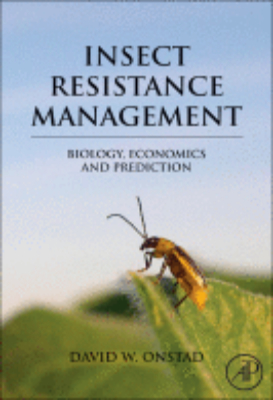
Herbivorous Insects: Host-Seeking Behavior and Mechanisms addresses mechanisms of searching behavior leading ultimately to host location of herbivorous insects. It is divided into four sections, wherein the first two sections deal with neurophysiology and the diversity of behavioral induction cues. The third section covers the searching mechanisms as affected by insects' breadth of diet. The last part examines the evolutionary analysis of the behavioral and physiological adaptations in insect/host plant relations. This book starts with an introduction to the chemical sensory system as it relates to host selection in general. This is followed by considerable discussions on host-seeking behavior and allied patterns in behavior. This text also includes the study of oviposition behavior in butterflies belonging to Papilionidae. The third section presents host selection and colonization by three insects within the saprophage-predator continuum, namely, Hylurgopinus rufipes, Scolytus multistriatus, and Pissodes strobi. The behaviors by which certain oligophagous insects locate and select food plants are also considered. The concluding part addresses the unifying theme and the diversity of responses of phytophagous insects to plants. The book provides direction toward developing a unifying theme and improving the ability to unravel the complexities of insect/plant interactions. Behaviorists, ecologists, entomologists, evolutionary biologists, and physiologists will find this book invaluable.

Insect Pathology

ebooks
Insect Pathology is designed for a broad spectrum of readers. Is should be useful to students, lecturers, and researchers requiring information about the principles in insect pathology and the biology of pathogens. It should serve as a resource for specialists to learn about other insect pathogen systems, for generalists to become aware of advances in insect pathology, and for scientists and students, beginning or otherwise, interested in learning about insect pathology.. This book was originally intended to update the 1949 test by E. A. Steinhaus entitled Principles of Insect Pathology. The purpose for this book was twofold: To serve (1) as a text for an insect pathology and/or biological control class and (2) as a comprehensive reference source. Because this book summarizes much of the available information, its usefulness as a textbook for an insect pathology class is apparent. Although the literature citations are extensive, they are far from complete. The literature in insect pathology is voluminous and for the past decade has been expanding at an almost exponential rate. A complete review of the literature is beyond the scope of the book, and an omission of a reference does not preclude its importance. Our citations, however, should serve as a good starting point for those who wish to obtain further information. We have attempted to cover equally all subdisciplines, but shortcomings are unavoidable. For these, we take full responsibility.

The Agronomy and Economy of Turmeric and Ginger

ebooks
"Turmeric has been used as a medicine, a condiment, and a dye since at least 600 B.C., while ginger has been used extensively throughout history for its medicinal purposes. The Agronomy and Economy of Turmeric and Ginger brings these two important plants together in one reference book, explaining their history, production techniques, and nutritional and medicinal properties in detail. This book is intuitively organized by plant and use, allowing quick access to information. It puts the uniquely Indian use and history of turmeric and ginger plants into a global context of production and economic aspects. It explores the plants from a botanical perspective, and goes into details of their chemical composition as well. Rounding out the book are chapters on disease and pest control issues. The book is a valuable resource for those involved in the production and marketing of these plants, as well as those looking for more information on the medicinal and nutritional properties of turmeric and ginger. Key Features. The first book to bring together extensive information about turmeric and ginger. Incorporates medicinal, nutritional and agricultural aspects of the two plants. Offers a global perspective"

Tomato Diseases

ebooks
"Following the successful first edition, this revised edition, contains 680 pages and 900 color photos and diagrams, covering every imaginable symptom, pest and disease affecting the tomato. This is the definitive work on the diseases and disorders of the tomato, a worldwide crop of significant economic importance. Key Features. Includes over 300 high quality colour photographs. Explains how to examine and identify diseases of the foliage, roots, neck, stalk and fruit. Enables readers to diagnose and combat both parasitic and non-parasitic diseases of the tomato plant and fruit"

Weather and Agriculture

ebooks
Weather and Agriculture presents the major principles involved in the integrated study of weather and agriculture. The book is divided into three sections. Part I discusses the aspects of environmental factors and their validity and measurement. Part II presents a selection of the weather hazards and their relation to agricultural practice. The last section focuses on productivity, the efficient maximization of available resources towards economic ends. Meteorologists, agriculturists, and pedologists will find the book invaluable.
    Wiley Online Library
    Taylor & Francis Group
    Springer Nature
    Oxford University Press
    Nature.com
    ICAR
    Elsevier

    The Logo depicts wheat in growing stage, the encircling component symbolizes strength of the holistic research.

    • CeRA (Consortium for e-Resources in Agriculture) Agricultural Education Division, ICAR, Krishi Anusandhan Bhavan -II, Pusa, New Nelhi-12
    • Phone: 91-11-25841760
    • Email: adg.ephs@icar.gov.in
    Recent Posts
    • Going Global: International Linkages
      July 11, 2023 No Comments
    • The Network: Disseminating Knowledge
      July 11, 2023 No Comments
    • The Utilization: Waste to Wealth
      July 11, 2023 No Comments
    • Women Power: Contribution at Par
      July 11, 2023 No Comments
    Our Menu
    • Home
    • E-Resources
    • About us
    • Blog
    • Contact us
    E-Resource Categories
    • eJournals
    Subject Categories
    Agricultural Science Animal Science Basic Science Engineering Health Science Life Science
    An Initiative of Indian Council of Agricultural Research (ICAR) Copyright @ 2024. Developed by Informatics Publishing Limited.
    • Menu
    • Categories
    • eJournals
    • Home
    • E-Resources
    • Blog
    • About Us
    • Contact Us
    • Login / Register
    Sidebar
    We use cookies to improve your experience on our website. By browsing this website, you agree to our use of cookies.
    Accept