

Small Animal Dermatology Secrets
This full-colour dermatology text provides essential, practical information for solving dermatological problems commonly encountered in small animals. Organised by disorder type, the popular question-and-answer format and detailed index make it easy to find vital information. In more than 50 chapters, the expert contributors propose key questions and provide authoritative answers about the diagnosis and treatment of dermatologic conditions relevant to small animal veterinary practice.
| Publication Language |
English |
|---|---|
| Publication Access Type |
Premium |
| Publication Author |
* |
| Publisher |
Elsevier |
| Publication Year |
* |
| Publication Type |
ebooks |
| ISBN/ISSN |
* |
| Publication Category |
Animal Science |
Kindly Login to ICAR Digital Library Portal.
Related products

Agrarian Development in Peasant Economies
Agriculture and Forestry Division, Volume 2: Agrarian Development in Peasant Economies: Some Lessons from Kenya tackles various areas of concerns in agriculture in the context of peasant economy. The title provides examples from the Kenyan agrarian development policies. The text first covers concern in improving agricultural production, and then proceeds to tackling post-war Kenya. Next, the selection talks about Kenyan agrarian revolution, along with the economics and features of peasant agriculture. The sixth chapter discusses government and agrarian development, while the seventh chapter details further problems of agrarian reform. The book will be of great interest to political scientists, economists, agriculturists, and sociologists.
Handbook of Farm, Dairy and Food Machinery Engineering
Handbook of Farm, Dairy and Food Machinery Engineering is the essential reference for engineers who need to understand those aspects of the food industry from farm machinery to food storage facilities to the machinery that processes and packages our foods. The process of getting food from "farm to fork," as the saying goes, involves more than planting, harvesting, shipping, processing, packaging and distributingthough those are all key components. Effective and efficient food delivery systems are built around processes that maximize the effort while minimizing cost, time, and resource depletion. This comprehensive reference is for engineers who design and build machinery and processing equipment, shipping containers, and packaging and storage equipment. It includes cutting-edge coverage of microwave vacuum application in grain processing, cacao processing, fruit and vegetable processing, ohmic heating of meat, facility design, closures for glass containers, double seaming, and much more.
Insect Resistance Management: 2014
"Neither pest management nor resistance management can occur with only an understanding of pest biology. For years, entomologists have understood, with their use of economic thresholds, that at least a minimal use of economics was necessary for proper integrated pest management. IRM is even more complicated and dependent on understanding and using socioeconomic factors. The new edition of Insect Resistance Management addresses these issues and much more. Many new ideas, facts and case studies have been developed since the previous edition of Insect Resistance Management published. With a new chapter focusing on Resistance Mechanisms Related to Plant-incorporated Toxins and heavily expanded revisions of several existing chapters, this new volume will be an invaluable resource for IRM researchers, practitioners, professors and advanced students. Authors in this edition include professors at major universities, leaders in the chemical and seed industry, evolutionary biologists and active IRM practitioners. This revision also contains more information about IRM outside North America, and a modeling chapter contains a large new section on uncertainty analysis, a subject recently emphasized by the U.S. Environmental Protection Agency. The final chapter contains a section on insecticidal seed treatments. No other book has the breadth of coverage of Insect Resistance Management, 2e. It not only covers molecular to economic issues, but also transgenic crops, seed treatments and other pest management tactics such as crop rotation. Major themes continuing from the first edition include the importance of using IRM in the integrated pest management paradigm, the need to study and account for pest behavior, and the influence of human behavior and decision making in IRM. Key Features. Provides insights from the history of insect resistance management (IRM) to the latest science. Includes contributions from experts on ecological aspects of IRM, molecular and population genetics, economics, and IRM social issues. Offers biochemistry and molecular genetics of insecticides presented with an emphasis on recent research. Encourages scientists and stakeholders to implement and coordinate strategies based on local social conditions"

Molecular Wine Microbiology
"Molecular Wine Microbiology features rigorous scientific content written at a level comprehensible for wine professionals as well as advanced students. It includes information on production and spoilage issues, the microbial groups relevant for wine production and microbial wine safety. Microbiology has long been recognized as a key tool in studying wine production, however only recently have wine microbiology studies been addressed at a molecular level, increasing the understanding of how microbiology impacts not only the flavor quality of the wine, but also its safety. Understanding, at a molecular level, how a starter culture can impact ethanol, glycerol, volatile phenols, mannoproteins, biogenic amines or ochratoxin A of a wine are just some of the core points that must be considered in order to achieve maximium consumer acceptability while addressing safety concerns during processing and storage. While other books offer insights into the technological aspects of enology, this book is written by expert microbiologists, who explore the positive and negative impacts of gene function in the production of wine, from a microbiological point of view. Key Features. Winner of the 2012 Jury Award in Enology from the International Organisation of Vine and Wine. Presents the most current methods of studying the microbiology of wine. Includes latest identification and typing methods, reducing identification time from days and weeks to minutes and hours. Provides important knowledge about the impact of microbiological factors at the molecular level for reduction of wine spoilage and increased wine quality and safety"
Postharvest Handling: 1993
"Postharvest Handling: A Systems Approach introduces a new concept in the handling of fresh fruits and vegetable. Traditional treatments have been either physiologically based with an emphasis on biological tissue or technologically based with an emphasis on storage and handling. This book integrates all processes from production practices through consumer consumption with an emphasis on understanding market forces and providing fresh product that meets consumer expectations. Postharvest physiologists and technologists across the disciplines of agricultural economics, agricultural engineering, food science and horticulture along with handlers of minially-processed products within the fresh produce fruit and vegetable processing industries will find this to be an invaluable source of information. Key Features
Pulse Foods
"Pulses are nutritionally diverse crops that can be successfully utilized as a food ingredient or a base for new product development. They provide a natural food grade ingredient that is rich in lysine, dietary fiber, complex carbohydrates, protein and B-vitamins suggesting that pulses can provide a variety of health benefits such as reducing heart disease and diabetes. Interest in the use of pulses and their ingredients in food formulations is growing and several factors are contributing to this drive. Pulse Foods: Processing, Quality and Nutraceutical Applications is the first book to provide up-to-date information on novel and emerging technologies for the processing of whole pulses, techniques for fractionating pulses into ingredients, their functional and nutritional properties, as well as their potential applications, so that the food industry can use this knowledge to incorporate pulses into new food products. Key Features. First reference bringing together essential information on the processing technology of pulses. Addresses processing challenges relevant to legume and pulse grain processors. Delivers insights into the current state-of-art and emerging processing technologies. In depth coverage of developments in nutraceutical applications of pulse protein and carbohydrate based foods"

Resource Structure of Agriculture
Resource Structure of Agriculture: An Economic Analysis focuses on the quantitative economic analysis of the agricultural industry. The book first discusses the theory of resource demand. Topics include decision milieu in agriculture; aggregate demand for an input; and notes on the statistical estimation of the demand function for an input. The text also examines the role of labor in agriculture, including agricultural wages, migration from agriculture, and regional labor supply. The monograph underscores the use of machineries in the agricultural sector. Analysis of post-war demand for power and machinery; early developments in agricultural mechanization; trends in the use of other machinery; and supply conditions for agricultural machinery are discussed. The text also looks at the use of fertilizers and pesticides in the agricultural sector, as well the need to invest in farm buildings. The book examines the demand for resources and supply of agricultural products. Future pattern of resource use and technological change; interactions between demands for different resources; and resource demand and a derived supply elasticity are discussed. The text is a valuable source of data for readers interested in the economic analysis of the agricultural industry.

The Produce Contamination Problem: 2009
Understanding the causes and contributing factors leading to outbreaks of food-borne illness associated with contamination of fresh produce continues to be a worldwide challenge for everyone from the growers of fresh-cut produce through the entire production and delivery process. Additionally researchers both at universities and in government agencies are facing an increased challenge to develop means of preventing these foodborne illness occurrences. The premise of this book is that when human pathogen contamination of fresh produce occurs, it is extremely difficult to reduce pathogen levels sufficiently to assure microbiological safety with the currently available technologies. A wiser strategy would be to avoid crop production conditions that result in microbial contamination to start. These critical, problem-oriented chapters have been written by researchers active in the areas of food safety and microbial contamination during production, harvesting, packing and fresh-cut processing of horticultural crops, and were designed to provide methods of contamination avoidance. Coverage includes policy and practices in the US, Mexico and Central America, Europe, and Japan.

The Science of Grapevines: Anatomy and Physiology
Written by a recognized expert and based on his experience in teaching the subject to students with a variety of educational backgrounds, The Science of Grapevines: Anatomy and Physiology is the only book to comprehensively explore the physiology of the grapevine as it occurs around the world.While other books have focused on the vines of specific regions, the globalization of the wine industry and the resulting increase of lands around the world being used for grapevine cultivation have left a gap in information. This book addresses not only the specific issues and concerns of grapevines from regions around the world, but includes important emerging topics such as global climate change, water relations, temperature effect and more. Key Features * Provides global coverage of grapevines, including the regional differences, similarities, challenges and potential changes* Avoids jargon while bringing the reader into this important aspect of the wine industry * Classroom proven by a leading expert in grapevine anatomy
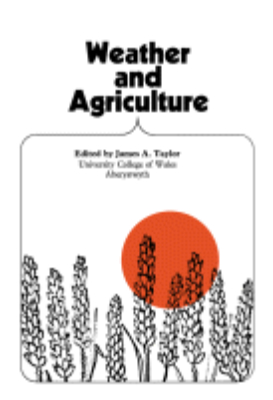
Weather and Agriculture
Weather and Agriculture presents the major principles involved in the integrated study of weather and agriculture. The book is divided into three sections. Part I discusses the aspects of environmental factors and their validity and measurement. Part II presents a selection of the weather hazards and their relation to agricultural practice. The last section focuses on productivity, the efficient maximization of available resources towards economic ends. Meteorologists, agriculturists, and pedologists will find the book invaluable.