E-Resources
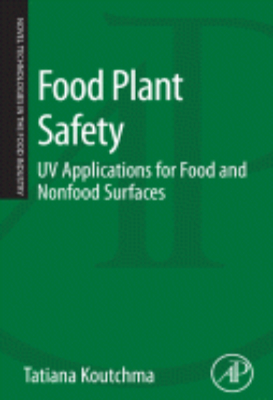
Food Plant Safety
"Food Plant Safety: UV Applications for Food and Non-Food Surfaces discusses the fundamental principles of ultraviolet (UV) light technology, and gives practical recommendations on UV processes and systems design for specific processing operations, as well as how microbial efficacy of UV light can improve the quality of existing product lines. Innovative research of ultraviolet light for food applications has been growing worldwide. With increased consumer demand for fresher, minimally processed but safe foods, comes the need for novel technologies to meet that demand. Ultraviolet technology has been taking its niche in food production as a non-chemical treatment to control and enhance safety of processing plants and storage facilities. This concise resource covers the fundamentals of this promising technology and its applications; it will benefit a broad audience of professionals in food engineering, processing, and product development, as well as graduate level students. Key Features. Focuses on plant processing operations in the food industry. Presents the benefits of UV light technology applications for air quality, and safety of non-food and food contact surfaces. Covers the cost benefits and energy and environmental advantages of using UV technologies"
Food Safety
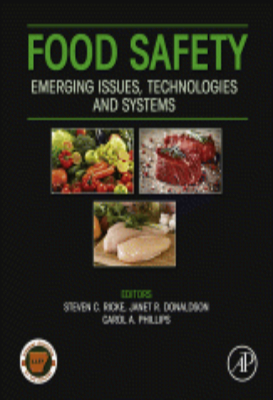
"Food Safety: Emerging Issues, Technologies and Systems offers a systems approach to learning how to understand and address some of the major complex issues that have emerged in the food industry. The book is broad in coverage and provides a foundation for a practical understanding in food safety initiatives and safety rules, how to deal with whole-chain traceability issues, handling complex computer systems and data, foodborne pathogen detection, production and processing compliance issues, safety education, and more. Recent scientific industry developments are written by experts in the field and explained in a manner to improve awareness, education and communication of these issues. Key Features. Examines effective control measures and molecular techniques for understanding specific pathogens. Presents GFSI implementation concepts and issues to aid in implementation. Demonstrates how operation processes can achieve a specific level of microbial reduction in food. Offers tools for validating microbial data collected during processing to reduce or eliminate microorganisms in foods"
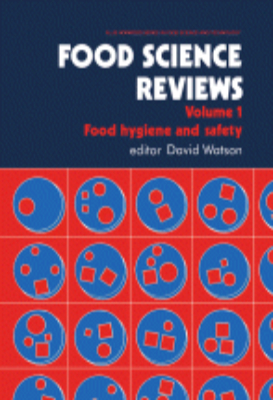
Food Science Reviews
Bridging the gap between journal articles and specialised books, Food Science Reviews provides expert coverage of key areas of food science. Drawing solely on contributions from leading scientists, the collated essays established themselves as a standard reference on the most interesting current work in the field. This topical first volume covers an area which is increasingly in the public and scientific eye. Expert contributions on all aspects of the microbiological and chemical safety of food provide a key review of food hygiene and safety.

Fowler’s Zoo and Wild Animal Medicine Current Therapy, Volume 7
With coverage of current issues and emerging trends,Fowler's Zoo and Wild Animal Medicine, Volume 7provides a comprehensive, all-new reference for the management of zoo and wildlife diseases. A Current Therapy format emphasizes the latest advances in the field, including nutrition, diagnosis, and treatment protocols. Cutting-edge coverage includes topics such as the "One Medicine" concept, laparoscopic surgery in elephants and rhinoceros, amphibian viral diseases, and advanced water quality evaluation for zoos. Editors R. Eric Miller and Murray E. Fowler promote a philosophy of animal conservation, bridging the gap between captive and free-ranging wild animal medicine with chapters contributed by more than 100 international experts.
Fowler’s Zoo and Wild Animal Medicine Volume 8
"Logically organized by taxonomic groups, this up-to-date text covers the diagnosis and treatment of all zoo animal species and free-ranging wildlife, including amphibians, reptiles, birds, mammals, and fish, unlikely to be seen by private practice veterinarians. Featuring full-color images, the consistent, user-friendly format supplies information on each animals biology, unique anatomy, special physiology, reproduction, restraint and handling, housing requirements, nutrition and feeding, surgery and anesthesia, diagnostics, therapeutics, and diseases. Global authorship includes multinational contributors who offer expert information on different species from around the world. ""This is a welcome update to an invaluable reference series; a must-have for any veterinary professional working largely in the zoo or wildlife field, and also recommended as a reference text for the library of any practice seeing unusual species on a regular basis, even if they already have an earlier volume.""Reviewed by: Charlotte Day on behalf of The Veterinary Record, Oct 14 Key Features. Global authorship includes internationally recognized authors who have contributed new chapters focusing on the latest research and clinical management of captive and free-ranging wild animals from around the world.. Zoological Information Management System chapter offers the latest update on this brand new system that contains a worldwide wealth of information.. General taxonomy-based format provides a comprehensive text for sharing information in zoo and wildlife medicine.. Concise tables provide quick reference to key points in the references.. NEW! All new authors have completely revised the content to provide fresh perspectives from leading experts in the field on the latest advances in zoo and wild animal medicine.. NEW! Color images vividly depict external clinical signs for more accurate recognition and diagnosis."

Freshwater Fish Distribution
This book clearly identifies nearly 170 families of fishes through the use of high-quality illustrations and includes an accurate account of selected members of that particular fish family, as well as a distribution map and accompanying commentary on classification, distribution, and diversity. Key Features Key Features* High-quality illustrations of representatives from each family* Distribution map provided for each family* Commentary for each family
From Plant Genomics to Plant Biotechnology
With the appearance of methods for the sequencing of genomes and less expensive next generation sequencing methods, we face rapid advancements of the -omics technologies and plant biology studies: reverse and forward genetics, functional genomics, transcriptomics, proteomics, metabolomics, the movement at distance of effectors and structural biology. From plant genomics to plant biotechnology reviews the recent advancements in the post-genomic era, discussing how different varieties respond to abiotic and biotic stresses, understanding the epigenetic control and epigenetic memory, the roles of non-coding RNAs, applicative uses of RNA silencing and RNA interference in plant physiology and in experimental transgenics and plants modified to specific aims. In the forthcoming years these advancements will support the production of plant varieties better suited to resist biotic and abiotic stresses, for food and non-food applications. This book covers these issues, showing how such technologies are influencing the plant field in sectors such as the selection of plant varieties and plant breeding, selection of optimum agronomic traits, stress-resistant varieties, improvement of plant fitness, improving crop yield, and non-food applications in the knowledge based bio-economy. Key Features Discusses a broad range of applications: the examples originate from a variety of sectors (including in field studies, breeding, RNA regulation, pharmaceuticals and biotech) and a variety of scientific areas (such as bioinformatics, -omics sciences, epigenetics, and the agro-industry) Provides a unique perspective on work normally performed 'behind closed doors'. As such, it presents an opportunity for those within the field to learn from each other, and for those on the 'outside' to see how different groups have approached key problems Highlights the criteria used to compare and assess different approaches to solving problems. Shows the thinking process, practical limitations and any other considerations, aiding in the understanding of a deeper approach

Functional Dairy Products
Dairy products constitute one of the most important types of functional food. Edited by two of the leading authorities in the field, and with a distinguished international team of contributors, this major collection reviews the health benefits of functional dairy products, their ingredients and key product development issues. After an introductory survey of the various types of functional dairy product, part one discusses current research on the health benefits of functional dairy products, with chapters on cancer, coronary heart disease, osteoporosis, food allergy, immune function and gastrointestinal health. Part two reviews key dairy ingredients, their functional benefits and uses, covering caseinophosphopeptides, oligosaccharides, lactic acid bacteria and conjugated linoleic acid. Part three covers product development issues ranging from enhancing the functionality of prebiotics and probiotics to safety evaluation, consumer, market and research trends in this important sector. Functional dairy productsis a standard work for food manufacturers developing new dairy products and for all those researching functional foods.
Functional Dairy Products: Volume 2
Dairy products have a prominent position in the development of functional foods. As understanding of the health benefits of dairy products increases and consumer awareness of these health benefits grows, demand for new and improved functional dairy products is likely to rise. Functional dairy products: Volume 2 reviews the latest developments in the field and their industrial applications.Part one outlines the health benefits of functional dairy products and their applications in areas such as weight management, child health and gut health. The second part of the book discusses various ingredients used in functional dairy products such as pro- and prebiotics, hypoallergenic hydrolysates and plant sterols and stanols. The final part of the book considers aspects of product development such as biomarkers and experimental models to investigate health benefits, genomics of probiotic microorganisms and functional dairy product regulation and safety.With its distinguished editor and collection of international authors, Functional dairy products: Volume 2, together with its companion volume, provides professionals and researchers within the field with an invaluable reference.
Fundamentals of Bacterial Plant Pathology
"Intended as a text for plant bacteriology courses and as a reference for plant pathologists in agricultural extension services and experimental stations, Fundamentals of Bacterial Plant Pathology presents current information on bacterial morphology, taxonomy, genetics, and ecology. Diagnosis, disease management, and the molecular basis of host-pathogen interactions are examined. The book is well illustrated, includes both subject and taxonomic indexes, and provides suggestions for the further reading. Key Features. Provides an overview on phytopathogenic prokaryotes and plant prokaryote diseases. Contains detailed descriptions of topics of current interest including: Molecular Genetics of Pathogenesis. Modern taxonomy and ecological behaviors of phytopathogenic prokaryotes. Biological control of plant prokaryote diseases. Presents full descriptions of eighteen selected diseases of economic interest"

Fundamentals of Plant Virology
"Fundamentals of Plant Virology is an introductory student text covering all of modern plant virology. The author, Dr. R.E.F. Matthews, has written this coursebook based on his classic and comprehensive Plant Virology, Third Edition. Four introductory chapters review properties of viruses and cells and techniques used in their study. Five chapters are devoted to current knowledge of all major plant viruses and related pathogens. Seven chapters describe biological properties such as transmission, host response, disease, ecology, control, classification, and evolution of plant viruses. A historical and future overview concludes the text. Fundamentals of Plant Virology is a carefully designed instructional format for a plant virology course. It is also an invaluable resource for students of plant pathology and plant molecular biology. Key Features. Summarizes knowledge on all aspects of plant virology. Condenses all essential material from Plant Virology 3/e. Compares basic properties of cells and viruses. Outlines principles of gene manipulation technology. Discusses serological techniques including monoclonal antibodies. Geared to student level course"
Fundamentals of Soil Ecology
This fully revised and expanded edition of Fundamentals of Soil Ecology continues its holistic approach to soil biology and ecosystem function. Students and ecosystem researchers will gain a greater understanding of the central roles that soils play in ecosystem development and function. The authors emphasize the increasing importance of soils as the organizing center for all terrestrial ecosystems and provide an overview of theory and practice of soil ecology, both from an ecosystem and evolutionary biology point of view. This volume contains updated and greatly expanded coverage of all belowground biota (roots, microbes and fauna) and methods to identify and determine its distribution and abundance. New chapters are provided on soil biodiversity and its relationship to ecosystem processes, suggested laboratory and field methods to measure biota and their activities in ecosystems..

Fundamentals of Soil Physics
This book is not, in any case, in total defiance of the Wise Old Man's admonition, for it is not an entirely new book. Rather, it is an outgrowth of a previous treatise, written a decade ago, entitled "Soil and Water: Physical Principles and Processes." Though that book was well enough received at the time, the passage of the years has inevitably made it necessary to either revise and update the same book, or to supplant it with a fresh approach in the form of a new book which might incorporate still-pertient aspects of its predecessor without necessarily being limited to the older book's format or point of view.