
E-Resources
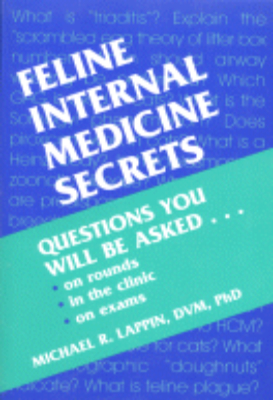
Feline Internal Medicine Secrets
This book covers the breadth of feline diagnoses and management in the textbook-in-question-and-answer format for the Secrets series. After years of being treated under the basic medical model of the canine, feline medicine has reached greater prominence in the past few years, and has become a hot topic in veterinary medicine. Michael Lappin is one of the major names in modern feline medicine and he has assembled a cast of contributors featuring many of the major feline authorities in veterinary medicine. Each chapter presents a brief overview, discusses the diagnotic plan and then focuses on the key concepts for each topic.
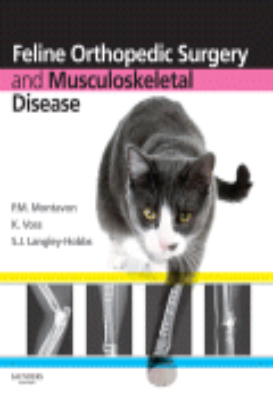
Feline Orthopedic Surgery and Musculoskeletal Disease
Feline Orthopedic Surgery and Musculoskeletal Disease is the first book dedicated specifically to treating cats with disorders in this specific area. The practice of feline orthopedic surgery and traumatology has developed to a great extent over the last ten years as cat ownership is increasing and this textbook discusses new veterinary diagnostic procedures and surgical techniques that have been developed that veterinarians, residents and students working in the field of internal medicine need to know about.
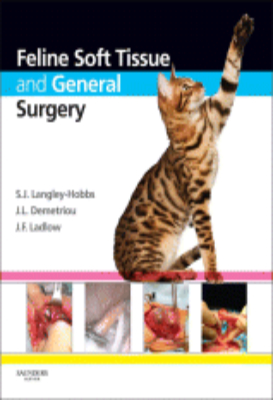
Feline Soft Tissue and General Surgery
While the practice of feline general and oncologic surgery has developed greatly in recent years, the option of referral for some cat owners is not always a viable one. The increasing requirement for the general veterinarian to be competent in performing feline surgery has not, however, been supported by a dedicated text on the subject. Feline General and Oncological Surgery assembles an international team of editors and contributors to present the first comprehensive resource devoted solely to all aspects of soft-tissue surgeries in the cat. Techniques are covered in a practical and detailed how to manner and range from the common to the more specialized, ensuring the widest possible appeal. The book divides into several sections, initially considering the general approach to the feline surgery patient and then proceeding to detailed coverage of surgery by anatomic location. Part 1 deals with the basics of feline anesthesia, analgesia, preoperative and postoperative care of the patient, surgical instrumentation and surgical principles for oncology cases. Part 2 covers surgical techniques of general and oncological feline diseases and injuries, which are explained as step-by-step methods with many specially prepared schematic illustrations specific to the cat. Emphasis is on presenting both classical methods and new techniques. Feline Soft Tissue and General Surgery is the perfect sister-text to Feline Orthopedic Surgery and Musculoskeletal Disease, also published by Elsevier. Together they comprise a comprehensive and complete literature giving practial coverage of all possible surgical procedures in the cat.

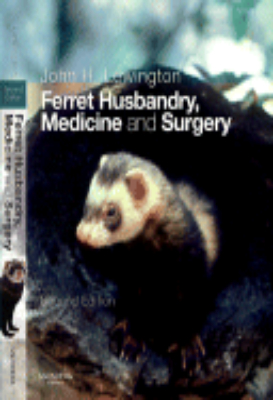
Ferret Husbandry, Medicine and Surgery
Ferret Husbandry, Medicine and Surgery is a must-have for the small animal practitioner and those interested in ferrets in general. It aims to inform on all aspects and conditions relating to the domestic ferret. Edited and authored by one of the eminent authorities on ferrets in the world, John Lewington, for this new edition is joined by contributions - including both new text and illustrations - from ferret experts based in 8 different countries, including the UK, US, Australia, Japan and Russia, thus ensuring the most current and complete information is available on this increasingly popular animal. Fully updated and with full colour throughout, this second edition now has 5 new chapters: gastroenteric/liver diseases; ferret-polecat domestication and genetics; ferret dentistry and pathology; ferret toxicosis; and ferret ultrasonography, covering new radiology and ultrasound techniques.
Ferrets, Rabbits, and Rodents: 2004
Addresses the common questions and concerns of the practicing veterinarian who works with small mammals. Serves as a useful reference for veterinary students, technicians, research scientists, pet shop owners, pet owners, and breeders. Because preventive medicine is crucial to small mammal medicine, coverage includes basic biology, husbandry, and routine care of the healthy animal. Also features chapters on disease management, surgery, and radiology.
Ferrets, Rabbits, and Rodents: 2012
A concise guide to the care of small mammals, Ferrets, Rabbits, and Rodents: Clinical Medicine and Surgery covers the conditions seen most often in veterinary practice. The book emphasizes preventive medicine along with topics including disease management, ophthalmology, dentistry, and zoonosis. More than 400 illustrations demonstrate key concepts related to radiographic interpretation, relevant anatomy, and diagnostic, surgical, and therapeutic techniques. Now in full color, this edition adds coverage of more surgical procedures and expands coverage of zoonotic disease. From editors Katherine Quesenberry and James W. Carpenter, along with a team of expert contributors, the "Pink Book" provides an authoritative, single source of information that is hard to find elsewhere.
Fibre-Rich and Wholegrain Foods
"Consumers are increasingly seeking foods that are rich in dietary fibre and wholegrains, but are often unwilling to compromise on sensory quality. Fibre-rich and wholegrain food reviews key research and best industry practice in the development of fibre-enriched and wholegrain products that efficiently meet customer requirements.Part one introduces the key issues surrounding the analysis, definition, regulation and health claims associated with dietary fibre and wholegrain foods. The links between wholegrain foods and health, the range of fibre dietary ingredients and a comparison of their technical functionality are discussed, as are consumption and consumer challenges of wholegrain foods. Part two goes on to explore dietary fibre sources, including wheat and non-wheat cereal dietary fibre ingredients, vegetable, fruit and potato fibres. Improving the quality of fibre-rich and wholegrain foods, including such cereal products as wholegrain bread, muffins, pasta and noodles, is the focus of part three. Fibre in extruded products is also investigated before part four reviews quality improvement of fibre-enriched dairy products, meat products, seafood, beverages and snack foods. Companion animal nutrition as affected by dietary fibre inclusion is discussed, before the book concludes with a consideration of soluble and insoluble fibre in infant nutrition.With its distinguished editors and international team of expert contributors, Fibre-rich and wholegrain foods provides a comprehensive guide to the field for researchers working in both the food industry and academia, as well as all those involved in the development, production and use of fibre-enriched and wholegrain foods. Key Features. Reviews key research and best industry practice in the development of fibre-enriched and wholegrain products. Considers analysis, definition, regulation and health claims associated with dietary fibre and wholegrain foods. Explores sources of dietary fibre including: wheat and non-wheat cereal, vegetable, fruit and potato fibres"
Fish and Fish Oil in Health and Disease Prevention
"Fish and Fish Oil in Health and Disease Prevention provides an authoritative review of the role of fish and fish oil intake in the promotion of human health. This up-to-date volume provides a complete examination of intake patterns as well as research evidence of intake in disease prevention and treatment. Readers will gain knowledge ranging from the current state of fish and fish oil intake, their health promoting effects and influences on individual response, how they influence development and health maintenance through the life cycle, and their role in disease prevention and treatment. This book is an invaluable resource for all researchers working to understand the relationship between fish and human health. It is a valuable reference for nutritionists, dietitians, and health care providers. Key Features. Imparts a valuable understanding of fish intake patterns around the world and the role of fish and fish oil in human health through the lifecycle. Offers an understanding of the role of fish and fish oil in disease risk reduction and treatment. Presents the current status of fish intake and recommended intake levels for human health. Focuses on research on unique fish and oil sources and potential problems with fish availability"

Fish and River Pollution
Fish and River Pollution deals with experimental and field research connected with the effects of pollution in fish, and the useful data gathered from these studies. After reviewing some experiments made on the effects of pollution on fish, the author discusses pollution by oxygen-reducing effluents such as sewage, milk washing, and other solutions that can be broken down by microorganisms, a process that uses up dissolved oxygen in the water. The experiments conducted by Shelford and Allee, which the author cites, studies the reactions of fish to different concentrations of atmospheric gases, particularly as fish detect low concentrations of oxygen more sensitively than man. The paper also discusses the time-effect relationship of a toxic substance to fish as immersion time, time needed for advancement, minimum time of exposure, and immersion time to fatality. The effect of thermal pollution such as that generated in thermal plants to produce electricity, though chemically toxic-free, can significantly change the temperature of the water where fish live. Such temperature change can affect water viscosity, rate of water oxygen absorption, development of sewage fungus, and changes in natural invertebrate fauna. This book can be appreciated by environmentalists, aquatic researchers, zoologists, and marine biologists.
Fish Aquaculture
Aquaculture has gained a momentum throughout the world during recent decades which is unparalleled in other branches of food production. This book describes methods currently used for the production of those warm water table fish which are of major importance. Included are experiments and procedures which will help to combat the growing food problem through new production methods for animal protein. The aim of the work presented here is to promote the continuous production of warm water table fish independently of climate or environment within the least necessary space and even in regions with unsuitable weather or topography.

Fish Immunology
Fish Immunology contains the proceedings of a symposium organized by the Fisheries Society of the British Isles, held in Plymouth, England, 11-13 July 1983. This volume contains 29 chapters and opens with a study on the prevention of disease outbreak or treatment of disease in fish farms with drugs or chemicals. Separate chapters follow on topics such as immune phenomena in Teleostei or Anura; phagocytosis in fish; the granulocytes of three elasmobranch species, namely Scyliorhinus canicula, Raja clavata and R. microcellata; and phagocytic cells in the dogfish (Scyliorhinus canicula l.); and levels of -precipitin in two groups of wild fish: a group believed to be suffering from Ulcerative Dermal Necrosis (UDN) and a healthy group showing no external evidence of disease. Subsequent chapters deal with sequential antigenic competition in teleosts challenged with the fish-furunculosis bacterium Aeromonas salmonicida; the occurrence of vaccine uptake at the skin surface of rainbow trout; and vaccination and development of immunological memory in carp.

Fish in Research
Fish in Research comprised of papers presented at a symposium entitled ""Fish in Research"" sponsored by the University of South Dakota in Vermillion. The purpose of the symposium was to ask those directly involved in research on fish, ""What unique information of biochemical and physiological processes can be gained by using fish as experimental animals"" The book presents the environment aspects of neoplasia in fishes; experimental fish neoplasia; and the comparative aspects of neoplasia in fish and other laboratory animals. The text also includes papers on the control of cholesterol synthesis in normal malignant tissue; the biochemical aspects of salt; and steroidogenesis in fish. Papers on the lipid catabolism in fish muscle; the contrasts between fish and warm blooded vertebrates in enzymes systems of intermediary metabolism; and quantitative inheritance and environmental response of rainbow trout are also considered. The book further tackles the blood groups in salmonid fishes; ontogeny of lactate dehydrogenase isozymes in trout; and amino acid and protein requirements of fish. The text also looks into the inorganic salt effects on growth; salt water adaption; and gill ATPase of pacific salmon. Zoologists and scientists involved in fisheries research will find the book invaluable.
Fish Nutrition: 1972
Fish Nutrition aims to present the state of knowledge of basic and applied nutritional requirements of fishes. Most of the information found in this book involves salmonids, their nutrition, and metabolism of nutrients. This is in view of the fact that more research has been done and completed with this fish. Although applied fish nutrition is a very broad field, this book focuses on some of its aspects. These include the classes of nutrients and requirements for several types of fishes. This book comprises of 11 chapters. The first few chapters deal with the general nutrient requirements of fishes. Then, other chapters discuss calorie and energy as well as micro- and macronutrient needs and requirements. The following chapters deal with the non-nutrient components of the diet, or those that influence the characteristics of food products including texture, odor, flavor, and color. Other topics covered are enzymes and systems of intermediary metabolism (Chapter 6); feed formulation and evaluation (Chapter 7); and salmonid husbandry techniques (Chapter 9). Nutritional fish diseases are also discussed in this book. Some of these diseases include thyroid tumor, gill disease, anemia, lipoid liver degeneration, and visceral granuloma. In Chapter 11, the relationship of nutrition and pathology is given emphasis. This chapter also tackles the diet and general fish husbandry. This topic is very important, because an adequate diet for fish husbandry is the foundation of fish farming.
Fish Nutrition: Third Edition 2003
This third edition of Fish Nutrition is a comprehensive treatise on nutrient requirements and metabolism in major species of fish used in aquaculture or scientific experiments. It covers nutrients required and used in cold water, warm water, fresh water, and marine species for growth and reproduction. It also highlights basic physiology and biochemistry of the nutrients and applications of these principles to scientific and practical diet formulations and to manufacturing techniques for major species used worldwide in aquaculture. Key Features *Nutrient requirements for dietary formulations for fish farming *Digestive physiology *Comparative nutritional requirements of different species *Fish as unique animals for certain metabolic pathways


Fishery Development
This book provides an overview of the whole process of fishery development and an appraisal for more efficiency in the industry. Topics include a broad overview of long-term changes in development of fisheries; the technical, social, political, organizational, and time requirements of long-term development programs; how to increase the long-term benefits to be derived from fisheries, and artisanal and market fishing, recreational fishing, and fish farming.
Flooding and Plant Growth
Flooding and Plant Growth covers the state of knowledge and opinion on the effects of flooding of soil with fresh or salt water on the metabolism and growth of herbaceous and woody plants. The book discusses the extent, causes, and impacts of flooding; the effects of flooding on soils and on the growth and metabolism of herbaceous plants; and the responses of woody plants to flooding. The text also describes the effect of flooding on water, carbohydrate, and mineral relations, as well as the effects of flooding on hormone relations and on plant disease. The adaptations to flooding with fresh water and the adaptations of plants to flooding with salt water are also encompassed. Agronomists, biochemists, plant ecologists, engineers, foresters, horticulturists, plant anatomists, meteorologists, geneticists, plant breeders, plant physiologists, and landscape architects will find the book invaluable.


Flow Cytogenetics-key feature
This is the first book to be devoted entirely to the application and development of flow techniques in cytogenetics. It provides comprehensive information on the use of flow cytometry and sorting for chromosome classification and purification. Cytogenetics and molecular biologists will find this book an invaluable reference source.
Fluid, Electrolyte, and Acid-Base Disorders in Small Animal Practice: 2012
"The leading reference for the diagnosis and management of fluid, electrolyte, and acid-base imbalances in small animals, Fluid, Electrolyte, and Acid-Base Disorders in Small Animal Practice, 4th Edition provides cutting-edge, evidence-based guidelines to enhance your care of dogs and cats. Information is easy to find and easy to use, with comprehensive coverage including fluid and electrolyte physiology and pathophysiology and their clinical applications, as well as the newest advances in fluid therapy and a discussion of a new class of drugs called vaptans. Lead author Stephen DiBartola is a well-known speaker and the ""go-to"" expert in this field, and his team of contributors represents the most authoritative and respected clinicians and academicians in veterinary medicine. Key Features. Over 30 expert contributors represent the ""cream of the crop"" in small animal medicine, ensuring that this edition provides the most authoritative and evidence-based guidelines.. Scientific, evidence-based insights and advances integrate basic physiological principles into practice, covering patient evaluation, differential diagnosis, normal and abnormal clinical features and laboratory test results, approaches to therapy, technical aspects of therapy, patient monitoring, assessing risk, and prediction of outcomes for each disorder.. Hundreds of tables, algorithms, and schematic drawings demonstrate the best approaches to diagnosis and treatment, highlighting the most important points in an easy-access format.. Drug and dosage recommendations are included with treatment approaches in the Electrolyte Disorders section.. Clear formulas in the Fluid Therapy section make it easier to determine the state of dehydration, fluid choice, and administration rate and volume in both healthy and diseased patients.. Updated chapters cover the latest advances in fluid therapy in patient management, helping you understand and manage a wide range of potentially life-threatening metabolic disturbances.. Expanded Disorders of Sodium and Water chapter includes information on a new class of drugs called vaptans, vasopressin receptor antagonists that may soon improve the ability to manage patients with chronic hyponatremia.. Hundreds of new references cover the most up-to-date advances in fluid therapy, including renal failure and shock syndromes."
Fluid, Electrolyte, and Acid-Base Disorders in Small Animal Practice: Third Edition 2006
"This comprehensive resource brings together cutting edge information about fluid, electrolyte, and acid-base physiology and fluid therapy as they apply to small animal practice. It also offers complete coverage of relevant physiology and pathophysiology, as well as important information for interpreting and analyzing biochemical test results. Key Features. Provides the most up-to-date information for understanding and managing a wide range of metabolic disorders.. Offers extensive coverage of patient evaluation, possible causes, normal and abnormal clinical and laboratory features, approaches to therapy, technical aspects of therapy, patient monitoring, assessing risk, and prediction of outcomes for each disorder.. Contributions from 25 experts in the field ensure the most current, authoritative coverage.. Comprehensive references offer opportunities for further research.. Helpful tables, algorithms, and illustrations highlight important concepts.. A section on Special Therapy, including blood transfusions and blood substitutes, critical nutrition, and dialysis.. 3 new chapters:. Strong Ion Difference Approach to Acid-Base Balance. Monitoring Fluid Therapy and Complication of Fluid Therapy. Enteral Nutrition"
