
E-Resources

ICAR technologies Biofertilizers
Soil is a dynamic living entity wherein several self regulatory
mechanisms are operated through the constituent living organisms.
Microorganisms play a major role in keeping soils live through its
ecosystem services like solubilization of minerals, recycling of organic
matter, bioremediation and soil formation. Post green revolution,
self sufficiency in food grain production was achieved through
the use of high yielding varieties responsive to chemical fertilizers.
However, indiscriminate use of chemical fertilizers has resulted
in deterioration of soil health leading to shift in emphasis towards
sustainable agriculture. Use of biofertilizers for nutrient management
is an integral component of sustainable agriculture.
Biofertilizers contain different plant associated microorganisms
that enhance plant growth and improve yield and quality of the
produce through supply of adequate nutrients. Nitrogen fixers,
P-solubilizers and mobilizers are the traditionally known biofertilizers.
With the advancement of science, new groups of biofertilizers kept on
adding to the list, a few to name are K-solubilizers, Zn-solubilizers
and consortia supplying different nutrients. In addition to supply of
nutrients to crop plants, many of these microbes help the plants to
tolerate abiotic stresses.
Indian Council of Agricultural Research recognized the
importance of Biofertilizers and started AICRP on Biological Nitrogen
fixation in 1976, which was renamed as All India Network Project on
Soil Biodiversity-Biofertilizers in 2008. These coordinated projects
and the constituent institutes of ICAR have developed a large number
of biofertilizers for different field and horticultural crops. In 2014, the
Govt. of India initiated National Mission on Sustainable Agriculture
(NMSA) where use of biofertilizers is being promoted to improve soil
health. Though a lot of efforts have been made on the development and popularization of biofertilizers, the usage of biofertilizers is not
at the expected level. The distribution of production and usage across
the country is also skewed with south zone dominating both in terms
of production and consumption of biofertilizers. Popularization of
biofertilizers developed by ICAR is the immediate concern.
This compendium entitled ?ICAR Technologies: Biofertilizers
for Sustainable Crop Production? is a compilation of validated
biofertilizers developed by constituent ICAR institutes over the
decades. I am hopeful that this publication would be useful for
researchers, scientists, students and other stakeholders interested in
this area. It would also help to popularize the biofertilizer technologies
developed by ICAR.

Icar Technologies Biopesticides FOR ECO-FRIENDLY PEST MANAGEMENT
Indiscriminate use of chemical fertilizers and pesticides post
green revolution taught us a tough lesson that sustainable utilization of
the resources is the way forward for prolonged growth in agricultural
production sans deterioration of soil health. Just as biofertilizers are
emerging as green alternative to chemical fertilizers, biopesticides
have a huge role to play in sustainable management of crop pests
and pathogens. In contrast to chemical pesticides, application of
ecofriendly biopesticides does not lead to development of any
resistance in pests and pathogens. Still this sustainable alternative is
struggling to find its place in the market over its chemical counterpart
owing to technological challenges and acceptance among the farming
community.
National Policy for Farmers (NPF), 2007, which aims to improve
economic viability of farming and increase net income of farmers,
strongly recommends the promotion of biopesticides. In spite of these
efforts the biopesticides represent only 4.2% of the overall pesticide
market in India compared to 40% in USA and 20% each in Europe
and Oceanic countries.
Indian Council of Agricultural Research, recognizing the
importance of biopesticides started All India Coordinated Research
Project (AICRP) on Biological control of Crop Pests and Weeds
way back in 1977. Since the inception of this project different
ICAR institutes accelerated the works on biocontrol and developed
biopesticides against a number of crop pests and diseases. At present
more than 970 biopesticide products have been registered with
Central Insecticide Board and Registration Committee (CIB & RC)
which is a governing body for insecticide registration in India. Most
biopesticide producing companies are dependent on either a single
strain or a handful of microbes for commercial production. Most ofthe times, the products developed using these strains have limited
application and their activity range is narrow. To overcome this issue,
there should be many bioagents available that are active against a
wide range of pests and pathogens. Once there is availability of many
bioagents to select upon, the challenges faced by biopesticides in the
market can be handled well.
This compendium entitled ?ICAR Technologies: Biopesticides
for Eco-friendly Pest Management? is a compilation of microbial
formulations developed by ICAR against crop pests and pathogens
that are at various stages of registration and commercialization. It can
be a useful source of information for students, researchers, scientists,
entrepreneurs and most importantly farming community and policy
makers.



Immune Biology of Allogeneic Hematopoietic Stem Cell Transplantation
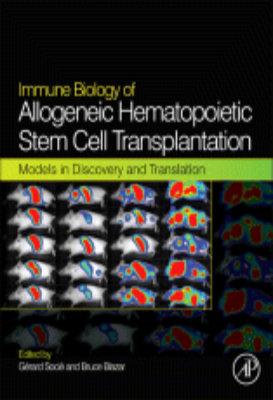
"Immune Biology of Allogeneic Hematopoietic Stem Cell Transplantation provides clinical and scientific researchers with a deep understanding of the current research in this field and the implications for translational practice. By providing an overview of the immune biology of HSCT, an explanation of immune rejection, and detail on antigens and their role in HSCT success, this book embraces biologists and clinicians who need a broad view of the deeply complex processes involved. It then moves on to discuss the immunobiology mechanisms that influence graft-versus-host disease (GVHD), graft-versus-leukemia (GVL) effect, and transplantation success. Using illustrative figures, highlighting key issues, describing recent successes and discussing unanswered questions, this book sums up the current state of HSCT to enhance the prospects for the future. Allogeneic HSCT is a medical procedure in which a patient receives blood-forming stem cells from a genetically similar but not identical donor. This procedure is commonly performed for people with diseases of the blood, bone marrow, or certain cancers, but it remains risky with many possible complications. As such, experimental practice is reserved for preclinical animal models including the mouse and dog. These animal models have been essential in developing transplant protocols, including preclinical testing of conditioning regimens, treatment of GVHD, and understanding the pathology of GVHD as well as the immunological mechanisms of GVHD and GVL effect. However, recent research has revealed significant species differences between humans and animal models that must be considered when relating animal model studies to clinical allogeneic HSCT scenarios. Key Features. Brings together perspectives leading laboratories and clinical research groups to highlight advances from bench to the bedside. Guides readers through the caveats that must be considered when drawing conclusions from studies with animal models before correlating to clinical allogeneic HSCT scenarios. Categorizes the published advances in various aspects of immune biology of allegeneic HSCT to illustrate opportunities for clinical applications"
Immunogenetics
Immunogenetics is a 12-chapter book that begins with the elucidation of the major histocompatibility complex genes and their role in autoimmune and infectious diseases. Subsequent chapters explore the human major histocompatibility complex, including implications of their complement genes for linkage disequilibrium and disease associations. This book also describes the genetics of human immunoglobulins; T-cell clones; genes of the major histocompatibility complex of the mouse; and the generation, characterization, and use of monoclonal antibodies of murine and human origin. Specific diseases are also discussed; these include spondoarthritides, rheumatoid arthritis, systemic lupus erythematosus, multiple sclerosis, and autoimmune thyroid disease. This book will be of beneficial value to specialists in infectious diseases, endocrinology, connective tissue diseases, and neurology, as well as to medical scientists in immunology and molecular biology.
Improving Farmed Fish Quality and Safety
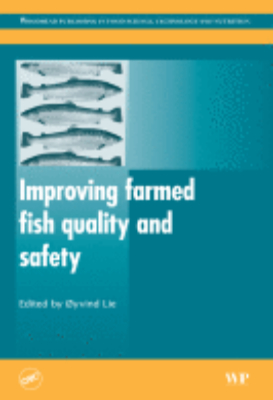
"Global aquaculture production has grown rapidly over the last 50 years. It is generally accepted that there is limited potential to increase traditional fisheries since most fish stocks are well or fully exploited. Consequently increased aquaculture production is required in order to maintain global per capita fish consumption at the present level. Fish farming enables greater control of product quality and safety, and presents the possibility of tailoring products according to consumer demands. This important collection reviews safety and quality issues in farmed fish and presents methods to improve product characteristics. The first part of the book focuses on chemical contaminants, chemical use in aquaculture and farmed fish safety. After an opening chapter discussing the risks and benefits of consumption of farmed fish, subsequent contributions consider environmental contaminants, pesticides, drug use and antibiotic resistance in aquaculture. Part two addresses important quality issues, such as selective breeding to improve flesh quality, the effects of dietary factors including alternative lipids and proteins sources on eating quality, microbial safety of farmed products, parasites, flesh colouration and off-flavours. Welfare issues and the ethical quality of farmed products are also covered. The final part discusses ways of managing of product quality, with chapters on HACCP, monitoring and surveillance, authenticity and product labelling. With its distinguished editor and international team of contributors, Improving farmed fish quality and safety is a standard reference for aquaculture industry professionals and academics in the field. Key Features. Reviews safety and quality issues in farmed fish and presents methods to improve product characteristics. Discusses contaminants, persistent organic pollutants and veterinary drug residues and methods for their reduction and control. Addresses important quality issues, genetic control of flesh characteristics and the effects of feed on product nutritional and sensory quality"
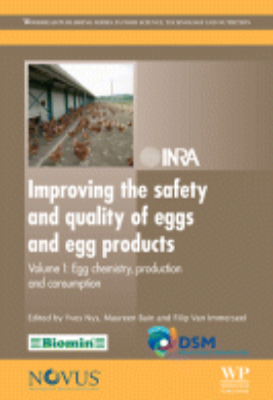
Improving the Safety and Quality of Eggs and Egg Products: 2011 Egg Chemistry, Production and Consumption
Eggs are economical and of high nutritional value, yet can also be a source of foodborne disease. Understanding of the factors influencing egg quality has increased in recent years and new technologies to assure egg safety have been developed. Improving the safety and quality of eggs and egg products reviews recent research in these areas.Volume 1 focuses on egg chemistry, production and consumption. Part one sets the scene with information on egg production and consumption in certain countries. Part two then provides essential information on egg formation and chemistry. Factors that impact egg quality are the focus of part three. Chapters cover the role of poultry breeding, hen nutrition and laying environment, among other significant topics. Part four addresses organic and free range egg production, the impact of egg production on the environment and non-poultry eggs. A chapter on processed egg products completes the volume.With its distinguished editors and international team of contributors, Volume 1 of Improving the safety and quality of eggs and egg products is an essential reference for managers in the egg industry, professionals in the food industry using eggs as ingredients and all those with a research interest in the subject.
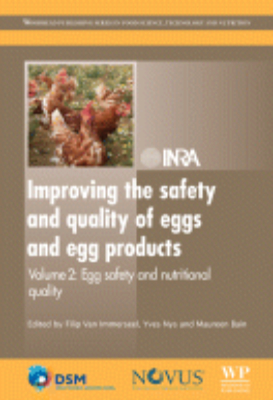
Improving the Safety and Quality of Eggs and Egg Products: 2011 Egg Safety and Nutritional Quality
Eggs are economical and of high nutritional value, yet can also be a source of foodborne disease. Understanding of the factors influencing egg quality has increased in recent years and new technologies to assure egg safety have been developed. Improving the safety and quality of eggs and egg products reviews recent research in these areas Volume 2 focuses on egg safety and nutritional quality. Part one provides an overview of egg contaminants, covering both microbial pathogens and chemical residues. Salmonella control in laying hens is the focus of part two. Chapters cover essential topics such as monitoring and control procedures in laying flocks and egg decontamination methods. Finally, part three looks at the role of eggs in nutrition and other health applications. Chapters cover dietary cholesterol, egg allergy, egg enrichment and bioactive fractions of eggs, among other topics. With its distinguished editors and international team of contributors, Volume 2 of Improving the safety and quality of eggs and egg products is an essential reference for managers in the egg industry, professionals in the food industry using eggs as ingredients and all those with a research interest in the subject.
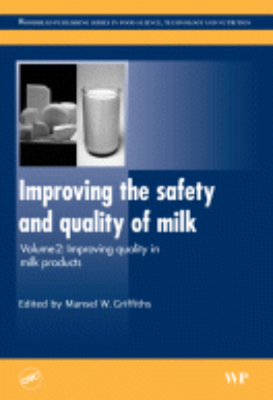
Improving the Safety and Quality of Milk: 2010 Improving Quality in Milk Products
Consumers demand quality milk with a reasonable shelf-life, a requirement that can be met more successfully by the milk industry through use of improved processes and technologies. Guaranteeing the production of safe milk also remains of paramount importance. Improving the safety and quality of milk provides a comprehensive and timely reference to best practice and research advances in these areas. Volume 1 focuses on milk production and processing. Volume 2 covers the sensory and nutritional quality of cows milk and addresses quality improvement of a range of other milk-based products. The health aspects of milk, its role in the diet and milk-based functional foods are the focus of the opening section of Volume 2. Part two reviews essential aspects of milk quality, including milk microbial spoilage and chemical deterioration, sensory evaluation, factors affecting milk vitamin and mineral content and the impact of packaging on quality. Chapters in part three look at improving particular products, such as organic milk, goat milk and sheep milk. The impact of milk on the quality of yoghurt and cheese is also covered. With its distinguished editor and international team of contributors, volume 2 of Improving the safety and quality of milk is an essential reference for researchers and those in industry responsible for milk safety and quality.
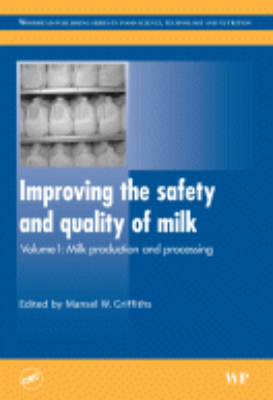
Improving the Safety and Quality of Milk: 2010 Milk Production and Processing
Consumers demand quality milk with a reasonable shelf-life, a requirement that can be met more successfully by the milk industry through use of improved processes and technologies. Guaranteeing the production of safe milk also remains of paramount importance. Improving the safety and quality of milk provides a comprehensive and timely reference to best practice and research advances in these areas. Volume 1 focuses on milk production and processing. Volume 2 covers the sensory and nutritional quality of cows milk and addresses quality improvement of a range of other milk-based products.The opening section of Volume 1: Milk production and processing introduces milk biochemistry and raw milk microbiology. Part two then reviews major milk contaminants, such as bacterial pathogens, pesticides and veterinary residues. The significance of milk production on the farm for product quality and safety is the focus of Part three. Chapters cover the effects of cows diet and mastitis, among other topics. Part four then reviews the state-of-the-art in milk processing. Improving the quality of pasteurised milk and UHT milk and novel non-thermal processing methods are among the subjects treated.With its distinguished editor and international team of contributors, volume 1 of Improving the safety and quality of milk is an essential reference for researchers and those in industry responsible for milk safety and quality.
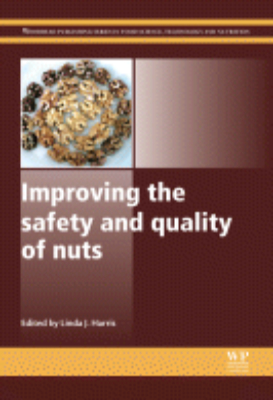
Improving the Safety and Quality of Nuts
"As tree nuts and peanuts become increasingly recognised for their health-promoting properties, the provision of safe, high quality nuts is a growing concern. Improving the safety and quality of nuts reviews key aspects of nut safety and quality management.Part one explores production and processing practices and their influence on nut contaminants. Chapters discuss agricultural practices to reduce microbial contamination of nuts, pest control in postharvest nuts, and the impact of nut postharvest handling, de-shelling, drying and storage on quality. Further chapters review the validation of processes for reducing the microbial load on nuts and integrating Hazard Analysis Critical Control Point (HACCP) and Statistical Process Control (SPC) for safer nut processing. Chapters in part two focus on improving nut quality and safety and highlight oxidative rancidity in nuts, the impact of roasting on nut quality, and advances in automated nut sorting. Final chapters explore the safety and quality of a variety of nuts including almonds, macadamia nuts, pecans, peanuts, pistachios and walnuts.Improving the safety and quality of nuts is a comprehensive resource for food safety, product development and QA professionals using nuts in foods, those involved in nut growing, nut handling and nut processing, and researchers in food science and horticulture departments interested in the area. Key Features. Reviews key aspects of nut safety and quality management and addresses the influences of production and processing practices on nut safety. Analyses particular nut contaminants, safety management in nut processing and significant nut quality issues, such as oxidative rancidity. Places focus on quality and safety in the production and processing of selected types of nuts"

Indian Agriculture after Independence
Agriculture is the foundation of the civilization, culture and heritage of
India. Agriculture in India is a complex mosaic of distinct agro-ecosystems,
differentiated by climatic, soil, vegetation and other natural features. About
half of the Indians derive their livelihood from agriculture and allied activities.
It is one of the oldest systems of the world characterized by its diversity
and heterogeneity, unorganized and stressed on account of natural and
anthropogenic vagaries from ?seed to market?. Historically, stressed natural
resources due to unfavourable weather, monsoon and natural calamities
resulted in crop failures leading to food shortage that made serious impacts
on the civilization. Post-Independence, the Indian agriculture transformed
from a food-scarce to food-exporting country primarily due to science led
innovations that caused multifold increase in the agricultural production from
135 million tons in 1950/51 to over 1300 million tons in 2021/22 in spite of
increasing abiotic and biotic stresses and depleting alongwith deteriorating
natural resources.
The book ?Indian Agriculture after Independence? portrays the uniqueness,
diversity, vastness and history; and captures the aspirations of Indian
agriculture to develop a road-map for agri-food system matching with the 4th
Industrial Revolution and the global commitments on food security, nutrition
and sustainability. The first chapter provides an overview of Indian agriculture
with its achievements and aspirations. The following three chapters detail
out the crop and animal husbandry and natural resource management in
the pre-independent India starting from the Vedic to British period. The
subsequent chapters present the achievements of Indian agriculture after
independence in the areas of field crops, horticulture, livestock and poultry,
fisheries and aquaculture, crop and animal health, mechanization and postharvest processing, natural resources management, agricultural education
and extension, as well as policy, investment, collaboration and organizational
leadership.The book is an outcome of a sincere exercise by about 60 leading scientists and
science-leaders of ICAR, from a range of disciplines. In the course of
preparing the book, the authors and editors have received help and support
from different individuals. We are extremely grateful to each one of them. Our
sincere gratitude to the distinguished reviewers namely Dr. RB Singh, Dr. SP
Ghosh, Dr. JC Katyal, Dr. Mruthyunjaya, Dr. MP Yadav, Dr. SL Mehta, Dr. P
Das, Dr. VM Mayande and Dr. AG Ponnaiah for their constructive suggestions
and guidance. The editors take this opportunity to express their gratitude to all the authors for developing the chapters in a comprehensive and time-bound manner.
We sincerely thank Hon?ble Minister of Agriculture and Farmers? Welfare, and Hon?ble
Ministers of State of Agriculture and Farmers? Welfare, Govt. of India and Secretary,
DARE & DG, ICAR for their guidance and support in bringing out this publication. We are
thankful to the ICAR-Directorate of Knowledge Management in Agriculture, New Delhi
for its support in formating, developing the cover page and printing of the book.
We hope that the publication would be useful to the students, researchers, teachers, policy
makers, planners, administrators and the farmers.
Indian Farming
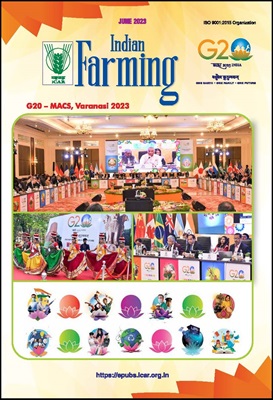
This magazine is for people interested-in-farming. The aim is to present scientific information in a popular style to the progressive farmers and people interested in application of science to day-to-day problems to Indian farming. It has articles, book reviews, photo features, interviews, success stories and an editorial page. Two special issues are also brought every year. One in October on World Food Day and another on any special occasion; accent issues are also brought out on subject of topical issues. It is most authoritative and popular farming magazine in India published since 1940.


Indian Farming January 2022
For the second successive year, Covid-19 pandemic is playing havoc for the world,
India in particular. Indian agriculture has progressed tremendously on every front
despite the pandemic. Thanks to the government policies, initiatives and untiring efforts
of our scientists, farmers and other stakeholders. Share of gross value added by agriculture
was estimated at ` 19.48 lakh crore in 2020, which is 17.8% compared to other sectors. In
India, total food grain production was recorded at 296.65 million tonnes in 2020 which is
11.44 million tonnes more compared with 285.11 million tonnes in 2019. For the year 2022,
the government has set a target for farmers to increase food grain production by 2% i.e.
to 307.31 million tonnes. In 2021, production was recorded at 303.34 million against a
target of 301 million tonnes.
India has the highest livestock population of about 535.78 million, which is around 31%
of the world livestock population. Milk production in the country was 198 MT in 2020.
India is the second highest producer of rice, wheat, sugarcane, cotton, groundnut, and
fruits and vegetables in the world. The Indian food industry is assured for huge growth
due to its enormous potential for value addition, specially within the food processing
industry. Indian food and grocery market is sixth largest market in the world, with retail
contributing 70% of sales. The Indian food processing industry has grabbed 32% of the
country?s total food market. In India, the processed food market is expected to grow to
` 3,41,352.5 crore by 2025 as compared to ` 1,931,288.7 crore in 2020. The organic food
segment in India will grow at a CAGR of 10% between 2015?25 and is estimated to reach
` 75,000 crore by 2025 as against ` 2,700 crore in 2015. In 2019, Coca Cola launched ?Rani
Float? fruit juices.
Two diagnostic kits developed by ICAR-IVRI and the Japanese Encephalitis IgM ELISA
were launched in 2019. Investment of ` 8,500 crore has been declared for ethanol production
in India. In 2021, APEDA signed an MoU with ICAR-CCRI, Nagpur, for increasing export
of citrus and its value-added products. In 2021, the Prime Minister launched 35 crop
varieties with special traits such as climate resilience and higher nutrient content. The
government has initiated Digital Agriculture Mission for 2021?25 for agriculture projects
based on new technologies such as artificial intelligence, block chain, remote sensing and
GIS technology, drones, robots and others. The Krishi UDAN 2.0 scheme proposes
assistance and incentive for movement of agri-produce by air transport. India looks forward
to achieve the ambitious goal of doubling farmer?s income by 2022.



Indian Journal of Agroforestry
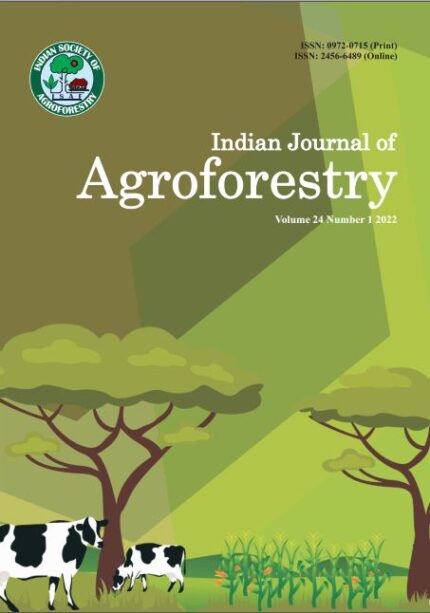
Focus and Scope The Indian Journal of Animal Production and Management publishes original research and review papers in all applied aspects of animal production management. Peer Review Process Double-blind reviewing procedure is followed for each paper. Publication Frequency The journal is published quarterly (4 issues per year). Ethics Policy Manuscripts submitted to the journal are evaluated on the basis of their scientific content. Measures are adopted to uphold the standards of publication ethics and to avoid malpractices. We ensure that the papers submitted and their work is original and unpublished, and is not submitted for publication elsewhere. In addition, authors certify that their research paper is their own original work, that is neither copied or plagiarized, partly or whole, from other works, and that the works of others are appropriately cited or quoted. Open Access Policy This is an open access journal which means that all content is freely available without charge to the user or his/her institution. Users are allowed to read, download, copy, distribute, print, search, or link to the full texts of the articles, or use them for any other lawful purpose, without asking prior permission from the publisher or the author. This is in accordance with the BOAI definition of open access. Licence Attribution-NonCommercial 4.0 International (CC BY-NC 4.0) Copyright Notice Copyright lies with the publisher. Privacy Statement The names and email addresses entered in this journal site will be used exclusively for the stated purposes of this journal and will not be made available for any other purpose or to any other party. Archiving All published journal content shall be automatically preserved in the PKP Preservation Network (PKP|PN). Sponsors Indian Society of Animal Production and Management Journal History The journal was started in the year 1986 by the Indian Society of Animal Production and Management with aim to publish original research work in the area of livestock production management. The first issue was published in the year 1986 by Department of Livestock Production and Management, Haryana Agricultural University, Hisar, Haryana. The founder editor of the Journal was Dr. N. S. R. Sastry.
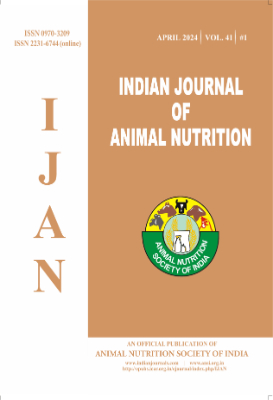
Indian Journal of Animal Nutrition
Focus and Scope The Indian Journal of Animal Nutrition (IJAN) publishes original papers on research in the fields of animal nutrition, feed technology, feed evaluation and conservation, physiological and biochemical aspects including microbiology, biotechnology, feed and fodders and other relevant areas related to livestock feeding in developing and tropical regions. Papers describing research on given areas for ruminants and non-ruminants are welcome. The Journal is a forum for presenting peer reviewed articles on basic and applied research. Submissions addressing the new frontiers of the subject including emerging areas of nutritional genomics, modelling and interface topics such as soil plant animal and ecosystem interrelationships are given priority. Reviews on specialized topics are also included. The IJAN is published quarterly since its inception in 1983 under the aegis of Animal Nutrition Society of India (ANSI) having about twelve hundred life members around the world. ANSI has instituted two awards to be given to two selected papers published in the Journal during the biennial conferences. Peer Review Process All the manuscripts are submitted to chief editor and thereafter sent for evaluation/comments/recommendations by two referees. The papers are processed as per the recommendations of the referee and editorial board. The papers are rejected if not found suitable for publication or out of scope of Journal. Publication Frequency The journal is published quarterly. Open Access Policy This journal provides immediate open access to its content on the principle that making research freely available to the public supports a greater global exchange of knowledge. Sponsors 1984 Indian Council of Agricultural Research Journal History IJAN is published quarterly since its inception in 1983 under the aegis of Animal Nutrition Society of India (ANSI), having more than one thousand life members around the world.

Indian Journal of Animal Production and Management
Focus and Scope The Indian Journal of Animal Production and Management publishes original research and review papers in all applied aspects of animal production management. Peer Review Process Double-blind reviewing procedure is followed for each paper. Publication Frequency The journal is published quarterly (4 issues per year). Ethics Policy Manuscripts submitted to the journal are evaluated on the basis of their scientific content. Measures are adopted to uphold the standards of publication ethics and to avoid malpractices. We ensure that the papers submitted and their work is original and unpublished, and is not submitted for publication elsewhere. In addition, authors certify that their research paper is their own original work, that is neither copied or plagiarized, partly or whole, from other works, and that the works of others are appropriately cited or quoted. Open Access Policy This is an open access journal which means that all content is freely available without charge to the user or his/her institution. Users are allowed to read, download, copy, distribute, print, search, or link to the full texts of the articles, or use them for any other lawful purpose, without asking prior permission from the publisher or the author. This is in accordance with the BOAI definition of open access. Licence Attribution-NonCommercial 4.0 International (CC BY-NC 4.0) Copyright Notice Copyright lies with the publisher. Privacy Statement The names and email addresses entered in this journal site will be used exclusively for the stated purposes of this journal and will not be made available for any other purpose or to any other party. Archiving All published journal content shall be automatically preserved in the PKP Preservation Network (PKP|PN). Sponsors Indian Society of Animal Production and Management Journal History The journal was started in the year 1986 by the Indian Society of Animal Production and Management with aim to publish original research work in the area of livestock production management. The first issue was published in the year 1986 by Department of Livestock Production and Management, Haryana Agricultural University, Hisar, Haryana. The founder editor of the Journal was Dr. N. S. R. Sastry.
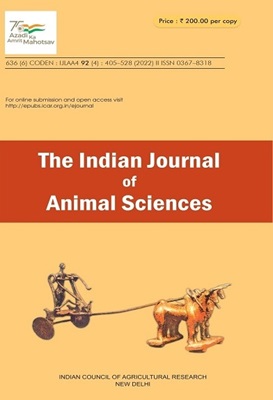
Indian Journal of Animal Sciences
This journal caters to a wide clientele comprising veterinarians, researchers and students. Articles are included on animal breeding and genetics, immunology, biotechnology, diseases, medicine and pharmacology, anatomy and histology, surgery, pathology, physiology, nutrition, milk, meat and other animal products, housing and fisheries from India and internationally.