• Home
  • E-Resources
  • About us
  • Blog
  • Contact us
  • Login
    • Forgot Password
Menu
Click to enlarge
Home ebooks Wear of Orthopaedic Implants and Artificial Joints

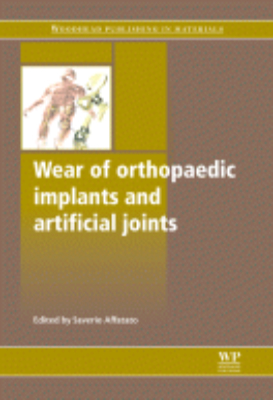
Wear of Orthopaedic Implants and Artificial Joints

“Although hip, knee and other orthopaedic implants are well-established prostheses, much remains to be understood about how these implants wear in use. This important book summarises the wealth of recent research in this area and its implications for implant and joint design. After an introductory overview, the book reviews the causes and prevention of implant wear. Part one discusses fundamental issues such as tissue response to wear, the anatomy and biomechanics of hips and knees as well as the materials and design issues they raise for hip, knee and other types of orthopaedic implant. Part two considers wear phenomena in a range of materials, including ultra-high molecular weight (UHMWPE), metal and ceramic joints. It also covers surgical and other factors influencing wear as well as ways of detecting, analysing and predicting implant wear and failure. With its distinguished editor and international team of contributors, Wear of orthopaedic implants and artificial joints is a standard reference for implant manufacturers, surgeons and those researching this important area. Key Features. Summarises the wealth of recent research into the wear of orthopaedic implants and artificial joints and discusses the implications for implant and joint design. Reviews the causes and prevention of implant wear, tissue response to wear, the anatomy and biomechanics of hips and knees and the materials and design issues they raise for orthopaedic implants. Considers wear phenomena in a range of materials, including ultra-high molecular weight (UHMWPE), metal and ceramic joints”

Publication Language

English

Publication Access Type

Premium

Publication Author

*

Publisher

Elsevier

Publication Year

*

Publication Type

ebooks

ISBN/ISSN

*

Publication Category

Plant Science

Kindly Login to ICAR Digital Library Portal.

SKU: Elsevier-9780857091284 Category: ebooks Tag: Health Science
Close
Publication Types
  • ebooks 1206
  • eJournals 828
  • eMagazines 2

Related products

A History of Weed Science in the United States

ebooks
"It is important that scientists think about and know their history - where they came from, what they have accomplished, and how these may affect the future. Weed scientists, similar to scientists in many technological disciplines, have not sought historical reflection. The technological world asks for results and for progress. Achievement is important not, in general, the road that leads to achievement. What was new yesterday is routine today, and what is described as revolutionary today may be considered antiquated tomorrow. Weed science has been strongly influenced by technology developed by supporting industries, subsequently employed in research and, ultimately, used by farmers and crop growers. The science has focused on results and progress. Scientists have been--and the majority remain--problem solvers whose solutions have evolved as rapidly as have the new weed problems needing solutions. In a more formal sense, weed scientists have been adherents of the instrumental ideology of modern science. That is an analysis of their work, and their orientation reveals the strong emphasis on practical, useful knowledge; on know how. The opposite, and frequently complementary orientation, that has been missing from weed science is an emphasis on contemplative knowledge; that is, knowing why. This book expands on and analyzes how these orientations have affected weed sciences development. Key Features. The first analytical history of weed science to be written. Compares the development of weed science, entomology and plant pathology. Identifies the primary founders of weed science and describes their role"

An Introduction to Field Quantization
ebooks
An Introduction to Field Quantization is an introductory discussion of field quantization and problems closely related to it. Field quantization establishes a commutation relation of the field and finds an operator in such a manner that the Heisenberg equation of motion is satisfied. This book contains eight chapters and begins with a review of the quantization of the Schroedinger field and the close relation between quantized field theory and the many-body theory in quantum mechanics. These topics are followed by discussions of the quantization of the radiation field and the field of lattice vibrations in a solid. The succeeding chapter deals with the familiar linear equations in relativistic field theory and the deduction of certain spin independent theories, which these fields have in common. Other chapter explores the derivation technique of the conservation laws for fields with arbitrary spin directly from the field equations without explicit recourse to Noether's theorem using a configuration space version of the generalized Ward identity. The discussion then shifts to the relativistic quantization method applicable to any field with arbitrary spin; the transformation of various fields under the Lorentz transformation; and a general method for constructing wave functions explicitly, as well as the application of this method to several examples. The concluding chapter focuses on the quantization of interacting fields. This book will prove useful to physicists and researchers.

Genetically Modified Plants

ebooks
"A transgenic organism is a plant, animal, bacterium, or other living organism that has had a foreign gene added to it by means of genetic engineering. Transgenic plants can arise by natural movement of genes between species, by cross-pollination based hybridization between different plant species (which is a common event in flowering plant evolution), or by laboratory manipulations by artificial insertion of genes from another species. Methods used in traditional breeding that generate transgenic plants by non-recombinant methods are widely familiar to professional plant scientists, and serve important roles in securing a sustainable future for agriculture by protecting crops from pest and helping land and water to be used more efficiently. There is worldwide interest in the biosafety issues related to transgenic crops because of issues such as increased pesticide use, increased crop and weed resistance to pesticides, gene flow to related plant species, negative effects on nontarget organisms, and reduced crop and ecosystem diversity. This book is intended to provide the basic information for a wide range of people involved in the release of transgenic crops. These will include scientists and researchers in the initial stage of developing transgenic products, industrialists, and decision makers. It will be of particular interest to plant scientists taking up biotechnological approaches to agricultural improvement for developing nations. Key Features. Discusses traditional and future technology for genetic modification. Compares conventional non-GM approaches and genetic modification. Presents a risk assessment methodology for GM techniques. Details mitigation techniques for human and environmental effects"

Insect Resistance Management: 2007

ebooks
Insects, mites, and ticks have a long history of evolving resistance to pesticides, host-plant resistance, crop rotation, pathogens, and parasitoids. Insect resistance management (IRM) is the scientific approach to preventing or delaying pest evolution and its negative impacts on agriculture, public health, and veterinary issues. This book provides entomologists, pest management practitioners, developers of new technologies, and regulators with information about the many kinds of pest resistance including behavioral and phenological resistance. Abstract concepts and various case studies provide the reader with the biological and economic knowledge required to manage resistance. No other source has the breadth of coverage of this book: genomics to economics, transgenic insecticidal crops, insecticides, and other pest management tactics such as crop rotation. Dr. David W. Onstad and a team of experts illustrate how IRM becomes efficient, effective and socially acceptable when local, social and economic aspects of the system are considered. Historical lessons are highlighted with new perspectives emphasized, so that future research and management may be informed by past experience, but not constrained by it.

Integrated Pest Management

ebooks
"Integrated Pest Management: Current Concepts and Ecological Perspective presents an overview of alternative measures to traditional pest management practices using biological control and biotechnology. The removal of some highly effective broad-spectrum chemicals, caused by concerns over environmental health and public safety, has resulted in the development of alternative, reduced risk crop protection products. These products, less toxic to the environment and easily integrated into biological control systems, target specific life stages or pest species. Predation recognized as a suitable, long-term strategy effectively suppresses pests in biotechnological control systems. Integrated Pest Management covers these topics and more. It explores the current ecological approaches in alternative solutions, such as biological control agents, parasites and predators, pathogenic microorganisms, pheromones and natural products as well as ecological approaches for managing invasive pests, rats, suppression of weeds, safety of pollinators, role of taxonomy and remote sensing in IPM and future projections of IPM. This book is a useful resource to entomologists, agronomists, horticulturists, and environmental scientists. Key Features. Fills a gap in the literature by providing critical analysis of different management strategies that have a bearing on agriculture, sustainability and environmental protection. Synthesizes research and practice on integrated pest management. Emphasizes an overview of management strategies, with critical evaluation of each in the larger context of ecologically based pest management"

Pulse Foods

ebooks
"Pulses are nutritionally diverse crops that can be successfully utilized as a food ingredient or a base for new product development. They provide a natural food grade ingredient that is rich in lysine, dietary fiber, complex carbohydrates, protein and B-vitamins suggesting that pulses can provide a variety of health benefits such as reducing heart disease and diabetes. Interest in the use of pulses and their ingredients in food formulations is growing and several factors are contributing to this drive. Pulse Foods: Processing, Quality and Nutraceutical Applications is the first book to provide up-to-date information on novel and emerging technologies for the processing of whole pulses, techniques for fractionating pulses into ingredients, their functional and nutritional properties, as well as their potential applications, so that the food industry can use this knowledge to incorporate pulses into new food products. Key Features. First reference bringing together essential information on the processing technology of pulses. Addresses processing challenges relevant to legume and pulse grain processors. Delivers insights into the current state-of-art and emerging processing technologies. In depth coverage of developments in nutraceutical applications of pulse protein and carbohydrate based foods"

The Agronomy and Economy of Important Tree Crops of the Developing World

ebooks
"Major tree crops contribute substantially to the economy of many developing countries on the Asian, African and Latin American continents. For example, coffee is the main revenue earner for Kenya. This book provides a comprehensive review of the agronomy, botany, taxonomy, genetics, chemistry, economics, and future global prospects of a range of crops that have great food, industrial and economic value such as cocoa, coffee, cashew, oil palm and natural rubber. Key Features. Discusses the major tree crops of great economic value to the developing world. The author is an eminent scientist who has won numerous awards for his work in this area"

The Agronomy and Economy of Turmeric and Ginger

ebooks
"Turmeric has been used as a medicine, a condiment, and a dye since at least 600 B.C., while ginger has been used extensively throughout history for its medicinal purposes. The Agronomy and Economy of Turmeric and Ginger brings these two important plants together in one reference book, explaining their history, production techniques, and nutritional and medicinal properties in detail. This book is intuitively organized by plant and use, allowing quick access to information. It puts the uniquely Indian use and history of turmeric and ginger plants into a global context of production and economic aspects. It explores the plants from a botanical perspective, and goes into details of their chemical composition as well. Rounding out the book are chapters on disease and pest control issues. The book is a valuable resource for those involved in the production and marketing of these plants, as well as those looking for more information on the medicinal and nutritional properties of turmeric and ginger. Key Features. The first book to bring together extensive information about turmeric and ginger. Incorporates medicinal, nutritional and agricultural aspects of the two plants. Offers a global perspective"

The Science of Grapevines: Anatomy and Physiology

ebooks
Written by a recognized expert and based on his experience in teaching the subject to students with a variety of educational backgrounds, The Science of Grapevines: Anatomy and Physiology is the only book to comprehensively explore the physiology of the grapevine as it occurs around the world.While other books have focused on the vines of specific regions, the globalization of the wine industry and the resulting increase of lands around the world being used for grapevine cultivation have left a gap in information. This book addresses not only the specific issues and concerns of grapevines from regions around the world, but includes important emerging topics such as global climate change, water relations, temperature effect and more. Key Features * Provides global coverage of grapevines, including the regional differences, similarities, challenges and potential changes* Avoids jargon while bringing the reader into this important aspect of the wine industry * Classroom proven by a leading expert in grapevine anatomy

Tomato Diseases

ebooks
"Following the successful first edition, this revised edition, contains 680 pages and 900 color photos and diagrams, covering every imaginable symptom, pest and disease affecting the tomato. This is the definitive work on the diseases and disorders of the tomato, a worldwide crop of significant economic importance. Key Features. Includes over 300 high quality colour photographs. Explains how to examine and identify diseases of the foliage, roots, neck, stalk and fruit. Enables readers to diagnose and combat both parasitic and non-parasitic diseases of the tomato plant and fruit"
    Wiley Online Library
    Taylor & Francis Group
    Springer Nature
    Oxford University Press
    Nature.com
    ICAR
    Elsevier

    The Logo depicts wheat in growing stage, the encircling component symbolizes strength of the holistic research.

    • CeRA (Consortium for e-Resources in Agriculture) Agricultural Education Division, ICAR, Krishi Anusandhan Bhavan -II, Pusa, New Nelhi-12
    • Phone: 91-11-25841760
    • Email: adg.ephs@icar.gov.in
    Recent Posts
    • Going Global: International Linkages
      July 11, 2023 No Comments
    • The Network: Disseminating Knowledge
      July 11, 2023 No Comments
    • The Utilization: Waste to Wealth
      July 11, 2023 No Comments
    • Women Power: Contribution at Par
      July 11, 2023 No Comments
    Our Menu
    • Home
    • E-Resources
    • About us
    • Blog
    • Contact us
    E-Resource Categories
    • eJournals
    Subject Categories
    Agricultural Science Animal Science Basic Science Engineering Health Science Life Science
    An Initiative of Indian Council of Agricultural Research (ICAR) Copyright @ 2024. Developed by Informatics Publishing Limited.
    • Menu
    • Categories
    • eJournals
    • Home
    • E-Resources
    • Blog
    • About Us
    • Contact Us
    • Login / Register
    Sidebar
    We use cookies to improve your experience on our website. By browsing this website, you agree to our use of cookies.
    Accept