• Home
  • E-Resources
  • About us
  • Blog
  • Contact us
  • Login
    • Forgot Password
Menu
Click to enlarge
Home ebooks Farm Animal Surgery

Farm Animal Surgery

“This is the only resource of its kind that provides practical field-tested surgical procedures for farm animals. Many procedures can safely be performed in the field as standing surgery using portable chutes that help keep the animals immobilized. Coverage includes key information on patient preparation, anesthesia concerns, fluid therapy, imaging options, and postoperative management. Key Features. This is the only book covering surgery of all these species of farm animals: cattle, goats, sheep, and swine. More than 500 figures clearly illustrate common disorders, techniques, and equipment for large animal surgery. Step-by-step surgical guidelines cover various procedures for each species by body system. Up-to-date, practical information on key surgical techniques and equipment. Uniquely qualified authors and contributors are experts in the field of large animal surgery”

Publication Language

English

Publication Access Type

Premium

Publication Author

*

Publisher

Elsevier

Publication Year

*

Publication Type

ebooks

ISBN/ISSN

*

Publication Category

Animal Science

Kindly Login to ICAR Digital Library Portal.

SKU: Elsevier-9780721690629 Category: ebooks Tag: Health Science
Close
Publication Types
  • ebooks 1206
  • eJournals 828
  • eMagazines 2

Related products

Agrarian Development in Peasant Economies

ebooks
Agriculture and Forestry Division, Volume 2: Agrarian Development in Peasant Economies: Some Lessons from Kenya tackles various areas of concerns in agriculture in the context of peasant economy. The title provides examples from the Kenyan agrarian development policies. The text first covers concern in improving agricultural production, and then proceeds to tackling post-war Kenya. Next, the selection talks about Kenyan agrarian revolution, along with the economics and features of peasant agriculture. The sixth chapter discusses government and agrarian development, while the seventh chapter details further problems of agrarian reform. The book will be of great interest to political scientists, economists, agriculturists, and sociologists.

Agricultural Sustainability

ebooks
Collaboratively written by top international experts and established scientists in various fields of agricultural research, this book focuses on the state of food production and sustainability; the problems with degradation of valuable sources of land, water, and air and their effects on food crops; the increasing demand of food resources; and the challenges of food security worldwide. The book provides cutting edge scientific tools and methods of research as well as solid background information that is accessible for those who have a strong interest in agricultural research and development and want to learn more on the challenges facing the global agricultural production systems.

An Introduction to Economics for Students of Agriculture

ebooks
The Introduction to Economics for Students of Agriculture describes the universal economic principles, illustrated primarily by examples drawn from farming and the food industry. This book is composed of nine chapters, and begins with what an overview of the concepts of economics, its objective, with a particular emphasis on the mechanism of allocating scarce resources. The succeeding chapters deal with the behavior of individual through the theory of consumer choice, the concept of demand and supply, market competitions, and production economics. These topics are followed by discussions on the mobility of the factors of production and unemployment, and some problems of using the market as a resource allocator. This book will prove useful to economists, agriculturists, and students.

Genetically Modified Plants

ebooks
"A transgenic organism is a plant, animal, bacterium, or other living organism that has had a foreign gene added to it by means of genetic engineering. Transgenic plants can arise by natural movement of genes between species, by cross-pollination based hybridization between different plant species (which is a common event in flowering plant evolution), or by laboratory manipulations by artificial insertion of genes from another species. Methods used in traditional breeding that generate transgenic plants by non-recombinant methods are widely familiar to professional plant scientists, and serve important roles in securing a sustainable future for agriculture by protecting crops from pest and helping land and water to be used more efficiently. There is worldwide interest in the biosafety issues related to transgenic crops because of issues such as increased pesticide use, increased crop and weed resistance to pesticides, gene flow to related plant species, negative effects on nontarget organisms, and reduced crop and ecosystem diversity. This book is intended to provide the basic information for a wide range of people involved in the release of transgenic crops. These will include scientists and researchers in the initial stage of developing transgenic products, industrialists, and decision makers. It will be of particular interest to plant scientists taking up biotechnological approaches to agricultural improvement for developing nations. Key Features. Discusses traditional and future technology for genetic modification. Compares conventional non-GM approaches and genetic modification. Presents a risk assessment methodology for GM techniques. Details mitigation techniques for human and environmental effects"

Insect Pathology

ebooks
Insect Pathology is designed for a broad spectrum of readers. Is should be useful to students, lecturers, and researchers requiring information about the principles in insect pathology and the biology of pathogens. It should serve as a resource for specialists to learn about other insect pathogen systems, for generalists to become aware of advances in insect pathology, and for scientists and students, beginning or otherwise, interested in learning about insect pathology.. This book was originally intended to update the 1949 test by E. A. Steinhaus entitled Principles of Insect Pathology. The purpose for this book was twofold: To serve (1) as a text for an insect pathology and/or biological control class and (2) as a comprehensive reference source. Because this book summarizes much of the available information, its usefulness as a textbook for an insect pathology class is apparent. Although the literature citations are extensive, they are far from complete. The literature in insect pathology is voluminous and for the past decade has been expanding at an almost exponential rate. A complete review of the literature is beyond the scope of the book, and an omission of a reference does not preclude its importance. Our citations, however, should serve as a good starting point for those who wish to obtain further information. We have attempted to cover equally all subdisciplines, but shortcomings are unavoidable. For these, we take full responsibility.

Insect Resistance Management: 2007

ebooks
Insects, mites, and ticks have a long history of evolving resistance to pesticides, host-plant resistance, crop rotation, pathogens, and parasitoids. Insect resistance management (IRM) is the scientific approach to preventing or delaying pest evolution and its negative impacts on agriculture, public health, and veterinary issues. This book provides entomologists, pest management practitioners, developers of new technologies, and regulators with information about the many kinds of pest resistance including behavioral and phenological resistance. Abstract concepts and various case studies provide the reader with the biological and economic knowledge required to manage resistance. No other source has the breadth of coverage of this book: genomics to economics, transgenic insecticidal crops, insecticides, and other pest management tactics such as crop rotation. Dr. David W. Onstad and a team of experts illustrate how IRM becomes efficient, effective and socially acceptable when local, social and economic aspects of the system are considered. Historical lessons are highlighted with new perspectives emphasized, so that future research and management may be informed by past experience, but not constrained by it.

Molecular Wine Microbiology

ebooks
"Molecular Wine Microbiology features rigorous scientific content written at a level comprehensible for wine professionals as well as advanced students. It includes information on production and spoilage issues, the microbial groups relevant for wine production and microbial wine safety. Microbiology has long been recognized as a key tool in studying wine production, however only recently have wine microbiology studies been addressed at a molecular level, increasing the understanding of how microbiology impacts not only the flavor quality of the wine, but also its safety. Understanding, at a molecular level, how a starter culture can impact ethanol, glycerol, volatile phenols, mannoproteins, biogenic amines or ochratoxin A of a wine are just some of the core points that must be considered in order to achieve maximium consumer acceptability while addressing safety concerns during processing and storage. While other books offer insights into the technological aspects of enology, this book is written by expert microbiologists, who explore the positive and negative impacts of gene function in the production of wine, from a microbiological point of view. Key Features. Winner of the 2012 Jury Award in Enology from the International Organisation of Vine and Wine. Presents the most current methods of studying the microbiology of wine. Includes latest identification and typing methods, reducing identification time from days and weeks to minutes and hours. Provides important knowledge about the impact of microbiological factors at the molecular level for reduction of wine spoilage and increased wine quality and safety"

Postharvest Handling: 1993

ebooks
"Postharvest Handling: A Systems Approach introduces a new concept in the handling of fresh fruits and vegetable. Traditional treatments have been either physiologically based with an emphasis on biological tissue or technologically based with an emphasis on storage and handling. This book integrates all processes from production practices through consumer consumption with an emphasis on understanding market forces and providing fresh product that meets consumer expectations. Postharvest physiologists and technologists across the disciplines of agricultural economics, agricultural engineering, food science and horticulture along with handlers of minially-processed products within the fresh produce fruit and vegetable processing industries will find this to be an invaluable source of information. Key Features

Securing Safe Water Supplies

ebooks
Available water disinfection systems rely mainly on large-scale filtration and the combination of filtration (to remove solids), and subsequent application of chemical disinfectants. This has proven to produce water of acceptable quality. Important points for application in household systems are low complexity, few training requirements, and easy transportation and distribution as well as a sufficiently high acceptance by the user. Written and endorsed by the European Federation of Food Science and Technology this book compares a variety of purification systems. There is a growing evidence base on targeting water quality improvements to maximize health benefits, and it is believed that 4% of the global disease burden could be prevented by improving water supply, sanitation, and hygiene. Better tools and procedures to improve and protect drinking-water quality at the community and urban level, for example, through Water Safety Plans include the availability of simple and inexpensive approaches to treat and safely store water at the household-level.

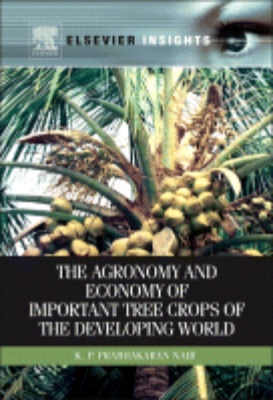
The Agronomy and Economy of Important Tree Crops of the Developing World

ebooks
"Major tree crops contribute substantially to the economy of many developing countries on the Asian, African and Latin American continents. For example, coffee is the main revenue earner for Kenya. This book provides a comprehensive review of the agronomy, botany, taxonomy, genetics, chemistry, economics, and future global prospects of a range of crops that have great food, industrial and economic value such as cocoa, coffee, cashew, oil palm and natural rubber. Key Features. Discusses the major tree crops of great economic value to the developing world. The author is an eminent scientist who has won numerous awards for his work in this area"
    Wiley Online Library
    Taylor & Francis Group
    Springer Nature
    Oxford University Press
    Nature.com
    ICAR
    Elsevier

    The Logo depicts wheat in growing stage, the encircling component symbolizes strength of the holistic research.

    • CeRA (Consortium for e-Resources in Agriculture) Agricultural Education Division, ICAR, Krishi Anusandhan Bhavan -II, Pusa, New Nelhi-12
    • Phone: 91-11-25841760
    • Email: adg.ephs@icar.gov.in
    Recent Posts
    • Going Global: International Linkages
      July 11, 2023 No Comments
    • The Network: Disseminating Knowledge
      July 11, 2023 No Comments
    • The Utilization: Waste to Wealth
      July 11, 2023 No Comments
    • Women Power: Contribution at Par
      July 11, 2023 No Comments
    Our Menu
    • Home
    • E-Resources
    • About us
    • Blog
    • Contact us
    E-Resource Categories
    • eJournals
    Subject Categories
    Agricultural Science Animal Science Basic Science Engineering Health Science Life Science
    An Initiative of Indian Council of Agricultural Research (ICAR) Copyright @ 2024. Developed by Informatics Publishing Limited.
    • Menu
    • Categories
    • eJournals
    • Home
    • E-Resources
    • Blog
    • About Us
    • Contact Us
    • Login / Register
    Sidebar
    We use cookies to improve your experience on our website. By browsing this website, you agree to our use of cookies.
    Accept