

Small Animal Cardiology Secrets
This textbook in the question-and-answer format of The Secrets Series offers concise yet comprehensive coverage of cardiologic disorders affecting small animals. Under the section headings of Cardiovascular Function and Dysfunction, Examination of the Cardiovascular System, Cardiovascular Diseases and Their Management, and cardiovascular Pharmacology, the authors offer 59 chapters with questions focusing on the key need to know areas, also providing the authors keys to diagnosis and management, tips, pearls of practice, and other secrets. The contributing authors are among the most highly regarded authorities in veterinary cardiology.
| Publication Language |
English |
|---|---|
| Publication Access Type |
Premium |
| Publication Author |
* |
| Publisher |
Elsevier |
| Publication Year |
* |
| Publication Type |
ebooks |
| ISBN/ISSN |
* |
| Publication Category |
Animal Science |
Kindly Login to ICAR Digital Library Portal.
Related products

Agrarian Development in Peasant Economies
Agriculture and Forestry Division, Volume 2: Agrarian Development in Peasant Economies: Some Lessons from Kenya tackles various areas of concerns in agriculture in the context of peasant economy. The title provides examples from the Kenyan agrarian development policies. The text first covers concern in improving agricultural production, and then proceeds to tackling post-war Kenya. Next, the selection talks about Kenyan agrarian revolution, along with the economics and features of peasant agriculture. The sixth chapter discusses government and agrarian development, while the seventh chapter details further problems of agrarian reform. The book will be of great interest to political scientists, economists, agriculturists, and sociologists.
An Introduction to Economics for Students of Agriculture
The Introduction to Economics for Students of Agriculture describes the universal economic principles, illustrated primarily by examples drawn from farming and the food industry. This book is composed of nine chapters, and begins with what an overview of the concepts of economics, its objective, with a particular emphasis on the mechanism of allocating scarce resources. The succeeding chapters deal with the behavior of individual through the theory of consumer choice, the concept of demand and supply, market competitions, and production economics. These topics are followed by discussions on the mobility of the factors of production and unemployment, and some problems of using the market as a resource allocator. This book will prove useful to economists, agriculturists, and students.
Handbook of Farm, Dairy and Food Machinery Engineering
Handbook of Farm, Dairy and Food Machinery Engineering is the essential reference for engineers who need to understand those aspects of the food industry from farm machinery to food storage facilities to the machinery that processes and packages our foods. The process of getting food from "farm to fork," as the saying goes, involves more than planting, harvesting, shipping, processing, packaging and distributingthough those are all key components. Effective and efficient food delivery systems are built around processes that maximize the effort while minimizing cost, time, and resource depletion. This comprehensive reference is for engineers who design and build machinery and processing equipment, shipping containers, and packaging and storage equipment. It includes cutting-edge coverage of microwave vacuum application in grain processing, cacao processing, fruit and vegetable processing, ohmic heating of meat, facility design, closures for glass containers, double seaming, and much more.
Insect Outbreaks
FROM THE PREFACE: The abundance of insects can change dramatically from generation to generation; these generational changes may occur within a growing season or over a period of years. Such extraordinary density changes or "outbreaks" may be abrupt and ostensibly random, or population peaks may occur in a more or less cyclic fashion....The goal of this book is to update and advance current thinking on the phenomenon of insect outbreaks. The contributors have reviewed relevant literature in order to generate a synthesis providing new concepts and important alternatives for future research. More importantly, they have presented new ideas or syntheses that will stimulate advances in thinking and experimentation.
Insect Pathology
Insect Pathology is designed for a broad spectrum of readers. Is should be useful to students, lecturers, and researchers requiring information about the principles in insect pathology and the biology of pathogens. It should serve as a resource for specialists to learn about other insect pathogen systems, for generalists to become aware of advances in insect pathology, and for scientists and students, beginning or otherwise, interested in learning about insect pathology.. This book was originally intended to update the 1949 test by E. A. Steinhaus entitled Principles of Insect Pathology. The purpose for this book was twofold: To serve (1) as a text for an insect pathology and/or biological control class and (2) as a comprehensive reference source. Because this book summarizes much of the available information, its usefulness as a textbook for an insect pathology class is apparent. Although the literature citations are extensive, they are far from complete. The literature in insect pathology is voluminous and for the past decade has been expanding at an almost exponential rate. A complete review of the literature is beyond the scope of the book, and an omission of a reference does not preclude its importance. Our citations, however, should serve as a good starting point for those who wish to obtain further information. We have attempted to cover equally all subdisciplines, but shortcomings are unavoidable. For these, we take full responsibility.
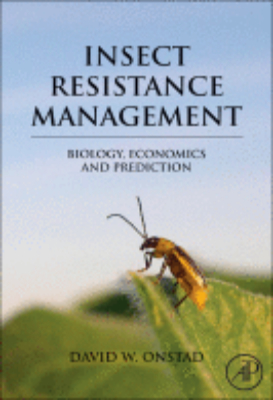
Insect Resistance Management: 2007
Insects, mites, and ticks have a long history of evolving resistance to pesticides, host-plant resistance, crop rotation, pathogens, and parasitoids. Insect resistance management (IRM) is the scientific approach to preventing or delaying pest evolution and its negative impacts on agriculture, public health, and veterinary issues. This book provides entomologists, pest management practitioners, developers of new technologies, and regulators with information about the many kinds of pest resistance including behavioral and phenological resistance. Abstract concepts and various case studies provide the reader with the biological and economic knowledge required to manage resistance. No other source has the breadth of coverage of this book: genomics to economics, transgenic insecticidal crops, insecticides, and other pest management tactics such as crop rotation. Dr. David W. Onstad and a team of experts illustrate how IRM becomes efficient, effective and socially acceptable when local, social and economic aspects of the system are considered. Historical lessons are highlighted with new perspectives emphasized, so that future research and management may be informed by past experience, but not constrained by it.

Integrated Pest Management
"Integrated Pest Management: Current Concepts and Ecological Perspective presents an overview of alternative measures to traditional pest management practices using biological control and biotechnology. The removal of some highly effective broad-spectrum chemicals, caused by concerns over environmental health and public safety, has resulted in the development of alternative, reduced risk crop protection products. These products, less toxic to the environment and easily integrated into biological control systems, target specific life stages or pest species. Predation recognized as a suitable, long-term strategy effectively suppresses pests in biotechnological control systems. Integrated Pest Management covers these topics and more. It explores the current ecological approaches in alternative solutions, such as biological control agents, parasites and predators, pathogenic microorganisms, pheromones and natural products as well as ecological approaches for managing invasive pests, rats, suppression of weeds, safety of pollinators, role of taxonomy and remote sensing in IPM and future projections of IPM. This book is a useful resource to entomologists, agronomists, horticulturists, and environmental scientists. Key Features. Fills a gap in the literature by providing critical analysis of different management strategies that have a bearing on agriculture, sustainability and environmental protection. Synthesizes research and practice on integrated pest management. Emphasizes an overview of management strategies, with critical evaluation of each in the larger context of ecologically based pest management"

Managing Agricultural Greenhouse Gases
Global climate change is a natural process that currently appears to be strongly influenced by human activities, which increase atmospheric concentrations of greenhouse gases (GHG). Agriculture contributes about 20% of the worlds global radiation forcing from carbon dioxide, methane and nitrous oxide, and produces 50% of the methane and 70% of the nitrous oxide of the human-induced emission. Managing Agricultural Greenhouse Gases synthesizes the wealth of information generated from the GRACEnet (Greenhouse gas Reduction through Agricultural Carbon Enhancement network) effort with contributors from a variety of backgrounds, and reports findings with important international applications.

Molecular Wine Microbiology
"Molecular Wine Microbiology features rigorous scientific content written at a level comprehensible for wine professionals as well as advanced students. It includes information on production and spoilage issues, the microbial groups relevant for wine production and microbial wine safety. Microbiology has long been recognized as a key tool in studying wine production, however only recently have wine microbiology studies been addressed at a molecular level, increasing the understanding of how microbiology impacts not only the flavor quality of the wine, but also its safety. Understanding, at a molecular level, how a starter culture can impact ethanol, glycerol, volatile phenols, mannoproteins, biogenic amines or ochratoxin A of a wine are just some of the core points that must be considered in order to achieve maximium consumer acceptability while addressing safety concerns during processing and storage. While other books offer insights into the technological aspects of enology, this book is written by expert microbiologists, who explore the positive and negative impacts of gene function in the production of wine, from a microbiological point of view. Key Features. Winner of the 2012 Jury Award in Enology from the International Organisation of Vine and Wine. Presents the most current methods of studying the microbiology of wine. Includes latest identification and typing methods, reducing identification time from days and weeks to minutes and hours. Provides important knowledge about the impact of microbiological factors at the molecular level for reduction of wine spoilage and increased wine quality and safety"
Weather and Agriculture
Weather and Agriculture presents the major principles involved in the integrated study of weather and agriculture. The book is divided into three sections. Part I discusses the aspects of environmental factors and their validity and measurement. Part II presents a selection of the weather hazards and their relation to agricultural practice. The last section focuses on productivity, the efficient maximization of available resources towards economic ends. Meteorologists, agriculturists, and pedologists will find the book invaluable.