
E-Resources
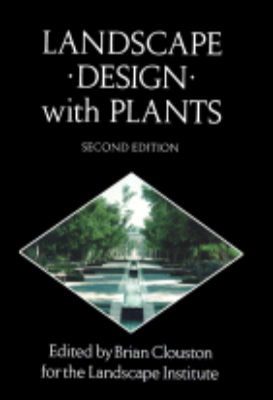
Landscape Design with Plants
Landscape Design with Plants, Second Edition focuses on landscape architecture. The book first discusses trees in the countryside. Adaptation to locality, self-town vegetation, designs for both short-term and long-term effect, ecological planting, and plant associations are described. The text looks at planting for forestry. The need for afforestation; forest habitat; scale of the forest mosaic; and woodlands as visual elements in the landscape are considered. The book puts emphasis on trees in urban areas, shrubs and groundcover, and herbaceous plants and bulbs. The text also focuses on water plants. The use of water plants in garden design, aquatic communities, and historical background are discussed. The book underscores the use and management of plant species native to Britain in landscaping; urban landscape and roof gardens; and how to transplant semi-mature trees. The text also describes reclamation and planting of industrial and urban wastelands; landscaping of reservoir margins; and the relationship of plants and air pollution. The book also puts emphasis on the use of vegetation in slope stabilization; planting in tropical lowland areas; planting in hot, arid climates; and the functional use of Australian plants. The selection is a must for readers interested in landscaping.

Leafhopper Vectors and Plant Disease Agents
Leafhopper Vectors and Plant Disease Agents is the second in a multivolume series on vectors, vector-borne disease agents, and plant disease spread. This text aims to collect findings in leafhopper vector research, to suggest promising frontiers for further research, and to call attention to possible practical applications of understanding of leafhopper-pathogen-plant interactions. This book is organized into five parts. Opening chapters on the taxonomy, bionomics, and worldwide importance of leafhopper and planthopper vectors are appropriately relegated to Parts I and II. Part III focuses on vector-virus interactions of leafhopper-, planthopper-, and aphid-borne viruses and virus-induced, cytopathological changes in vectors. This part also explains the interactions of mycoplasmalike organisms (MLOs) and viruses in dually infected leafhoppers, planthoppers, and plants, as well as the transitory vector-virus interactions. The artificial and aseptic rearing of vectors, microinjection technique, vector tissue culture, and spiroplasmas and its vectors are all covered in Part IV. Part V contains chapters on specific leafhopper-borne viruses and MLOs, leafhopper and planthopper vector control, leafhopper-borne pathogens of corn-stunting diseases, Western X disease, and leafhopper-borne xylem-restricted pathogens. This text will be valuable for students, teachers, and researchers of vector-pathogen-plant relationships. Its in-depth coverage of leafhoppers and planthoppers as vectors makes this book ideally suited as a supplemental text in graduate entomology and plant pathology courses on insect transmission of plant disease agents.


Lepidoptera Genetics
Lepidoptera Genetics provides a systematic account of the genetics and karyology of Lepidoptera. Topics covered include the use of biometry in genetic studies; population genetics and polymorphism; the rise of industrial melanism; and the evolution of mimicry. The genetics of Rhopalocera and Heterocera is also discussed. This book is comprised of eight chapters and begins with an overview of Lepidoptera species and their genetics, paying particular attention to color and pigmentation, breeding, and resistance to insecticides, as well as the effect of seasonal variations and the environment on Lepidoptera. The next chapter outlines the tenets of genetics that are of value for Lepidoptera research, including particulate heredity, random assortment, sex-linked inheritance, maternal inheritance, and mosaicism. The reader is methodically introduced to the application of biometry to the study of Lepidoptera genetics; the evolution of mimicry in Lepidoptera; and the known heredity of Rhopalocera and Heterocera. The final chapter examines the karyology of Lepidoptera, focusing on the haploid karyotype, polyploidy, chiasmata frequency, supernumerary chromosomes, and sex chromatin. This monograph will be a useful resource for entomologists, geneticists, and biologists.

Lexicon of Plant Pests and Diseases
Lexicon of Plant Pests and Diseases is a companion book to "Elsevier's Lexicon of Parasites and Diseases in Livestock" (1964). It is based on identical principles and is developed along the same lines, viz. one part as wide as possible in scope, systematically covering all living forms which are noxious, destructive or otherwise unfavorable to economic crops, trees, and plant products; and a second part made up of indexes to the six languages (Latin, English, French, Spanish, Italian, and German). The indexes facilitate retrieval of any desired term in the basic table. The table of contents explains fully the scope of the lexicon. Entries in the lexicon are arranged alphabetically within each section, according to the Latin name of the living form. In the Appendices English is the key language.
Life Cycles of Coccidia of Domestic Animals
Life Cycles of Coccidia of Domestic Animals describes the structure and physiology of all stages of the life cycle of coccidian of domestic animals. This book discusses the area of location of coccidia in the body of the host. Organized into seven chapters, this book begins with an overview of the characteristics of the group of parasitic protozoa to which the coccidia belong. This text then describes the characteristics of development and duration of the coccidian infection. Other chapters consider the conditions necessary for the survival of the oocysts in the external environment. This book discusses as well the effects of external factors on sporulation. The final chapter deals with the conditions determining infection of the host by coccidia. This book is a valuable resource for microbiologists and parasitologists. Readers who are interested in the fundamental ecology of this group of parasitic protozoa will also find this book extremely useful.

Light and Plant Development
Light and Plant Development presents the Proceedings of the 22nd University of Nottingham Easter School in Agricultural Science. It discusses the spectral sensitivity of inhibition of flowering by light. It addresses the action spectrum for leaf enlargement and stem growth inhibition. Some of the topics covered in the book are the nature of the blue light photoreceptor in higher plants and fungi; re-examination of photochemical properties and absorption characteristics of phytochrome using high-molecular-weight preparations; and intermediates in the photoconversion of phytochrome. The high irradiance reaction is fully covered. The physiological evidence and localised responses, intracellular localisation and action of phytochrome are discussed in detail. The text describes in depth the immunological visualisation of phytochrome. The fractionation procedures and terminology are presented completely. A chapter is devoted to the photocontrol of enzyme levels. Another section focuses on the ribosomal RNA synthesis in developing leaves. The book can provide useful information to botanists, chemists, students, and researchers.

Light Emission by Plants and Bacteria
Light Emission by Plants and Bacteria deals mainly with light coming from plants and bacteria as a result of various different reactions. This book emphasizes the light emission from photosynthetic organisms. The major aim of this book is to give insight on light emission studies in plant and bacteria in terms of its physiological, biophysical, and biochemical relevance. The book is divided into six parts. Part I serves as an introduction and at the same time a historical review and development of different concepts of the emission phenomena. Part II tackles the relationship of light emission to the various photosynthetic reactions. Part III discusses the concept of bioluminescence, with a focus on bacteria and dinoflagellates. Part IV is a description of the light emission from bacteriorhodopsin and rhodopsin. Part V discusses the special light emission characteristics and their relationship to specialized pigment systems found in different bacteria and plant groups. It also reviews the fluorescence properties of photosynthetic bacteria. Lastly, Part VI basically shows the practical applications of light emission from algae as well as higher plants. This book contains not only relevant information about theories and concepts, but also experiments. Thus, it is a recommended reference to researchers and students alike in the field of cell biology, microbiology, plant physiology, biochemistry, biophysics, and agriculture.

Lipid Metabolism in Ruminant Animals
Lipid Metabolism in Ruminant Animals is a nine-chapter book that first discusses the anatomy, physiology, and microbiology of the ruminant digestive tract. Subsequent chapters center on lipid metabolism in the rumen; digestion, absorption and transport of lipids in ruminant animals; the composition, structure and function of lipids in the tissues of ruminant animals; and the effects of diet and other factors on the lipid composition of ruminant tissues and milk. Other chapters focus on lipid metabolism in the mammary gland, adipose tissue, liver, and other selected tissues of ruminant animals.
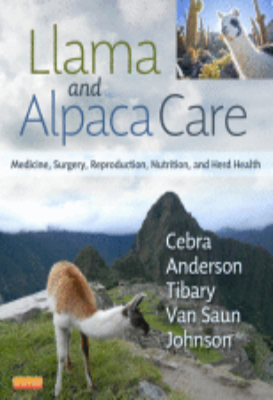
Llama and Alpaca Care
Designed for the mixed practice large animal veterinarian, veterinary students, and camelid caretakers alike, Llama and Alpaca Care covers all major body systems, herd health, physical examination, nutrition, reproduction, surgery, anesthesia, and multisystem diseases of llamas and alpacas. Written by world-renowned camelid specialists and experts in the field, this comprehensive and uniquely global text offers quick access to the most current knowledge in this area. With coverage ranging from basic maintenance such as restraint and handling to more complex topics including anesthesia and surgery, this text provides the full range of knowledge required for the management of llamas and alpacas. "..an essential text for anyone working with South American camelids." Reviewed by Claire E. Whitehead on behalf of Veterinary Record, July 2015
Low Temperature Stress in Crop Plants
Low Temperature Stress in Crop Plants: The Role of the Membrane contains the proceedings of an international seminar on ""Low Temperature Stress in Crop Plants"" held at the East-West Center, Honolulu, Hawaii, March 26-30, 1979. Organized into five parts, this book focuses on the fundamental mechanisms involved in the temperature response of crop plants. It examines the hypotheses related to the primary temperature sensor in crop plants and the mechanisms of low temperature injury. It also explores the genetic potential for cold resistance. Special topics related to the utilization of Arrhenius plots of the temperature response of plants are also discussed.
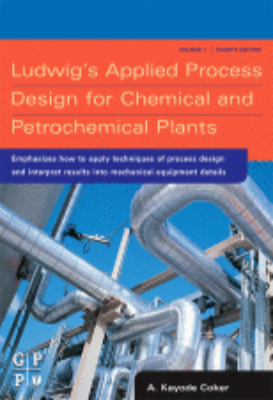
Ludwig’s Applied Process Design for Chemical and Petrochemical Plants
"This complete revision of Applied Process Design for Chemical and Petrochemical Plants, Volume 1 builds upon Ernest E. Ludwigs classic text to further enhance its use as a chemical engineering process design manual of methods and proven fundamentals. This new edition includes important supplemental mechanical and related data, nomographs and charts. Also included within are improved techniques and fundamental methodologies, to guide the engineer in designing process equipment and applying chemical processes to properly detailed equipment.All three volumes of Applied Process Design for Chemical and Petrochemical Plants serve the practicing engineer by providing organized design procedures, details on the equipment suitable for application selection, and charts in readily usable form. Process engineers, designers, and operators will find more chemical petrochemical plant design data in:Volume 2, Third Edition, which covers distillation and packed towers as well as material on azeotropes and ideal/non-ideal systems.Volume 3, Third Edition, which covers heat transfer, refrigeration systems, compression surge drums, and mechanical drivers.A. Kayode Coker, is Chairman of Chemical & Process Engineering Technology department at Jubail Industrial College in Saudi Arabia. Hes both a chartered scientist and a chartered chemical engineer for more than 15 years. and an author of Fortran Programs for Chemical Process Design, Analysis and Simulation, Gulf Publishing Co., and Modeling of Chemical Kinetics and Reactor Design, Butterworth-Heinemann. Key Features. Provides improved design manuals for methods and proven fundamentals of process design with related data and charts. Covers a complete range of basic day-to-day petrochemical operation topics with new material on significant industry changes since 1995."

Mammalian Cytogenetics and Related Problems in Radiobiology
Mammalian Cytogenetics and Related Problems in Radiobiology covers the proceedings of a symposium held in Sao Paulo and Rio de Janeiro, Brazil in October 1962. The book focuses on the processes, methodologies, and approaches involved in mammalian cytogenetics and radiobiology. The selection first offers information on the nutrition and metabolism of cultured mammalian cells, blood technique and human chromosomes, and DNA replication in human chromosomes. Discussions focus on replication of heterochromatin in the human male; difficulties involved in the study of DNA synthesis in human chromosomes; and perspectives for future research. The text then ponders on the progress in the utilization of cell culture techniques for studies in mammalian and human somatic cell genetics and modification of radiation effects in the Ehrlich ascites tumor by oxygen or sodium azide. The manuscript examines experimental studies on mammalian chromosome aberrations, chromosome breakage in vitro, and survival of human cells in tissue culture after irradiation with densely and sparsely ionizing radiation. The text then elaborates on the observations on the morphology and behavior of normal human chromosomes, human pachytene chromosomes, and abnormalities of autosomes. The selection is a vital reference for readers interested in mammalian cytogenetics and radiobiology.

Managing Agricultural Greenhouse Gases
Global climate change is a natural process that currently appears to be strongly influenced by human activities, which increase atmospheric concentrations of greenhouse gases (GHG). Agriculture contributes about 20% of the worlds global radiation forcing from carbon dioxide, methane and nitrous oxide, and produces 50% of the methane and 70% of the nitrous oxide of the human-induced emission. Managing Agricultural Greenhouse Gases synthesizes the wealth of information generated from the GRACEnet (Greenhouse gas Reduction through Agricultural Carbon Enhancement network) effort with contributors from a variety of backgrounds, and reports findings with important international applications.
Manipulation of Flowering
Manipulation of Flowering presents the edited proceedings of the 45th University of Nottingham Easter School in Agricultural Science held at Sutton Bonington in England on April 7-10, 1986. This book is organized into eight sections. The first main section examines the measurement and prediction of flowering and analyzes how best to measure flowering when the aim is either to assist physiological interpretations or construct predictive models. The following sections explore juvenility, the nature of determination in meristems, vernalization, photoperiodic induction and flower evocation, and initiation and development to anthesis. Each of the main sections provides an analysis of the flowering problems and a critical view of how to achieve a better understanding and use of the physiology of flowering. This book will be of interest to crop researchers, plant physiologists, geneticists, and others interested in understanding flowering manipulation.
Manual of Canine and Feline Cardiology
The most effective, practical approach to the recognition and management of cardiovascular and cardiopulmonary medicine, MANUAL OF CANINE AND FELINE CARDIOLOGY, 4th Edition takes a user-friendly approach to the challenges and conditions you encounter in everyday practice. This completely revised and updated edition includes vital information on diagnostic modalities and techniques, therapeutic options, surgical procedures, and pharmaceutical management of the dog and cat cardiac patient. This invaluable, practical reference covers the full breadth of canine and feline cardiology diagnosis and management in a straightforward and clinically focused format.
Manual of Equine Field Surgery
This practical manual provides thorough explanations and step-by-step guidance for 34 procedures that can be performed in less than an hour in a standing sedated patient without the use of special equipment. Three-dimensional, anatomical line drawings, high-quality photographs, and a companion DVD visually demonstrate key concepts and techniques.
Manual of Equine Gastroenterology
This book provides the equine expert and general veterinary practitioner with a complete review of the latest information on all aspects of equine gastroenterology. Edited by an international team of equine specialists and with over 55 contributors from the USA and Europe, it provides the most up-to-date information on a wide range of conditions such as colic, hepatobiliary disease, oesophageal disorders, diarrhoea, gastrointestinal parasites and many more. With detailed chapters on diagnosis and clinical examination, medical and surgical treatment and management of complications, it gives veterinarians all the information they need to diagnose and treat any gastrointestinal problem in the horse or foal.
Manual of Equine Reproduction
Now in full color, Manual of Equine Reproduction, 3rd Edition provides a comprehensive look at the reproductive management of horses, including management of stallions, pregnant mares, and neonatal foals. Expert authors use a concise, practical approach in discussing improved therapies and treatments in equine breeding. Youll enhance your skills and knowledge with this books detailed coverage of techniques used in reproductive examination, breeding procedures, pregnancy diagnosis, foaling, and reproductive tract surgery.
Manual of Equine Reproduction: 2003
Written by acknowledged experts in the field, this authoritative text presents a comprehensive overview of reproductive management of horses, including management of stallions, pregnant mares, and neonatal foals. Discussions are concise and practical, with detailed information on techniques used in reproductive examination, breeding procedures, pregnancy diagnosis, foaling, and reproductive tract surgery. This outstanding 2nd edition features a new chapter on the use of breeding records to evaluate stallion fertility and improve management of breeding stallions. High-quality photographs and line drawings - many new to this edition - clearly depict procedures.