
E-Resources

Opioid Peptides: Biology Chemistry and Genetics
The Peptides: Analysis, Synthesis, Biology, Volume 6: Opioid Peptides: Biology, Chemistry, and Genetics presents a biological topic of peptide research. This book is divided into nine chapters. Chapter 1 reviews the opioid peptide precursors and their genes. The proenkephalin and products of its processing are discussed in Chapter 2. In Chapter 3, the role of pro-opiomelanocortin (POMC) as a protein at the interface of the endocrine and nervous systems is examined. Chapter 4 provides a comprehensive account of the biology and chemistry of the dynorphin peptides. The opioid receptors are described in Chapter 5. Chapter 6 evaluates the structure-activity relationships of -endorphin, while Chapter 7 considers the conformational analysis of enkephalins and conformation-activity relationships. The structure-activity relationships among enkephalin peptides are elaborated in Chapter 8. The last chapter is devoted to the clinical significance of opioid peptides in humans. This publication is a good reference for biologists, specialists, and researchers concerned with peptides and proteins.
Optimizing the Soil Physical Environment Toward Greater Crop Yields
Optimizing the Soil Physical Environment Toward Greater Crop Yields contains the proceedings of an invitational panel convened during the International Symposium on Soil-Water Physics and Technology held at The Hebrew University Faculty of Agriculture in Rehovot, Israel, August 29 to September 5, 1971. Organized into 13 chapters, this book begins with a discussion on the criteria for determining the aims and direction of research in soil physics and technology. Some chapters deal with the transformation and fluxes of energy and matter in the field, particularly water, soil temperature, soil structure, soil salinity, radiation climate, and nutrient supply and uptake. The book also explores the methods of measuring, managing, and modifying the crop production system to greater agricultural advantage. This book will reflect not only what is known, but also what is missing in the incomplete conception of this environment.
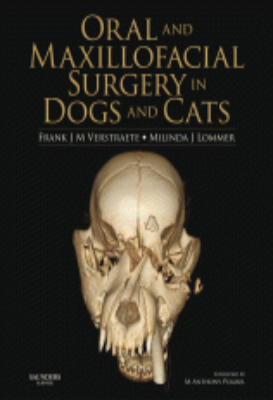
Oral and Maxillofacial Surgery in Dogs and Cats
Oral and Maxillofacial Surgery in Dogs and Cats offers a unique, detailed, comprehensive and highly illustrated account of surgical procedures that will improve outcomes for all surgical and dental specialists. In drawing together the expertise of specialists worldwide, it will also prove indispensable for general practitioners with a dental and oral caseload. Basic principles are considered prior to in-depth treatment of surgical conditions. The book combines expertise from both human and veterinary oral surgeons to provide an authoritative reference with a strongly practical slant. It is likely to become the standard work in the field for many years.
ORD and CD in Chemistry and Biochemistry
ORD and CD in Chemistry and Biochemistry: An Introduction essentially presents the necessary foreword and theoretical foundation for the useful application of optical rotatory dispersion (ORD) and circular dichroism (CD) to certain common chemical problems. This book emphasizes the precision of ORD and CD data in terms of stereochemical information. The book begins with some historical references and a concise review of basic principles on stereochemistry. It further delves onto the phenomena of optical activity. Also included are the definitions and units commonly used in ORD and CD. The book also discusses optical properties of polymers, organometallic, and inorganic derivatives; and some of the aspects of magnetic optical rotator dispersion (MORD) and magnetic circular dichroism (MCD). A table that presents wavelength range of the Cotton effects of most chromophoric groupings concludes the book. This monograph is a helpful reference to students as well as professionals from both chemistry and biochemistry fields of science.
Organization and Assembly of Plant and Animal Extracellular Matrix
Organization and Assembly of Plant and Animal Extracellular Matrix presents a state-of-the-art view of some of the experimental systems in plant and animal matrix biology. It discusses certain principles underlying establishment of complex three-dimensional architecture cross broad evolutionary boundaries. The opening chapter reviews studies on the cellular mechanisms responsible for storage, release, assembly, and function of extracellular matrices during early sea urchin development. The subsequent chapters describe the structure, assembly, disassembly, and molecular biology of the Chlamydomonas reinhardtii cell wall. The chapters also summarize the status of work on basement membrane assembly. Important insights into approaches to identify critical molecular domains and the complexity of relating defined molecular associations to establishment of matrix architecture are provided. A family of discovered cell wall genes that encode protein products containing up to 70% glycine is presented in Chapter 4. This is followed by a discussion on the role of alginate self-assembly in cell wall formation in Fucus. The book goes on to address the issue of protein-carbohydrate recognition with a detailed discussion of plant and animal lectins. Chapter 7 tackles a family of genes encoding higher plant hydroxyproline-rich glycoproteins (HRGPs) and the relationship between the HRGP genes cloned and their products. The final two chapters are devoted to one of the most important classes of protein modifying enzymes for extracellular matrix formation and function, the prolyl hydroxylases. This book will be of help to workers in plant and animal matrix in understanding information, approaches, and ideas that they may not normally encounter.
Origin and Phylogeny of Rices
"rigin and Phylogeny of Rices provides an evolutionary understanding of the origin, spread, and extent of genetic diversity in rice. This single volume is the first to review and synthesize the significant work done in this area in the last 30 years.Rice is the most important food crop of humankind. It provides more energy and also forms the staple food for more humans than any other food plant. This book assesses multiple aspects of this crucial crop in chapters devoted to rice's history and spread, phylogeny of the genus Oryza, Oryza species and their interrelationships, and the origins of west African and Asian rice. Key Features. Offers an interpretive review of the latest research on this vital crop. Guides further research and understanding with an extensive list of references. Enhances the presentation of concepts via illustrations throughout"
Osmotic and Ionic Regulation in Animals
Osmotic and Ionic Regulation in Animals focuses on the processes involved in osmoregulation. The book first discusses general considerations of osmoregulation in animals, including the distinction of body fluids, definitions, and properties of solutions and membranes. The text also looks at the different types of excretory organs, including the differentiation of the excretory organs of mollusks, crustaceans, and vertebrates; protonephridia; and excretion in insects. The selection also describes the ionic regulation in marine animals. Topics include the selective advantages of ionic regulation; mechanisms of ionic regulation; and composition of tissues. The text also discusses osmotic regulation in brackish and freshwater animals. The book also focuses on osmotic regulation in terrestrial animals, including salt gain and loss, secretions, water loss and uptake, and osmotic pressure and composition of blood. The text is a good source of information for readers interested in osmoregulation.
Oxidative Damage to Plants
"With contributions that review research on this topic throughout the world, Oxidative Damage to Plants covers key areas of discovery, from the generation of reactive oxygen species (ROSs), their mechanisms, quenching of these ROSs through enzymatic and non-enzymatic antioxidants, and detailed aspects of such antioxidants as SOD and CAT. Environmental stress is responsible for the generation of oxidative stress, which causes oxidative damage to biomolecules and hence reduces crop yield. To cope up with these problems, scientists have to fully understand the generation of reactive oxygen species, its impact on plants and how plants will be able to withstand these stresses. Key Features. Provides invaluable information about the role of antioxidants in alleviating oxidative stress. Examines both the negative effects (senescence, impaired photosynthesis and necrosis) and positive effects (crucial role that superoxide plays against invading microbes) of ROS on plants. Features contributors from a variety of regions globally"
Oxygen in the Animal Organism
Oxygen in the Animal Organism is a compilation of papers presented during the symposium on Oxygen in the Animal Organism, jointly sponsored by the International Union of Biochemistry and the International Union of Physiological Sciences, held at Bedford College, London in September 1963. The book provides a multidisciplinary approach to the study of the subject of oxygen in the animal organism. The papers presented cover a wide range of facts and hypotheses on the subject. Topics discussed include studies in the transport of oxygen; the fundamental physics and chemistry of oxygen; the diffusion of oxygen from the capillaries to the mitochondria; the neural and humoral components to the regulation of ventilation; and the evolution of biochemical pathways for oxygen. Biologists, biochemists, biophysicists, physiologists, and researchers will find the text informative and insightful.
Pain Management in Animals
An ever-increasing number of drugs are available to veterinarians for use in the control of pain. This new, concise guide gives vets with all the information they need to choose the most appropriate pain medication for any clinical situation. Introductory chapters explain the physiology of pain and pharmacology of analgesics, and are followed by detailed chapters on management of acute and post-operative pain and chronic pain, the problems of pain management and pain assessment. Written by an international team of veterinary pain management experts,Pain Management in Animalsprovides vets with all the information they need to provide good pain control in all their patients.
Pathogens Vectors and Plant Diseases
Pathogens, Vectors, and Plant Diseases: Approaches to Control is a collection of papers that discusses how vector host interactions, vector ecology, and disease epidemiology can be applied to disease prevention and control. The book deals with innovative strategies pertaining to control of vector-borne viruses and viral infections in plants. One paper discusses nonpesticidal control of vector-borne viruses including soil solarization that uses solar energy for crop protection, and insect sterilization through radiation, chemosterilants or genetic modifications. Another paper discusses chemicals that interfere with nucleic acid and protein synthesis; as these interactions pose no hazards to animal (mammals), the chemicals are suitable for controlling viral diseases. One author examines the use of oil sprays and reflective surfaces as a means of controlling plant viruses transmitted by insects. In the United States, the entry of vector-borne plant pathogens is controlled by plant quarantine. One author lists several ways in effective quarantine procedures, as well as, the safe importation of potential vectors as cultures. This book is suitable for environmentalists, biologists, conservationists, agriculturists, botanists, and researchers in botany and plant genealogy.
Pathology of Domestic Animals: Volume 1 1963
Pathology of Domestic Animals, Volume 1 elaborates on the bone structure and diseases, as well as the genital, circulatory, and respiratory systems, of domestic animals. The manuscript first offers information on bones, joints, and synovial structures and diseases of joints, including adaptational deformities of the skeleton, metabolic diseases of bones, necrosis and inflammation of bones, and discontinuities of bone and the healing of fractures. The text then ponders on the circulatory and respiratory systems. Discussions focus on congenital anomalies of the heart and large vessels, myocardium, hypertrophy and dilation of the heart, pharynx and guttural pouches, larynx and trachea, lungs, and pleura and mediastinum. The publication examines the haemopoietic system and endocrine glands. Topics include blood and bone marrow, general reactions of erythrocytes to injury, lymphoreticular tissues, adrenal glands and paraganglia, and polycythaemia. The book then reviews the male and female genital systems. The manuscript is a valuable source of data for readers interested in the pathology of domestic animals.

Pathology of Domestic Animals: Volume 1 1993
"The all-new Fourth Edition of Pathology of Domestic Animals comprehensively covers the biology and pathology of diseases of domestic animals on a systemic basic. Updated and expanded to reflect the current knowledge of the study of domestic animal diseases, this three-volume set appeals to veterinarians, veterinary students, trainee veterinary pathologists learning the scope of their field, and practicing pathologists confronted with diagnostic problems. Key Features. All material completely updated and expanded to reflect the current knowledge of the study of diseases of domestic animals. Covers the biology and pathology of diseases of domestic animals on a global basis. Emphasizes the pattern of disease and the defense mechanisms of each organ system. Several new illustrations"

Pathology of Domestic Animals: Volume 2 Fourth Edition 1993
"The all-new Fourth Edition of Pathology of Domestic Animals comprehensively covers the biology and pathology of diseases of domestic animals on a systemic basic. Updated and expanded to reflect the current knowledge of the study of domestic animal diseases, this three-volume set appeals to veterinarians, veterinary students, trainee veterinary pathologists learning the scope of their field, and practicing pathologists confronted with diagnostic problems. Key Features. Improvements over the Third Edition:. All material completely updated and expanded to reflect the current knowledge of the study of diseases of domestic animals. Covers the biology and pathology of diseases of domestic animals on a global basis. Emphasizes the pattern of disease and the defense mechanisms of each organ system. Several new illustrations"

Pathology of Domestic Animals: Volume 2 Third Edition 1985
Pathology of Domestic Animals, Third Edition, Volume 2 deals with various aspects of veterinary pathology, with emphasis on the disease of domestic animals. This text covers animal diseases affecting the alimentary, urinary, and respiratory systems; the liver and biliary system; the pancreas; and the peritoneum, retroperitoneum, and mesentery. This book is organized into six chapters and begins with a discussion of diseases of the organs comprising the alimentary system, including the oral cavity, tonsils, salivary glands, esophagus, stomach, and intestine. Emphasis is given to congenital anomalies and infectious and parasitic diseases of the gastrointestinal tract. The reader is then introduced to conditions that afflict animal liver and biliary system, such as inflammation, and anomalies of the pancreas. The chapters that follow focus on congenital anomalies of the peritoneum, retroperitoneum, and mesentery, along with circulatory disturbances and diseases of the blood vessels. The book concludes with an account of respiratory diseases, including metabolic and circulatory disturbances of nasal cavity and sinuses, laryngitis and tracheitis, and pulmonary hypertension. This book is intended for practitioners of veterinary medicine as well as teachers and students of pathology in the hope that they will contribute to an understanding of animal disease.

Pathology of Domestic Animals: Volume 3 Fourth Edition 1993
"The all-new Fourth Edition of Pathology of Domestic Animals comprehensively covers the biology and pathology of diseases of domestic animals on a systemic basic. Updated and expanded to reflect the current knowledge of the study of domestic animal diseases, this three-volume set appeals to veterinarians, veterinary students, trainee veterinary pathologists learning the scope of their field, and practicing pathologists confronted with diagnostic problems. Key Features. All material completely updated and expanded to reflect the current knowledge of the study of diseases of domestic animals. Covers the biology and pathology of diseases of domestic animals on a global basis. Emphasizes the pattern of disease and the defense mechanisms of each organ system. Several new illustrations"
Perinatal Genetics
Perinatal Genetics: Diagnosis and Treatment brings together the proceedings of the 15 Annual New York State Health Department Birth Defects Symposium held on September 30-October 1, 1984 in Albany, New York. The symposium provided a forum for clarifying and rationalizing certain aspects of diagnosis and treatment of perinatal genetic birth defects such as fragile X syndrome, phenylketonuria, and hypothyroidism. Comprised of 17 chapters, this book begins with an epidemiological review of very early pregnancy loss, focusing on fertilization and implantation; the probability of loss between fertilization and implantation (on about the sixth day), and between implantation and the 14th day (the first day of the expected next period in a non-pregnant woman); and the contribution of chromosomal errors in the sperm, ovum, and zygote to early reproductive loss. The reader is then introduced to cytogenetic abnormalities in spontaneous abortions of recognized conceptions; repetitive spontaneous abortion; and prenatal genetic diagnosis by chorionic villus sampling. Subsequent chapters explore prenatal treatment of biochemical disorders; in vitro fertilization and embryo transfer; and moral issues concerning third trimester pregnancy terminations. This monograph will appeal to perinatologists, neonatologists, obstetricians, pediatricians, and geneticists and should also serve as a useful guide for health professionals who provide care to pregnant women and their newborns.

Personalized Epigenetics
Personalized Epigenetics discusses the core translatability of epigenetics to health management of individuals who have unique variations in their epigenetic signatures that can guide both disorder and disease prevention and therapy. The book details inter-individual variability in the major epigenetic process in humans consisting of DNA methylation, histone modifications, and noncoding RNA, and the diagnostic, prognostic, and therapeutic potential of the field, it also reviews the impact of the environment on epigenetic variations among individuals and the role of pharmacology and drug development in personalized epigenetics. Most importantly, the text covers personalized epigenetics from a disease-oriented perspective, presenting chapters that provide advances in widespread disorders or diseases, including diabetes, cancer, autoimmune disorders, obesity, cardiovascular diseases, neurological disorders, and pain management.
Personalized Immunosuppression in Transplantation
"Personalized Immunosuppression in Transplantation: Role of Biomarker Monitoring and Therapeutic Drug Monitoring provides coverage of the various approaches to monitoring immunosuppressants in transplant patients, including the most recently developed biomarker monitoring methods, pharmacogenomics approaches, and traditional therapeutic drug monitoring. The book is written for pathologists, toxicologists, and transplant surgeons who are involved in the management of transplant patients, offering them in-depth coverage of the management of immunosuppressant therapy in transplant patients with the goal of maximum benefit from drug therapy and minimal risk of drug toxicity. This book also provides practical guidelines for managing immunosuppressant therapy, including the therapeutic ranges of various immunosuppressants, the pitfalls of methodologies used for determination of these immunosuppressants in whole blood or plasma, appropriate pharmacogenomics testing for organ transplant recipients, and when biomarker monitoring could be helpful. Key Features. Focuses on the personalized management of immunosuppression therapy in individual transplant patients. Presents information that applies to many areas, including gmass spectrometry, assay design, assay validation, clinical chemistry, and clinical pathology. Provides practical guidelines for the initial selection and subsequent modifications of immunosuppression therapy in individual transplant patients. Reviews the latest research in biomarker monitoring in personalizing immunosuppressant therapy, including potential new markers not currently used, but with great potential for future use. Explains how monitoring graft-derived, circulating, cell free DNA has shown promise in the early detection of transplant injury in liquid biopsy"
Perspectives on Plant Competition
Perspectives on Plant Competition is mainly about addressing the many different perspectives in plant competition and finding a common ground among them. Its aim is that through this common ground, new theories can be created. Encompassing 20 chapters, this book is divided into three parts. Part I, Perspectives on the Determinants of Competitive Success, consists of eight chapters. This section deals mainly on the question of determination of competitive success. Different writers put forward various definitions of competition and competitive success to shed light on the question at hand. In the second part of this book, an opposing set of views regarding the consequences of competitive interactions for the plant community structure is provided. This section emphasizes the idea that competition is not the sole force in natural communities. Each chapter in this part focuses on a certain aspect of competition as seen in different communities across and within habitats and systems. Part III, which comprises of four chapters, focuses on the competition within the context of interaction of plants with organisms on the other trophic levels. The chapters set forth the idea that competition depends on the impacts of herbivores, parasites, and symbionts. The concluding part of the book greatly emphasizes the need to integrate the mechanisms of competition into the framework of the entire food web.