
E-Resources

Plant Tissue Culture: 1981
Plant Tissue Culture: Methods and Applications in Agriculture contains the proceedings of a symposium based on the UNESCO training course on Plant Tissue Culture: Methods and Applications in Agriculture, sponsored by UNESCO and held in Campinas, Sao Paulo, Brazil, on November 8-22, 1978. This book contains two major sections encompassing plant tissue culture: Part A, which focuses on methodology, and Part B, which emphasizes the applications. The first chapters present the requirements for a tissue culture facility, and then describe nutrition, media, and characteristics of cultured plant cells and their growth and behavior in vitro, particularly with reference to embryogenesis and organogenesis. Discussions on protoplasts, mutagenesis and in vitro selection, meristem culture, freeze preservation, and cytogenetic techniques complete Part A. In Part B, androgenesis, in vitro fertilization, and embryo culture are discussed. Some chapters follow on the application of in vitro methodology to selected crops. The final chapter deals with the potential of tissue culture in the biosynthesis of secondary products. This text will prove useful to those who must thoroughly plan their research in tackling problems in agriculture that are amenable to the tissue culture approach.

Plant Tissue Culture: 1992
Plant Tissue Culture Techniques and Experiments is a manual that contains laboratory exercises about the demonstration of the methods and different plant materials used in plant tissue culture. It provides an overview on the plant cell culture techniques and plant material options in selecting the explant source. This book starts by discussing the proper setup of a tissue culture laboratory and the selection of the culture medium. It then explains the determination of an explant which is the ultimate goal of the cell culture project. The explant is a piece of plant tissue that is used in tissue culture. Furthermore, the book discusses topics about callus induction, regeneration and morphogenesis process, and haploid plants from anther and pollen culture. The meristem culture for virus-free plants and in vitro propagation for commercial propagation of ornamentals are also explained in this manual. The book also provides topics and exercises on the protoplast isolation and fusion and agrobacterium-mediated transformation of plants. This manual is intended for college students, both graduate and undergraduate, who study chemistry, plant anatomy, and plant physiology.

Plant Tissue Culture: 2013
"Plant Tissue Culture, Third Edition builds on the classroom tested, audience proven manual that has guided users through successful plant culturing A.tumefaciens mediated transformation, infusion technology, the latest information on media components and preparation, and regeneration and morphogenesis along with new exercises and diagrams provide current information and examples. The included experiments demonstrate major concepts and can be conducted with a variety of plant material that are readily available throughout the year. This book provides a diverse learning experience and is appropriate for both university students and plant scientists. Key Features. Provides new exercises demonstrating tobacco leaf infiltration to observe transient expression of proteins and subcellular location of the protein, and information on development of a customized protocol for protoplast isolation for other experimental systems. Includes detailed drawings that complement both introductions and experiments. Guides reader from lab setup to supplies, stock solution and media preparation, explant selection and disinfestations, and experimental observations and measurement. Provides the latest techniques and media information, including A. tumefaciens mediated transformation and infusion technology. Fully updated literature"


Plant Transcription Factors
"Plant Transcription Factors: Evolutionary, Structural and Functional Aspects is the only publication that provides a comprehensive compilation of plant transcription factor families and their complex roles in plant biology. While the majority of information about transcription factors is based on mammalian systems, this publication discusses plant transcription factors, including the important aspects and unifying themes to understanding transcription factors and the important roles of particular families in specific processes. Key Features. Provides an entry point for transcription factor literature. Offers compilation of information into one single resource for rapid consultation on different plant transcription factor features. Integrates the knowledge about different transcription factors, along with cross-referencing. Provides information on the unique aspects surrounding plant transcription factors"

Plant Virology: Second Edition 1981
Plant Virology, Second Edition, was written to cover the substantial developments in many areas of plant virology since the first edition was published. Advances have been made in all branches of the subject, but these have been most far reaching with respect to the structure of viruses and of their components, and in the understanding of how viral genomes are organized and how viruses replicate in cells. Significant developments have also occurred in the understanding of how viruses are transmitted by invertebrates and in the application of control measures for specific diseases. The taxonomy of viruses has advanced significantly, and there are now 25 internationally approved families and groups of plant viruses. All these developments have required that most sections be entirely rewritten. This book is intended primarily for graduate students in plant pathology, plant virology, general virology, and microbiology, and for teachers and research workers in these fields. It should also prove useful to some people in related disciplinesmolecular biologists, biochemists, plant physiologists, and entomologists.
Plant Virology: Third Edition 1991
Major developments have taken shape in the ten years since the publication ofPlant Virology, Second Edition. This Third Edition of the leading comprehensive text and reference for the field contains more than sixty percent new material, including applications and results of gene manipulation techniques. As with the first and second editions, this volume covers all aspects of plant virology, from molecular to ecological.Plant Virology, Third Edition, is intended for graduate students, researchers, and teachers in plant virology, plant pathology, general virology, and microbiology, and scientists in related areas of molecular biology, biochemistry, plant physiology, and entomology.

Plants and Organelles
Nucleotide Sequences 1986/1987, Volume IV: Plants and Organelles presents data that reflect the information found in GenBank Release 44.0 of August 1986. This book provides information pertinent to the unique international collaboration between two leading nucleotide sequence data libraries, one based in Europe and one in the United States. Organized into two sections, this volume begins with an overview of the sequences, some basic identifying information, and some of the biological annotations. This text then discusses the EMBL Nucleotide Sequence Data Library, an international center of fundamental research with its main focus in the fields of cell biology, molecular structures, instrumentation, and differentiation. This book discusses as well the GenBank database established in 1982 by the National Institute of General Medical Sciences of the U.S National Institutes of Health. This book is a valuable resource for molecular biologists and other investigators collecting the large number of reported DNA and RNA sequences and making them available in computer-readable form.

Plants Chemicals and Growth: Volume 1
Plants, Chemicals and Growth investigates natural and synthetic chemicals that control plant growth and development. It examines how plant growth regulators, such as 2,4-D, 2,4-dichlorophenoxyacetic acid, 2,4,5-T, 2,4,5-trichlorophenoxyacetic acid, ammonium sulfamate, indole-3-butyric acid, disodium 3,6-endoxohexahydrophthalate, gibberellic acid, and 2-chloroethyltrimethylammonium chloride, induce biological responses in plants. These responses range from tropism and chemotropism to growth of organs by cell division and enlargement, rhythmic phenomena in growth and development, initiation of lateral organs and problems of phyllotaxy, and the regulatory effects of light and temperature on growth and form. Comprised of 10 chapters, this volume begins with an overview of chemical regulators and the ways in which they elicit biological responses in plants; how chemical regulation of plants is related to the growth and development of flowering plants; cell growth and cell division; cell cycle; and cellular ontogeny. It then looks at the history and modern concepts of growth-regulating compounds, such as auxins, cytokinins, and gibberellins. The book introduces readers to how chemicals induce growth in quiescent cells; natural sources of growth stimulatory substances; synergisms and interactions of growth regulatory systems; growth-regulating effects in free cell systems; examples of biologically active compounds; the mechanisms of action of plant growth regulators; concepts and interpretations of plant growth regulation; and prospects and problems associated with chemical regulation of plant growth and behavior. Teachers, biology students, agriculturalists, and researchers will find this book extremely useful.

Plants Chemicals and Growth: Volume 2
Plants, Chemicals and Growth focuses on chemicals that regulate the growth and development of plants. It explores the problems of growth and growth regulation by looking at the roles of chemical substances, natural and synthetic, which affect the behavior of the cells of flowering plants. It also describes the variety of responses triggered by such chemicals, which include herbicides, those that stimulate the rooting of cuttings or cause leaf or fruit abscission, and those associated with fruit setting and artificial parthenocarpy. Comprised of 10 chapters, this volume begins with an overview of examples of chemical regulators and the biological responses they induce in plants, from tropism and chemotropism to nastic responses; rhythmic phenomena in growth and development; initiation of lateral organs and problems of phyllotaxy; periodicities in growth; and effects on the balance between vegetative growth, flowering, and fruiting. It discusses the totipotency and exogenous regulation of cells, history and modern concepts of plant growth regulators, the ways chemicals induce growth in quiescent cells, and growth-regulating effects in free cell systems. The reader is also introduced to biologically active compounds, such as indolyl and triazine compounds; how plant-regulating substances work; concepts and interpretations of plant growth regulation; and problems and prospects of chemical regulation of plant growth and development. This book will be of interest to teachers, biology students, agriculturalists, and researchers.

Polyphenols in Plants
"Polyphenols in Plants assists plant scientists and dietary supplement producers in assessing polyphenol content and factors affecting their composition. It also aids in selecting sources and regulating environmental conditions affecting yield for more consistent and function dietary supplements. Polyphenols play key roles in the growth, regulation and structure of plants and vary widely within different plants. Stress, growth conditions and plant species modify polyphenol structure and content. This book describes techniques to identify, isolate and characterize polyphenols, taking mammalian toxicology into account as well. Key Features. Defines conditions of growth affecting the polyphenol levels. Describes assay and instrumentation techniques critical to identifying and defining polyphenols, critical to researchers and business development. Documents how some polyphenols are dangerous to consume, important to dietary supplement industry, government regulators and lay public users"

Power Plant Performance
Power Plant Performance discusses the different procedures and practices involved in the operation of power plants. The book is divided into four parts. Part I covers general considerations such as steam cycles; the sampling, analysis, and assessment of coal; and pumping its related terms, the different types of pumps, and the determination of sizes and efficiency. Part II tackles the important measurements in power plants such as temperature, pressure, and gas and water flow. Part III deals with the operation of power plant components such as the boiler, turbine, and condensers. Part IV tackles other related topics such as steam turbine heat consumption tests; plant-operating parameters; and the costs of outages. The text is recommended for professionals involved in the development, maintenance, and operation of power plants, especially those who would like to be familiar with the basics.
Principles of Plant Disease Management
"Principles of Plant Disease Management is intended to provide a substantive treatment of plant disease management for graduate and undergraduate students in which theoretical and practical elements are combined. Reference is made to specific diseases and control practices to illustrate basic principles or strategies. The section on epidemiology includes a chapter in which arthropod vectors (aphids, leafhoppers, whiteflies, Coleoptera and mites) are briefly discussed, and the section on control includes references to the use of crop varieties with resistance to such vectors, and also contains information on mechanical, cultural, biological and chemical measures that contribute to vector control. Key Features. The technology of disease management is presented according to epidemiological principles. Sections on diagnosis, epidemiology, environmental factors, disease forecasting, disease control (exclusion, physical, chemical and biological), plant resistance, cultural modifications to suppress epidemics, effects of chemicals and their major groups and uses, and examples of disease management in practice are included. A bibliography and index are appended"
Principles of Plant Infection
Principles of Plant Infection investigates interactions among pathogens, host plants, the environment, time and space, and their role in plant infection. It describes the principles of infection, particularly of the root, stem, or leaf, as they apply to fungi, bacteria, or viruses. It also highlights the dual nature of resistance and suggests theories of host resistance. Organized into seven chapters, this volume begins with an overview of the relation between the amount of inoculum and the amount of disease it causes. It then turns to a discussion of the disease/inoculum relations of tobacco mosaic virus; how obligate synergism restricts the transmission of pathogens; disease/inoculum relations in root disease; the independent action of spores as inoculum; variable factors other than the amount of inoculum that affect plant disease; and time as a determining factor of the degree of plant infection. The reader is also introduced to endemic disease of plants, the implications of endemicity for plant resistance to disease, the spread of disease via migration of pathogens, and the genetics of host-pathogen interactions. Plant pathologists and plant breeders will gain valuable information from this book.
Principles of Tzeltal Plant Classification
Principles of Tzeltal Plant Classification: An Introduction to the Botanical Ethnography of a Mayan-Speaking People of Highland Chiapas covers the underlying classificatory principles used by the Tzeltal to order the vast array of organisms of the plant world. The book describes the setting of the research, both from a botanical and ethnographic view; the general outline of Tzeltal plant classification and nomenclature; and the methods used to collect data. The text also discusses the rich ethnolinguistic terminology used by the Tzeltal in describing and discussing the structure of plants, referred to as ethnophytography; and the cultural significance of plants to the Tzeltal in agriculture, food types, house building, and other areas of material culture where plants and plant products are of major importance. The individual description of all known Tzeltal plant classes is also encompassed in detail. Botanists and ethnobotanists will find the book invaluable.
Progress in Plant Breeding 1
Progress in Plant Breeding 1 is a collection of review articles that aim to critically assess progress in different major crops, not only in the aspect of variety production, but also across all the related disciplines. The book covers topics such as dwarfing genes in wheat; sugar-beet breeding; development of grain-protein crops; and the breeding programs of the International Potato Center. Also covered in the book are topics such as the development of bird resistance of soghum and maize; advances in the breeding of chickpeas; and breeding rice for disease resistance. The text is recommended for botanists and agriculturists who would like to know more about the advances in plant breeding and how it is improving crops.
Regenerative Medicine Applications in Organ Transplantation
"Regenerative Medicine Applications in Organ Transplantation illustrates exactly how these two fields are coming together and can benefit one another. It discusses technologies being developed, methods being implemented, and which of these are the most promising. The text encompasses tissue engineering, biomaterial sciences, stem cell biology, and developmental biology, all from a transplant perspective. Organ systems considered include liver, renal, intestinal, pancreatic, and more. Leaders from both fields have contributed chapters, clearly illustrating that regenerative medicine and solid organ transplantation speak the same language and that both aim for similar medical outcomes. The overall theme of the book is to provide insight into the synergy between organ transplantation and regenerative medicine. Recent groundbreaking achievements in regenerative medicine have received unprecedented coverage by the media, fueling interest and enthusiasm in transplant clinicians and researchers. Regenerative medicine is changing the premise of solid organ transplantation, requiring transplantation investigators to become familiar with regenerative medicine investigations that can be extremely relevant to their work. Similarly, regenerative medicine investigators need to be aware of the needs of the transplant field to bring these two fields together for greater results. Key Features. Bridges the gap between regenerative medicine and solid organ transplantation and highlights reasons for collaboration. Explains the importance and future potential of regenerative medicine to the transplant community. Illustrates to regenerative medicine investigators the needs of the transplant discipline to drive and guide investigations in the most promising directions"
Regulation of Secondary Product and Plant Hormone Metabolism
Regulation of Secondary Product and Plant Hormone Metabolism contains the proceedings of the 12th Meeting of the Federation of European Biochemical Societies held in Dresden, Germany in 1978. The meeting provided a forum for discussing progress in understanding the regulation of the metabolism of secondary products and plant hormones. It shows that the processes regulating secondary metabolism are similar in lower and higher plants, and that the molecular basis of cell differentiation and specialization is uniform in all groups of living organisms. Comprised of 22 chapters, this volume begins with an overview of the interrelationships between secondary products and hormones in plants, followed by a detailed account of the effects of phenolic compounds on auxin biosynthesis and vice versa. The reader is then introduced to non-ribosomal biosynthesis of biologically active peptides; channelling of intermediates during the biosynthesis of cyanogenic glycosides; and intracellular distribution of flavonoids in glandular cells. Subsequent chapters explore the regulation of gene expression in secondary biosynthesis; inhibition of phenylalanine ammonia-lyase by cinnamic acid derivatives; novel inhibitors of phenylpropanoid metabolism in higher plants; and stage-specific phenylpropanoid metabolism during pollen development. This book will be of interest to biochemists and geneticists.
Reproductive Allocation in Plants
"Much effort has been devoted to developing theories to explain the wide variation we observe in reproductive allocation among environments. Reproductive Allocation in Plants describes why plants differ in the proportion of their resources that they allocate to reproduction and looks into the various theories. This book examines the ecological and evolutionary explanations for variation in plant reproductive allocation from the perspective of the underlying physiological mechanisms controlling reproduction and growth. An international team of leading experts have prepared chapters summarizing the current state of the field and offering their views on the factors determining reproductive allocation in plants. This will be a valuable resource for senior undergraduate students, graduate students and researchers in ecology, plant ecophysiology, and population biology. Key Features. 8 outstanding chapters dedicated to the evolution and ecology of variation in plant reproductive allocation. Written by an international team of leading experts in the field. Provides enough background information to make it accessible to senior undergraduate students. Includes over 60 figures and 29 tables"
Reproductive Biology and Taxonomy of Vascular Plants
Reproductive Biology and Taxonomy of Vascular Plants is a collection of papers presented at the Conference on Reproductive Biology and Taxonomy of Vascular Plants, held at the Department of Botany, University of Birmingham on April 23-25, 1965. The conference primarily explores the reproductive biology of flowering plants and ferns to arrive at a better understanding of variation patterns and modes of evolution. This book is divided into six chapters and begins with a discussion on the breeding systems, variation and adaptation. The next chapters survey the practical implications of knowledge of breeding systems and other aspects of the reproductive biology of flowering plants, as well as the pollination mechanisms in orchids and the evolution of this family in relation to insect evolution. These chapters include an account of the foraging behavior of honey bees and its importance to the botanist in delineating the behavior of the insects that pollinate the plants. Other chapters deal with the mechanisms of plant dispersal and establishment, the aspects of seed dormancy, and germination and reproductive capacity related to evolutionary processes. The concluding chapters explore the many aspects of apomixis in its wider sense and survey how the variation patterns of apomicts were due to this special mode of reproduction. This book is directed primarily to botanists.
Response of Plants to Multiple Stresses
"This book presents a whole-plant perspective on plant integrated responses to multiple stresses, including an analysis of how plants have evolved growth forms and phenological responses to cope with changing stress patterns in natural environments. Key Features. Explores stress responses at both the structural and process levels. Outlines structural, phenological, and physiological responses that optimize production under multiple stresses. Combines physiological and evolutionary perspectives"
Responses of Plants to Air Pollution
Responses of Plants to Air Pollution examines the effects of air pollutants, individually and synergistically, on both higher and lower plants. The subject matter overlaps into a wide range of disciplines including agronomy, plant anatomy, biochemistry, cryptogamic botany, ecology, entomology, forestry, horticulture, landscape architecture, meteorology, microscopy, plant pathology, plant physiology, and soil science. The opening chapter presents an overview of sources of air pollution, costs of air pollution, and mechanisms of pollution injury to plants. Separate chapters on sulfur dioxide, ozone, fluorides, peroxyacyl nitrates, oxides of nitrogen, and particulates follow. Subsequent chapters are devoted to plant responses to combinations of pollutants; to effects of pollutants on plant ultrastructure, on forests, and on lichens and bryophytes; to interactions of pollutants with canopies of vegetation; to interactions of pollutants and plant diseases; and to interactions of pollutants with agricultural practices. This book will be useful to scientists in many disciplines as well as those who share the concern that clean air can no longer be expected to be the normal environment for plants or animals. The book will also be a valuable a reference work or text for upper level undergraduate students, graduate students, researchers, and growers of plants.
Rhythmic Phenomena in Plants
Rhythmic Phenomena in Plants, Second Edition focuses on the study of biological clocks in all kinds of plants, from unicellular algae to flowering trees. This book discusses the patterns of plant movement, parameters of rhythms and how to calculate them, and rhythms that match and do not match environmental periodicities. The mechanism of circadian timing, circadian rhythms in angiosperms, comparison between dinoflagellates and other rhythmic organisms, and semilunar and lunar rhythms are also elaborated. This publication likewise covers the measurement of day length in photoperiodism, circannian rhythms in plants, oscillations with short periods in leaves and roots, and streaming in a slime mold. This edition is valuable to biologists intending to contribute to the study of biological timing.
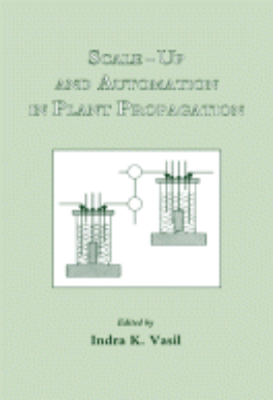
Scale-up and Automation in Plant Propagation
Scale-Up and Automation in Plant Propagation reviews methods of automation and scale-up of plant propagation in vitro. It looks at the large scale clonal propagation of plants, or micropropagation, as the first major practical application of plant biotechnology. It also discusses the advantages and limitations of micropropagation and evaluates current methods of commercial micropropagation. Organized into 13 chapters, this volume begins with an overview of the benefits of scaling up and automating plant propagation before proceeding with a discussion of synthetic seeds and their use for plant propagation, along with problems and economic considerations associated with synthetic seed technology. It then considers the implementation of somatic embryogenesis technology for clonal forestry, the development and commercialization of bioreactor technology for automated propagation of potato microtubers and lily microbulbs, and approaches to automated propagation of fruit trees. Other chapters focus on issues of cost reduction and development of ""new"" products, scale-up and operation of prototype bioreactors for plant propagation, and application of machine vision technology to scale-up and automated evaluation of somatic embryogenesis in sweet potato. The book also describes methods of measurement and control of the environment in culture, environmental factors affecting photosynthesis, and use of robotics and field transplanters in the automation of plant propagation. Scientists and plant breeders will find this book extremely useful.
Secondary Plant Products
The Biochemistry of Plants: A Comprehensive Treatise, Volume 7: Secondary Plant Products focuses on the biochemistry of secondary compounds, including tissue culture and differentiation, complexes, and plant systematics. The selection first elaborates on the physiological roles of secondary natural products, tissue culture and the study of secondary natural products, and turnover and degradation of secondary natural products. Discussions focus on degradative reactions of nitrogenous and phenolic compounds, concept of turnover of secondary products, and plant-vertebrate interactions. The text then elaborates on secondary plant products and cell and tissue differentiation; compartmentation in natural product biosynthesis by multienzyme complexes; and secondary metabolites and plant systematics. The manuscript examines the stereochemical aspects of natural products biosynthesis, nonprotein amino acids, and amines. Topics include tryptamines, phenethylamines, and histamine, nonprotein amino acids as analogues and antimetabolites, chemistry and biogenesis, and nonprotein amino acids as indexes for chemotaxonomy. The book also tackles glycosylation and glycosidases; transmethylation and demethylation reactions in the metabolism of secondary plant products; and oxygenases and the metabolism of plant products. The selection is a vital reference for researchers interested in the biochemistry of secondary compounds.
Senescence and Aging in Plants
Senescence and Aging in Plants reviews the state of knowledge in the processes involved in plant senescence and aging. The book begins by discussing the emergence of senescence as a concept; experimental analysis of senescence; and patterns of senescence. It then examines membrane deterioration during senescence; photosynthesis in relation to leaf senescence; senescence of detached plant organs; changing patterns of nucleic acid and protein synthesis during senescence; and degradative and associated assimilatory aspects of nitrogen removal. This is followed by chapters on aspects of ethylene that may impinge upon its role in promoting senescence of higher plants; the role of cytokinins in plant senescence; the promoters and retardants of senescence; and the role of calcium in plant senescence. The concept of whole plant senescence is discussed, which can be subdivided into patterns, correlative controls, cessation of vegetative growth, declining assimilatory processes, assimilate partitioning, and hormonal controls. The final chapters cover the deterioration of cellular membranes during the plant aging process and seed aging.
Serious Incident Prevention:: How to Sustain Accident-Free Operations in Your Plant or Company
"This is your guide to creating a proactive, effective prevention process. This book presents a model showing you how to systematically identify and execute the steps needed to make your operations incident-free. Its team-based approach draws every level of the organization into the effort. Serious incidents affect a company's most important and most visible measures of performance, including profitability and company image. Use the author's ground-breaking method for preventing serious incidents, from a team perspective. Whether applied in real-life situations or in the classroom, this method will help you create a safer, more profitable plant. Up to date information and expanded topic coverage is provided in this new edition. There are two new chapters. One covers leveraging the power of behavior-based techniques and the other covers the benefits of developing teamwork skills. New material features case studies of corporations that have achieved a high degree of success from the implementation of Burns' techniques. Additionally, the author has included safety performance scorecards, a practical and effective tool for preventing serious incidents. Key Features. Updated with all new material on teamwork skills and behavior-based techniques. This unique method shows the user how to prevent serious incidents before they occur. Includes cases of real-life examples and safety performance scorecards"