• Home
  • E-Resources
  • About us
  • Blog
  • Contact us
  • Login
    • Forgot Password
Menu
Click to enlarge
Home ebooks Small Animal Dermatology: 2011

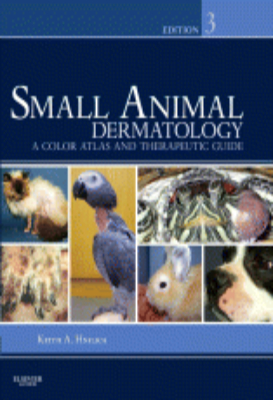
Small Animal Dermatology: 2011

“Designed with busy practitioners and students in mind, Small Animal Dermatology: A Color Atlas and Therapeutic Guide provides concise, thorough coverage of over 250 skin diseases affecting small animals. More than 1,000 high-quality images help to ensure accurate diagnoses, with coverage including clinical features, top differentials, treatment, and prognosis for each disorder. In this edition, author Keith A. Hnilica streamlines content for practical, everyday use in the clinic. The differential diagnosis chapter is updated for added clarity and easier use, and for quick access, chapters now list diseases based upon the frequency of their occurrence in the pet population. Key Features. A user-friendly organization allows for quick and easy access to information on specific diseases.. Vivid, full-color images facilitate accurate diagnosis of each disorder.. A comprehensive drug appendix includes information about dosage, adverse reactions, indications, and contraindications.. A new section on skin diseases of birds and exotic pets covers the management of rabbits, ferrets, hamsters, guinea pigs, gerbils, chinchillas, turtles, snakes, and lizards.. Hundreds of new, full-color images clearly demonstrate the clinical appearance of skin lesions for accurate diagnosis and treatment.. Expanded coverage includes multiple methods of developing a differential diagnosis list based on patterns, breed, lesion type, and lesion location.. Coverage of the zoonotic potential of animal skin diseases includes information on preventing the spread of disease from animal to human.. Content is streamlined to focus on the more common and likely to be seen clinical problems.. A completely updated drug formulary outlines the most effective treatment of dermatological conditions.”

Publication Language

English

Publication Access Type

Premium

Publication Author

*

Publisher

Elsevier

Publication Year

*

Publication Type

ebooks

ISBN/ISSN

*

Publication Category

Animal Science

Kindly Login to ICAR Digital Library Portal.

SKU: Elsevier-9781416056638 Category: ebooks Tag: Health Science
Close
Publication Types
  • ebooks 1206
  • eJournals 828
  • eMagazines 2

Related products

A History of Weed Science in the United States

ebooks
"It is important that scientists think about and know their history - where they came from, what they have accomplished, and how these may affect the future. Weed scientists, similar to scientists in many technological disciplines, have not sought historical reflection. The technological world asks for results and for progress. Achievement is important not, in general, the road that leads to achievement. What was new yesterday is routine today, and what is described as revolutionary today may be considered antiquated tomorrow. Weed science has been strongly influenced by technology developed by supporting industries, subsequently employed in research and, ultimately, used by farmers and crop growers. The science has focused on results and progress. Scientists have been--and the majority remain--problem solvers whose solutions have evolved as rapidly as have the new weed problems needing solutions. In a more formal sense, weed scientists have been adherents of the instrumental ideology of modern science. That is an analysis of their work, and their orientation reveals the strong emphasis on practical, useful knowledge; on know how. The opposite, and frequently complementary orientation, that has been missing from weed science is an emphasis on contemplative knowledge; that is, knowing why. This book expands on and analyzes how these orientations have affected weed sciences development. Key Features. The first analytical history of weed science to be written. Compares the development of weed science, entomology and plant pathology. Identifies the primary founders of weed science and describes their role"

An Introduction to Economics for Students of Agriculture

ebooks
The Introduction to Economics for Students of Agriculture describes the universal economic principles, illustrated primarily by examples drawn from farming and the food industry. This book is composed of nine chapters, and begins with what an overview of the concepts of economics, its objective, with a particular emphasis on the mechanism of allocating scarce resources. The succeeding chapters deal with the behavior of individual through the theory of consumer choice, the concept of demand and supply, market competitions, and production economics. These topics are followed by discussions on the mobility of the factors of production and unemployment, and some problems of using the market as a resource allocator. This book will prove useful to economists, agriculturists, and students.

Genetically Modified Plants

ebooks
"A transgenic organism is a plant, animal, bacterium, or other living organism that has had a foreign gene added to it by means of genetic engineering. Transgenic plants can arise by natural movement of genes between species, by cross-pollination based hybridization between different plant species (which is a common event in flowering plant evolution), or by laboratory manipulations by artificial insertion of genes from another species. Methods used in traditional breeding that generate transgenic plants by non-recombinant methods are widely familiar to professional plant scientists, and serve important roles in securing a sustainable future for agriculture by protecting crops from pest and helping land and water to be used more efficiently. There is worldwide interest in the biosafety issues related to transgenic crops because of issues such as increased pesticide use, increased crop and weed resistance to pesticides, gene flow to related plant species, negative effects on nontarget organisms, and reduced crop and ecosystem diversity. This book is intended to provide the basic information for a wide range of people involved in the release of transgenic crops. These will include scientists and researchers in the initial stage of developing transgenic products, industrialists, and decision makers. It will be of particular interest to plant scientists taking up biotechnological approaches to agricultural improvement for developing nations. Key Features. Discusses traditional and future technology for genetic modification. Compares conventional non-GM approaches and genetic modification. Presents a risk assessment methodology for GM techniques. Details mitigation techniques for human and environmental effects"

Insect Resistance Management: 2007

ebooks
Insects, mites, and ticks have a long history of evolving resistance to pesticides, host-plant resistance, crop rotation, pathogens, and parasitoids. Insect resistance management (IRM) is the scientific approach to preventing or delaying pest evolution and its negative impacts on agriculture, public health, and veterinary issues. This book provides entomologists, pest management practitioners, developers of new technologies, and regulators with information about the many kinds of pest resistance including behavioral and phenological resistance. Abstract concepts and various case studies provide the reader with the biological and economic knowledge required to manage resistance. No other source has the breadth of coverage of this book: genomics to economics, transgenic insecticidal crops, insecticides, and other pest management tactics such as crop rotation. Dr. David W. Onstad and a team of experts illustrate how IRM becomes efficient, effective and socially acceptable when local, social and economic aspects of the system are considered. Historical lessons are highlighted with new perspectives emphasized, so that future research and management may be informed by past experience, but not constrained by it.

Insect Resistance Management: 2014

ebooks
"Neither pest management nor resistance management can occur with only an understanding of pest biology. For years, entomologists have understood, with their use of economic thresholds, that at least a minimal use of economics was necessary for proper integrated pest management. IRM is even more complicated and dependent on understanding and using socioeconomic factors. The new edition of Insect Resistance Management addresses these issues and much more. Many new ideas, facts and case studies have been developed since the previous edition of Insect Resistance Management published. With a new chapter focusing on Resistance Mechanisms Related to Plant-incorporated Toxins and heavily expanded revisions of several existing chapters, this new volume will be an invaluable resource for IRM researchers, practitioners, professors and advanced students. Authors in this edition include professors at major universities, leaders in the chemical and seed industry, evolutionary biologists and active IRM practitioners. This revision also contains more information about IRM outside North America, and a modeling chapter contains a large new section on uncertainty analysis, a subject recently emphasized by the U.S. Environmental Protection Agency. The final chapter contains a section on insecticidal seed treatments. No other book has the breadth of coverage of Insect Resistance Management, 2e. It not only covers molecular to economic issues, but also transgenic crops, seed treatments and other pest management tactics such as crop rotation. Major themes continuing from the first edition include the importance of using IRM in the integrated pest management paradigm, the need to study and account for pest behavior, and the influence of human behavior and decision making in IRM. Key Features. Provides insights from the history of insect resistance management (IRM) to the latest science. Includes contributions from experts on ecological aspects of IRM, molecular and population genetics, economics, and IRM social issues. Offers biochemistry and molecular genetics of insecticides presented with an emphasis on recent research. Encourages scientists and stakeholders to implement and coordinate strategies based on local social conditions"

Postharvest Handling: 1993

ebooks
"Postharvest Handling: A Systems Approach introduces a new concept in the handling of fresh fruits and vegetable. Traditional treatments have been either physiologically based with an emphasis on biological tissue or technologically based with an emphasis on storage and handling. This book integrates all processes from production practices through consumer consumption with an emphasis on understanding market forces and providing fresh product that meets consumer expectations. Postharvest physiologists and technologists across the disciplines of agricultural economics, agricultural engineering, food science and horticulture along with handlers of minially-processed products within the fresh produce fruit and vegetable processing industries will find this to be an invaluable source of information. Key Features

Pulse Foods

ebooks
"Pulses are nutritionally diverse crops that can be successfully utilized as a food ingredient or a base for new product development. They provide a natural food grade ingredient that is rich in lysine, dietary fiber, complex carbohydrates, protein and B-vitamins suggesting that pulses can provide a variety of health benefits such as reducing heart disease and diabetes. Interest in the use of pulses and their ingredients in food formulations is growing and several factors are contributing to this drive. Pulse Foods: Processing, Quality and Nutraceutical Applications is the first book to provide up-to-date information on novel and emerging technologies for the processing of whole pulses, techniques for fractionating pulses into ingredients, their functional and nutritional properties, as well as their potential applications, so that the food industry can use this knowledge to incorporate pulses into new food products. Key Features. First reference bringing together essential information on the processing technology of pulses. Addresses processing challenges relevant to legume and pulse grain processors. Delivers insights into the current state-of-art and emerging processing technologies. In depth coverage of developments in nutraceutical applications of pulse protein and carbohydrate based foods"

Resource Structure of Agriculture

ebooks
Resource Structure of Agriculture: An Economic Analysis focuses on the quantitative economic analysis of the agricultural industry. The book first discusses the theory of resource demand. Topics include decision milieu in agriculture; aggregate demand for an input; and notes on the statistical estimation of the demand function for an input. The text also examines the role of labor in agriculture, including agricultural wages, migration from agriculture, and regional labor supply. The monograph underscores the use of machineries in the agricultural sector. Analysis of post-war demand for power and machinery; early developments in agricultural mechanization; trends in the use of other machinery; and supply conditions for agricultural machinery are discussed. The text also looks at the use of fertilizers and pesticides in the agricultural sector, as well the need to invest in farm buildings. The book examines the demand for resources and supply of agricultural products. Future pattern of resource use and technological change; interactions between demands for different resources; and resource demand and a derived supply elasticity are discussed. The text is a valuable source of data for readers interested in the economic analysis of the agricultural industry.

The Agronomy and Economy of Turmeric and Ginger

ebooks
"Turmeric has been used as a medicine, a condiment, and a dye since at least 600 B.C., while ginger has been used extensively throughout history for its medicinal purposes. The Agronomy and Economy of Turmeric and Ginger brings these two important plants together in one reference book, explaining their history, production techniques, and nutritional and medicinal properties in detail. This book is intuitively organized by plant and use, allowing quick access to information. It puts the uniquely Indian use and history of turmeric and ginger plants into a global context of production and economic aspects. It explores the plants from a botanical perspective, and goes into details of their chemical composition as well. Rounding out the book are chapters on disease and pest control issues. The book is a valuable resource for those involved in the production and marketing of these plants, as well as those looking for more information on the medicinal and nutritional properties of turmeric and ginger. Key Features. The first book to bring together extensive information about turmeric and ginger. Incorporates medicinal, nutritional and agricultural aspects of the two plants. Offers a global perspective"

The Role of Water in Agriculture

ebooks
The Role of Water in Agriculture focuses on the role of water in British agriculture. This book discusses the growing importance of hydrological science and agricultural hydrology. Organized into 14 chapters, this book begins with an overview of the problems of accurate rainfall measurement and its importance to agriculture. This text then presents a comprehensive study of the sources of error in agricultural water budgets. Other chapters consider the progress reports on two catchment studies and a report on the effect of agricultural treatments on water availability in the soil. This book discusses as well the sediment yields from forested and agricultural lands on an international basis. The final chapter deals with a summary of the discussions with conclusions and implications. This book is a valuable resource for hydrologists, geographers, meteorologists, agricultural scientists, applied biologists, plant physiologists, and pedologists. Engineers, administrators, and advisers will also find this book useful.
    Wiley Online Library
    Taylor & Francis Group
    Springer Nature
    Oxford University Press
    Nature.com
    ICAR
    Elsevier

    The Logo depicts wheat in growing stage, the encircling component symbolizes strength of the holistic research.

    • CeRA (Consortium for e-Resources in Agriculture) Agricultural Education Division, ICAR, Krishi Anusandhan Bhavan -II, Pusa, New Nelhi-12
    • Phone: 91-11-25841760
    • Email: adg.ephs@icar.gov.in
    Recent Posts
    • Going Global: International Linkages
      July 11, 2023 No Comments
    • The Network: Disseminating Knowledge
      July 11, 2023 No Comments
    • The Utilization: Waste to Wealth
      July 11, 2023 No Comments
    • Women Power: Contribution at Par
      July 11, 2023 No Comments
    Our Menu
    • Home
    • E-Resources
    • About us
    • Blog
    • Contact us
    E-Resource Categories
    • eJournals
    Subject Categories
    Agricultural Science Animal Science Basic Science Engineering Health Science Life Science
    An Initiative of Indian Council of Agricultural Research (ICAR) Copyright @ 2024. Developed by Informatics Publishing Limited.
    • Menu
    • Categories
    • eJournals
    • Home
    • E-Resources
    • Blog
    • About Us
    • Contact Us
    • Login / Register
    Sidebar
    We use cookies to improve your experience on our website. By browsing this website, you agree to our use of cookies.
    Accept