
Agricultural Science

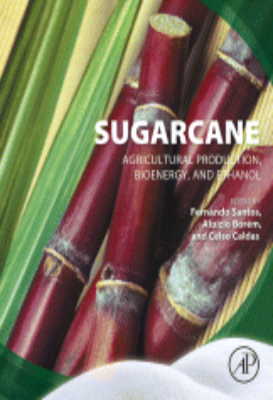
Sugarcane
"Sugarcane: Agricultural Production, Bioenergy and Ethanol explores this vital source for ""green"" biofuel from the breeding and care of the plant all the way through to its effective and efficient transformation into bioenergy. The book explores sugarcane's 40 year history as a fuel for cars, along with its impressive leaps in production and productivity that have created a robust global market. In addition, new prospects for the future are discussed as promising applications in agroenergy, whether for biofuels or bioelectricity, or for bagasse pellets as an alternative to firewood for home heating purposes are explored. Experts from around the world address these topics in this timely book as global warming continues to represent a major concern for both crop and green energy production. Key Features. Focuses on sugarcane production and processing for bioenergy. Provides a holistic approach to sugarcanes potential from the successful growth and harvest of the plant to the end-use product. Presents important information for ""green energy"" options"


Taxonomy Kinetoplastids and Flagellates of Fish
Parasitic Protozoa, Volume I: Taxonomy, Kinetoplastids, and Flagellates of Fish contains 10 chapters that first discuss the classification of the protozoans, and then explain the system of parasitic protozoans. This reference material focuses on the significant aspects specifically related to Leishmania and trypanosomes, including the trypanosomes causing disease in man and livestock in Africa, as well as the nonpathogenic trypanosomes of mammals. Lastly, the flagellate parasites of fish are described. This book will be invaluable to physicians and veterinarians interested in studying the parasite's disease-causing property in man and livestock.
Textbook of Rabbit Medicine: 2002
Although a lot has been written on the rabbit, much is anecdotal and aimed at the pet owner rather than the veterinarian. Textbook of Rabbit Medicine however, has been specifically written for the veterinary practitioner, using evidence-based material andproviding a comprehensive guide to the diagnosis and treatment of conditions affecting pet rabbits. Basic husbandry, behaviour and nutrition are explained within the concept of health and disease. Essential information on biology and physiology is also provided. Unique illustrations based on original dissections offer an additional insight into this complex animal.Frances Harcourt-Brown is a veterinary surgeon with a specific interest in rabbits. She is widely recognised as an expert and has been acclaimed for her research - receiving several awards, including the BSAVAs Melton award for meritorious contribution to small animal practicefor her work on dental disease in pet rabbits. Textbook of Rabbit Medicine says all there is to say about the pet rabbit: it is an essential purchase for every veterinary practitioner.With illustrations by Nigel Harcourt-Brown
Textbook of Rabbit Medicine: 2013
The new Textbook of Rabbit Medicine draws on the latest information from around the world to make it a truly global resource on all aspects of rabbit medicine and health. It will continue to be indispensable to veterinary surgeons in general practice, veterinary students, referral veterinarians specializing in exotic pets, and veterinary surgeons studying for certificates in advanced veterinary practice. The book is carefully constructed to allow for the biology, husbandry and clinical techniques that pertain to rabbit medicine to be treated comprehensively and conveniently. Clinical chapters follow a logical progression from clinical pathology, through anaesthesia, therapeutics and diseases covered by body system, to surgery and post-mortem examination. The author offers a strong emphasis on clinical practice to ensure the content is as practically useful and accessible as possible. Key points boxes integrated throughout the book provide a stand-alone prcis of important subjects. New clinical techniques boxes are packed with tips from a practising expert who regularly applies this same information in practice.
Textbook of Respiratory Disease in Dogs and Cats
Respiratory diseases are common and often challenging problems in dogs and cats. Animals with respiratory disease tend to have chronic, recurrent problems that are difficult to manage and do not respond easily to therapy. Alternatively, they may have acute, life threatening problems, with difficulty breathing and a high risk of death. Either type of patient can be very stressful to the veterinarian to manage! This textbook offers state-of-the-art advice about management of dyspneic patients, and patients with chronic recurrent disease. The chapters are all written by recognized experts in each specific subject area. The first parts of the book are organized to facilitate rapid use by presenting a problem-based approach to respiratory tract disease, and describing techniques for diagnostic testing and general support of patients with respiratory tract disease. The last section of the book provides an in-depth description of specific respiratory disorders, including their pathophysiology, diagnostics, expected clinical course and management.
Textbook of Special Pathological Anatomy of Domestic Animals
Textbook of Special Pathological Anatomy of Domestic Animals should not be regarded merely as a textbook for students, but rather as one which will also be of assistance to them in their later work, as well as to veterinarians generally working in the various branches of the profession, in the assessment of pathological changes. As many new diseases have become known and much new information relating to pathogenesis and aetiology has been gained since the appearance of the last edition, radical revision of the book has become imperative. The discussions in this book cover the circulatory system, blood-forming organs, reticulo-endothelial system, respiratory system, digestive organs, peritoneum, nervous system, urinary organs, genital organs, organs of locomotion, endocrine glands, and skin.

The Action of Hormones in Plants and Invertebrates
The Action of Hormones in Plants and Invertebrates focuses on the mechanisms of action of hormones in plants and invertebrates, including auxins, vitamins, steroids, and carotenoids. The book considers plant growth hormones, hormone-like substances in fungi, and hormones in insects and crustaceans. This volume is organized into four chapters and begins with a historical overview of the concept of hormones in plants, and then describes assay methods for auxins, along with auxin chemistry, transport, and role in tropisms. The discussion moves to other plant hormones such as wound hormones, flower-forming hormones, vitamins, steroids, carotenoids, rhizocaline, and caulocaline. The book then methodically explains insect hormones and their sources; the role of hormones in reproduction and postembryonic development; and hormone-induced color change in insects. This volume also offers information on the mode of action and physicochemical properties of insect hormones. The book concludes with a chapter on the biological effects of hormones on Crustacea, from sex characteristics to color change, molting and growth, retinal pigment movements, locomotion, and ovarian development. This book will be of interest to biologists, zoologists, botanists, and endocrinologists.
The Agronomy and Economy of Important Tree Crops of the Developing World
"Major tree crops contribute substantially to the economy of many developing countries on the Asian, African and Latin American continents. For example, coffee is the main revenue earner for Kenya. This book provides a comprehensive review of the agronomy, botany, taxonomy, genetics, chemistry, economics, and future global prospects of a range of crops that have great food, industrial and economic value such as cocoa, coffee, cashew, oil palm and natural rubber. Key Features. Discusses the major tree crops of great economic value to the developing world. The author is an eminent scientist who has won numerous awards for his work in this area"

The Agronomy and Economy of Turmeric and Ginger
"Turmeric has been used as a medicine, a condiment, and a dye since at least 600 B.C., while ginger has been used extensively throughout history for its medicinal purposes. The Agronomy and Economy of Turmeric and Ginger brings these two important plants together in one reference book, explaining their history, production techniques, and nutritional and medicinal properties in detail. This book is intuitively organized by plant and use, allowing quick access to information. It puts the uniquely Indian use and history of turmeric and ginger plants into a global context of production and economic aspects. It explores the plants from a botanical perspective, and goes into details of their chemical composition as well. Rounding out the book are chapters on disease and pest control issues. The book is a valuable resource for those involved in the production and marketing of these plants, as well as those looking for more information on the medicinal and nutritional properties of turmeric and ginger. Key Features. The first book to bring together extensive information about turmeric and ginger. Incorporates medicinal, nutritional and agricultural aspects of the two plants. Offers a global perspective"
The Anatomy of Aging in Man and Animals
The Anatomy of Aging in Man & Animals presents a critical review of the characteristics of invertebrates. It discusses the physical features and parts of fishes, amphibians, reptiles, and birds. It also addresses the characteristics and physiology of mammals as well as the organization of the nervous system. Some of the topics covered in the book are the descriptions and species of protozoa; description of porifera, coelenterate, and kinds of rotifer; parts and functions of mollusca; description and reproduction of annelida; types of crustacea; studies on drosophila; analysis of nutrition, temperature, and aging; and development of the nervous system of a bee. The structures of flatworms and the development of roundworms and echinodermata are discussed. An in-depth analysis of the classes of echinoidea is provided. The characteristics of thymus in an adult amphibian are also presented. A chapter is devoted to the description of changing appearance of human skin. The book can provide useful information to scientists, biologists, students, and researchers.
The Andhra Agricultural Journal
The Andhra Agricultural Union was started in 1954 at Agricultural College, Bapatla. A scientific Journal The Andhra Agricultural Journal is published by the Union since its inception to educate and encourage the agricultural science fraternity. It publishes original scientific work related to strategic and applied studies in all aspects of agricultural and allied sciences, as well as reviews of scientific topics of current agricultural relevance. In the beginning, it was a bimonthly journal and it was transformed into a Quarterly Journal from 1982 onwards and registered with the Registrar of News Papers of India as Quarterly under The Press and Registration of Books Act, 1860 with Registration No. 5751/57. The present NAAS rating of the Journal is 3.61.
The Athletic Horse
Showing how to maximize performance in horses, The Athletic Horse: Principles and Practice of Equine Sports Medicine, 2nd Edition describes sports training regimens and how to reduce musculoskeletal injuries. Practical coverage addresses the anatomical and physiological basis of equine exercise and performance, centering on evaluation, imaging, pharmacology, and training recommendations for sports such as racing and show jumping. Now in full color, this edition includes new rehabilitation techniques, the latest imaging techniques, and the best methods for equine transportation. Written by expert educators Dr. David Hodgson, Dr. Catherine McGowan, and Dr. Kenneth McKeever, with a panel of highly qualified contributing authors.

The Behavior of Fish and Other Aquatic Animals
The Behavior of Fish and Other Aquatic Animals provides a comprehensive discussion of the behavior of fish and other aquatic animals. It aims to fulfill the need for published materials that can responsibly depict the status quo of existing knowledge, and that can serve to educate the scientist seeking an organized presentation focused on biobehavioral issues and techniques. The book begins by exploring symbiotic relationships in fishes that range from broad multispecific types that have little or no intimacy between symbionts to intimate mutualistic relationships. It then presents studies on the feasibility of using teleost fish as subjects in behavioral toxicology experiments; the visual behavior of fishes; the role of the teleost telencephalon in behavior; and the auditory systems of fishes. The remaining chapters cover the behavior of turtles in land, sea, and fresh waters; visually guided behavior in turtles; the gas bubble disease of fish; and the advantages and limitations of acoustic telemetry, which has been used to obtain data from animals ranging in size from hatchling sea turtles to large tuna and sharks.

The Cat
Comprehensive in scope and exclusively devoted to feline medical care, Dr. Susan Little's The Cat: Clinical Medicine and Management is an essential resource for anyone who provides complete, state-of-the-art care to cats. In one convenient volume, you'll find authoritative, clinically-focused information enhanced by full-color illustrations, tables, boxes, algorithms, key points, and much more all in a format designed for quick access. Dr. Little and her expert contributors address the unique concerns and challenges facing the feline practitioner, including the latest advances in feline medical diagnosis and management and their clinical applications to everyday practice. User-friendly and complete, The Cat is also available as an e-book, giving you easy access to the complete, fully-searchable contents online.
The Detection of Fish
The Detection of Fish is a guide on how to locate fish through the indications of its presence in the area and the use of different acoustic instruments. The book has seven chapters, which cover the different types and locations of fisheries; the evaluation of resources of exploratory fishing; the position of fisheries; the two fish detection methods; basic principles of acoustics in relation to fishing; and the estimation of abundance of fish with an echo sounder. Also covered are the study of behavior of fish through acoustic means; the deep scattering layer and its different investigations; and the use of more complex acoustic instruments. The text is recommended for beginning fishermen, entrepreneurs who wish to venture in the fishing business, and those who work for government agencies who oversee fishing and aquatic resources. Marine biologists, especially those concerned with the study of fish, would also find the book as a handy guide.
The Dog Breeder’s Guide to Successful Breeding and Health Management
This unique resource offers a general overview of canine body systems and how each system affects the breeding process. Key topics include nutrition, pharmacology, microbiology, parasitology, vaccinations, genetics, and endocrinology, as well as normal anatomy and disorders of the male and female reproductive systems.
The Ecology of Fishes on Coral Reefs
This book provides a comprehensive and up-to-date review of the ecology of coral reef fishes presented by top researchers from North America and Australia. Immense strides have been made over the past twenty years in our understanding of ecological systems in general and of reef fish ecology in particular. Many of the methodologies that reef fish ecologists use in their studies will be useful to a wider audience of ecologists for the design of their ecological studies. Significant among the impacts of the research on reef fish ecology are the development of nonequilibrium models of community organization, more emphasis on the role of recruitment variability in structuring local assemblages, the development and testing of evolutionary models of social organization and reproductive biology, and new insights into predator-prey and plant-herbivore interactions.
The Economics and Organization of Brazilian Agriculture
"The Economics and Organization of Brazilian Agriculture: Recent Evolution and Productivity Gains presents insights on Brazilian agriculture and its impressive gains in productivity and international competitiveness, also providing insightful examples for global policymakers. In Brazil, as in many countries, many economists and policymakers believe that agriculture is a traditional, low-tech sector that crowds out the development of other economic sectors and the country. This book shows that this anti-agriculture bias is ill-informed, and with population growth, rising incomes, urbanization and diet changes especially in developing countries like China and India on the rise, the demand for food is expected to double in the next 40 years. Brazil has the natural resources, technology and management systems in place to benefit from this expected growth in food consumption and trade. Through real-world examples, the book shows how other low-latitude countries with tropical climate and soils like Brazil especially in sub-Saharan Africa can benefit from the agricultural technology, production, and management systems developed in Brazil. Case studies in each of three key categories, including technology, resource management, and effective government programs provide valuable insights into effective decision-making to maximize the effect of each. Key Features. Provides important and practical insights into achievable agricultural options via case studies. Addresses the use of natural resources, technological advances, and management systems to create viable, adaptive economic growth. Applies lessons learned in Brazil to improving both economic and ecological resource-sustainable agriculture for other regions and countries"
The Electronic Nose and Tongue in Food Science
Electronic Noses and Tongues in Food Science describes the electronic products of advanced chemical and physical sciences combined with intuitive integration of microprocessors, advanced bioinformatics and statistics. These include, for example, voltammetric, bio-electronic, piezoelectric platforms made from a variety of components including, nanoparticles, enzyme biosensors, heavy metals, graphite-epoxy composites, metal oxide semiconductors, microelectrodes, microfluidic channels, pre-manufactured gas sensors, redox enzymes and others and is an ideal resource for understanding and utilizing their power in Food Science settings. Devices used to analyse one particular food item can theoretically be adapted for other food items or components. This does not just mean the re-deploying the physical platforms but also the mode of bioinformatic and statistical analysis. This includes artificial neural networks (ANN), linear discriminant analysis (LDA), partial least squares (PLS), principal component analysis (PCA) etc. In other words, there is cross transference of chemistry, physics, concepts, techniques, findings and approaches from one food to another. Electronic noses and tongues are two of these devices but are advancing in application and importance. This book provides examples of the use of electronic noses and tongues to characterise components that contribute to sensory or compositional profiles, from ripening to harvesting and from storage of raw materials to packaging and consumption. These devises are suitable for high-throughput analysis, quality control or to determine the nature and extent of spoilage and adulteration, and have also been used to ascertain the geographical origins of food and mixtures.

The Equatorial Rain Forest
The Equatorial Rain Forest: A Geological History presents the equatorial vegetation as a dynamic entity with varied and highly significant history. It also discusses other types of equatorial regions. It addresses the vegetational history from a palaeoecological viewpoint. Some of the topics covered in the book are the vegetation of equatorial regions; the prelude to the quaternary; the quaternary vegetation of equatorial Latin America; the quaternary vegetation of equatorial Africa; the cretaceous period; and the quaternary vegetation of equatorial indo-malesia. The value of vegetational history is fully covered. The effect of man on vegetation is discussed in detail. The text describes in depth the methods of studying vegetational history. The Paleocene, Eocene, and Oligocene epochs are presented completely. A chapter is devoted to the palynological evidence and synthesis. Another section focuses on the xeroseres, hydroseres and related successions. The book can provide useful information to botanists, geologists, students, and researchers.
The Equine Manual
This second edition of the popular resource serves as a ready reference for equine practitioners. It provides comprehensive coverage of all aspects of equine medicine and many surgical conditions. It is a hands-on, user-friendly text aimed at the busy practitioner, veterinary students, specialist equine technicians and others with an interest in horse health. Covers new topics, including intensive care, the pre-purchase examination, equine behavior, and anesthesia (including euthanasia).